
For visitors to my website, my “Build of the Month” (BOTM) Series was created to help those who are trying to get started in scratch building their own Radio Controlled (RC) Model Aircraft from plans.
"Aerofred.com" and "Outerzone.co.uk" are two of my favorite web sites to obtain free RC model airplane plans for my new builds. Additionally, they like to post images of Builder's models, and both sites have posted my RC model images and build descriptions under the heading of the associated aircraft model. Other good sources for free plans are: "Hip Pocket Aeronautics Builders' Plan Gallery", "Vintage & Old-Timer RCM Free Plans", "James Hatton Blog Free Plans and Articles", "Hlsat Blog RCModeler Free Plans and Articles", and "Don Dewey Memorial RCM Plans Collection."
If you are currently not an active builder, and you would like to be, my BOTM Series is a great place to start. If you have an RC model aircraft that you would like to see featured in this section or feel others may find interesting, please let me know and I will make every attempt to find scratch build plans, photos, and maybe even a published build article, which I will then post in a future BOTM edition. Just send me an email @: Build of the Month.
Click on any link below to jump to that 2026 BOTM Edition
September 2026 — 1912 Blackburn Type D Monoplane
August 2026 — 1911 Voisin Canard
July 2026 — MQ-9 Reaper
June 2026 — Andy Clancy Yard Bee
May 2026 — Douglas A-26 Invader
April 2026 — DG-600 Jetpower
March 2026 — OV-10 Bronco
February 2026 — OSMW - Sky Ranger 40
January 2026 — Royal Air Frames - Royal Wing
NOTE - You can view all images in a “Spotlight Box” by simply clicking on any image.
Build of the Month Series - September 2026 Edition
I hope you enjoyed last months BOTM Edition on the 1911 Voisin Canard. If you have an RC model that you would like to see featured in this section or feel others may find interesting, please let me know and I will make every attempt to find scratch build plans, images, and maybe even a published build article, which I will then post in a future edition. Just send me an email @: Build of the Month.
Ok, now lets see what I have for the month of September 2026. For the 2nd Edition of my “Early Pioneers” Mini-Series, how about something with a single wing this time and is a UK design. Given these requirements, this month features an RC model of the 1912 Blackburn Type D Monoplane, sometimes known as the Single Seat Monoplane.


Images Source: flickr.
Designed by Robert Blackburn and manufactured by the Blackburn Aeroplane Company in the United Kingdom, the 1912 Type D was a wooden, fabric-covered single-seat monoplane powered by a 50 hp (37 kW) Gnome rotary engine. The design inherited some features from earlier Blackburn designs: it too had thin wings of constant chord with square tips of about the same span as the later Blackburn Mercuries and used wing warping rather than ailerons. The wing was wire braced from above via a kingpost and below via the undercarriage and was built up around machined I-section ash spars. The Type D also had the triangular cross-section fuselage seen on several of Blackburn's aircraft from the Second Monoplane onward.
It was a more pleasing-looking machine with a shorter fuselage, cowled engine, simplified undercarriage and heavily revised empennage. The fuselage had rounded upper decking and aluminum covering at the front. Blackburn had persisted with the Second Monoplane's Antoinette-style fin and tailplane through subsequent aircraft, but the Type D's tailplane had a much less steeply swept leading edge (though still 60°) than its predecessors and carried a divided elevator. The fin likewise was less swept though still long and now carried a single rudder rather than the characteristic triangular pair previously used. The undercarriage featured a pair of wheels, compared with four on the Mercury, with two struts per side terminating on skids and joined by the axle and a higher transverse strut. For the first time, Blackburn fitted a rudder bar in preference to his “triple steering column.”
The aircraft first flew late in 1912. Some modifications followed in time: the engine cowling was extended into a semicircular shape to discourage the discharge of smoke and hot oil from the rotary into the cockpit; the wingtips were slightly rounded, and the crook-shaped skids were replaced by skids of hockey stick form. In 1913 the basic Type D design was developed into the two-seat Blackburn Type I. A restored Type D flew still flies on quiet days with the Shuttleworth Collection, Britain's oldest active aircraft.
- Full Scale 1912 Blackburn Type D Monoplane General Characteristics:
- Manufacturer: Blackburn Aeroplane Company
- Crew: One
- Wingspan: 32 ft 1 in (9.78 m)
- Wing Area: 236 sq ft (21.9 m2)
- Length: 26 ft 3 in (8.00 m)
- Height: 8 ft 9 in (2.67 m)
- Power Plant: 1 × Gnome 7 Omega 7-cylinder rotary piston engine , 50 hp (37 kW)
- Empty weight: 550 lb (250 kg)
- Gross weight: 980 lb (446 kg)
- Maximum speed: 60 mph (97 km/h, 52 kn)
- Endurance: 2.5–3 hours
- Service ceiling: 4,000 ft (1,200 m)
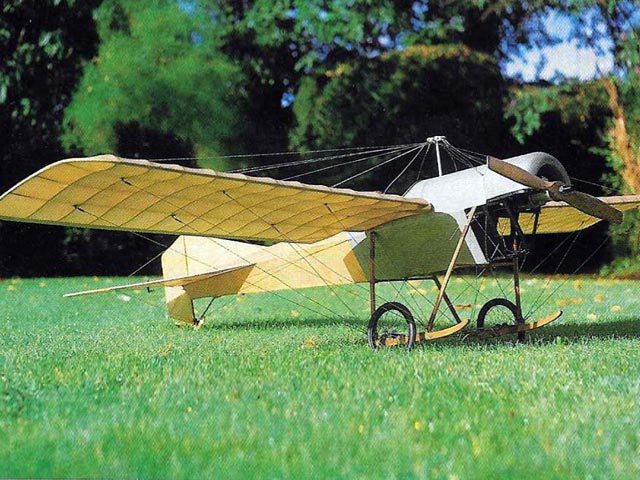
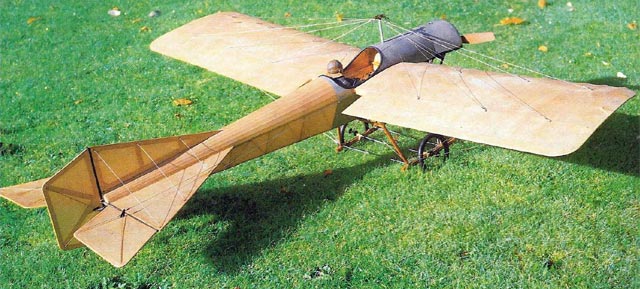
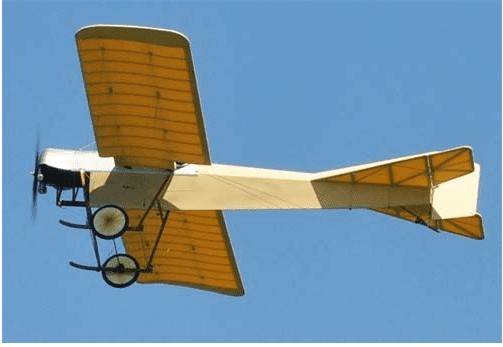
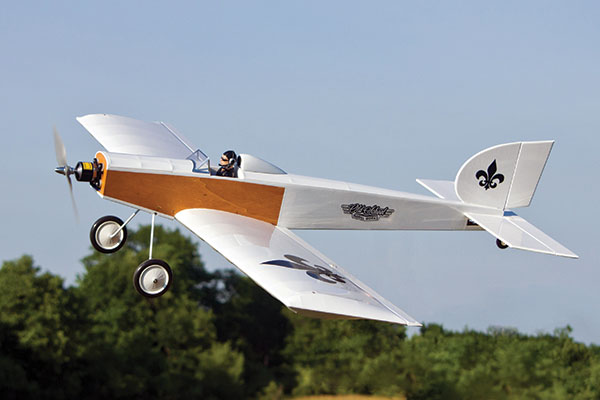
The RC model of the 1912 Blackburn Type D Monoplane featured this month and shown below was designed by David Boddington. Edwardian design has always combined elegance and practicality. Take the Blackburn 1912 monoplane, for instance. For all that its name suggests Northern qualities of dependability and industriousness, its refined and stylish lines evoke memories of a confident and outward-looking England in which the gentleman aviator enjoyed the brief Edwardian summer before the Great War brought an end to the era. The 1912 is equally refined aerodynamically, too: she's as a fully formed and practical monoplane, built at a time when her contemporaries were still braced and strutted biplanes. No doubt the Blackburn's English designers were influenced by the efficiency and simplicity of the earlier Bleriot, but beyond this the 1912 remains idiosyncratically English.


Images Source: Outerzone.
The 1912 Blackburn Type D Monoplane RC model in this months BOTM Edition can be built from a set of free full size plans, and the David Boddington article from a Winter 1987 edition of Radio Control Scale Aircraft, which are both available @: Outerzone.
- 1912 Blackburn Type D Monoplane RC Model Specifications:
- Aircraft Type: Scale Pioneer Aviation
- Flight Performance Category: General Sport
- Scale: 1/7th approx.
- Wing Span: 53″
- Wing Chord: 10.6″
- Wing Area: 560 sq.in.
- Elevator Span: 16″
- Elevator Chord: 4.25″
- Total Length: 41″
- Center of Gravity Location: 3.25″ aft of wing LE
- Required No. of Channels: 3 - Throttle, Rudder, and Elevator
- Landing Gear: Tail Dragger
- Glow Fuel Engines: .20 - .30 2-stroke
- Electric Powered: Output of 500-700 Watts, 50 amp ESC, 3 or 4-Cell 45C LiPo pack of around 3,000mah.
Being flown using only her rudder, elevator and throttle means that, as well as having 1912 period looks, the Blackburn has an authentic feel, too. Nevertheless, this nostalgia has its drawbacks: the airfoil section is very slim, and the model's balsa-and-ply cantilever wing quite literally depends upon its King post cable bracing.
Much of the following description are extracts from Radio Control Scale Aircraft, Winter 1987, written by David Boddington. What engine you decide to install will depend, to a large degree, on the type of flying you want to do. With the lower power range the Blackburn will fly slowly - and scale like - but will be limited to calm conditions. With the larger engines (25s and above) the Blackburn can be flown in stronger winds and, of course, you can always throttle back for slow flight.
Radio Installation and linkages: Because of the triangular fuselage section there is not a lot of spare space for the radio, so work out the installation before you start construction. If you can fit the throttle servo across the fuselage (in front of the elevator servo) so much the better as it allows the elevator servo to be centrally mounted. Closed loop cable linkages (also called a pull-pull system) are used for the rudder and elevators as these nearly represent the full size control functions. Actually, the rudder horn should be slightly higher, with the cables exiting the fuselage above the tailplane, but it is easier to route the cables as shown on the drawings. For those of you less concerned with scale accuracy you could use Flex-cables and conventional rudder and elevator horns.
Build Preparation: There are more formers and ribs to cut out than you will have in the average sports model, and I suggest that you do all the cutting out and wire bending before you start any construction. Accuracy of cutting and bending is important as it will make construction so much easier if all the parts fit first time.
In addition to resolving the radio installation you will need to mark the front formers with the correct engine mounting bolt spacing for the engine being used, also the size of the tube for the NiMh receiver battery - this allows moving the battery to some extent to give the correct balance point. Cut-outs in formers F15 and F25 must be adjusted for the fuel tank dimensions.
One point to note here. The center of gravity of the prototype was close to the mid-point of the wing chord, but the model requires a balance point much further forward. This places the balance point quite close, vertically, to the landing gear wheel axle and, consequently, there is a risk of the model nosing over on landing - or even when taking off from a grass runway. The wheel positions are already shown a little forward of scale; you can move them further forward if you wish.
Since the 1912 does not have ailerons or wing-warping, all flying control comes from its tail feathers, which are simple to build since they are built directly over the plan. Tail surfaces are externally braced and controlled using a pull-pull linkage system. The wing King post rigging attachments can be achieved in a number of different ways. Make sure that it is possible to fully de-rig the model for easier transport to the airfield.
Warning, take-offs from grass will be very tricky, with a tendency to nose over, so use a hard surface runway or go for a hand launch. Because the Blackburn has no ailerons, or wing warping, the turns have to be carefully controlled for scale effect using a fair amount of rudder to initiate the yaw and, and then as the wing drops, ease off the rudder and apply up elevator. You may find on initial flights that the model is tending to “kick” around through over control of the rudder - you must fly it as the prototype and ease it around the sky, use controls to the minimum and rely on throttle control for the rate of climb and descent. From a hard surface runway, you can “wheel” the Blackburn on for a landing, on grass try to make a real “three pointer” with plenty of up elevator at the point of touch down.
I hope you enjoy building and flying the Blackburn 1912 Monoplane, it is an airplane with lots of character and is full of Edwardian nostalgia.
If you really like the Blackburn 1912 Monoplane, but would like to build a larger 56 in wingspan, OS .52 Surpass four-stroke engine version, take a look at the plans and article available at Blackburn 1912 Monoplane (oz15821) Webpage.
For those that might what to try an RC model kit of the Blackburn 1912 Monoplane, as shown in the images below there is a very nice kit available for purchase from the DB Sport & Scale LTD. Website.


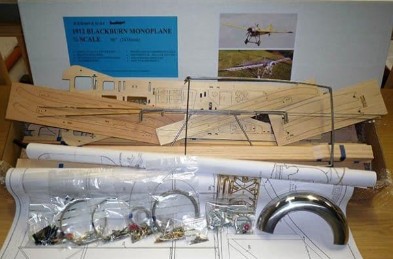
Images Source: DB Sport & Scale LTD. Website.
I hope you have enjoyed this months selection, and just maybe, I have spurred some interest in trying your hand at building an RC model airplane.
Until next month - Keep the Balsa Dust Flying!!
Build of the Month Series - August 2026 Edition
I hope you enjoyed last months BOTM Edition on the MQ-9 Reaper. If you have an RC model that you would like to see featured in this section or feel others may find interesting, please let me know and I will make every attempt to find scratch build plans, images, and maybe even a published build article, which I will then post in a future edition. Just send me an email @: Build of the Month.
Ok, now lets see what I have for the month of August 2026.This month I want to start another “BOTM Mini-Series” that will run over the next 4-6 months and feature several 1900's early pioneer aircraft. For the 1st Edition of this “Early Pioneers” Mini-Series, how about something that I have experience with in an actually scratch build. Given these requirements, this month features an RC model of the 1911 Voisin Canard, a truly different aircraft.
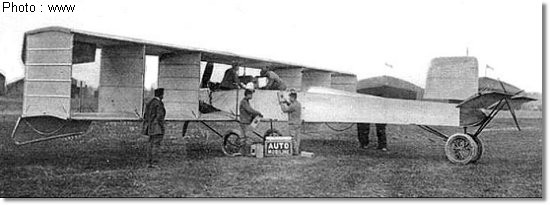
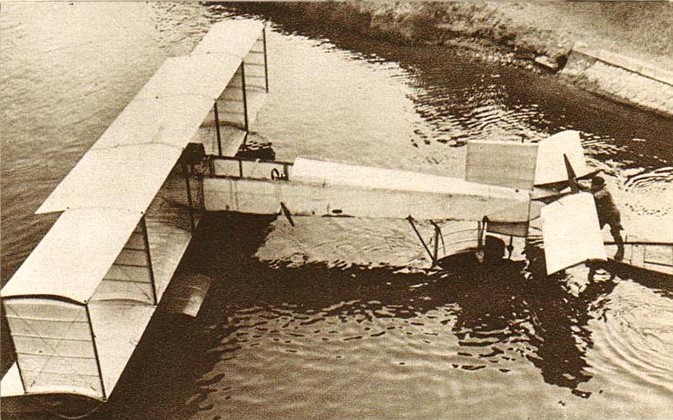
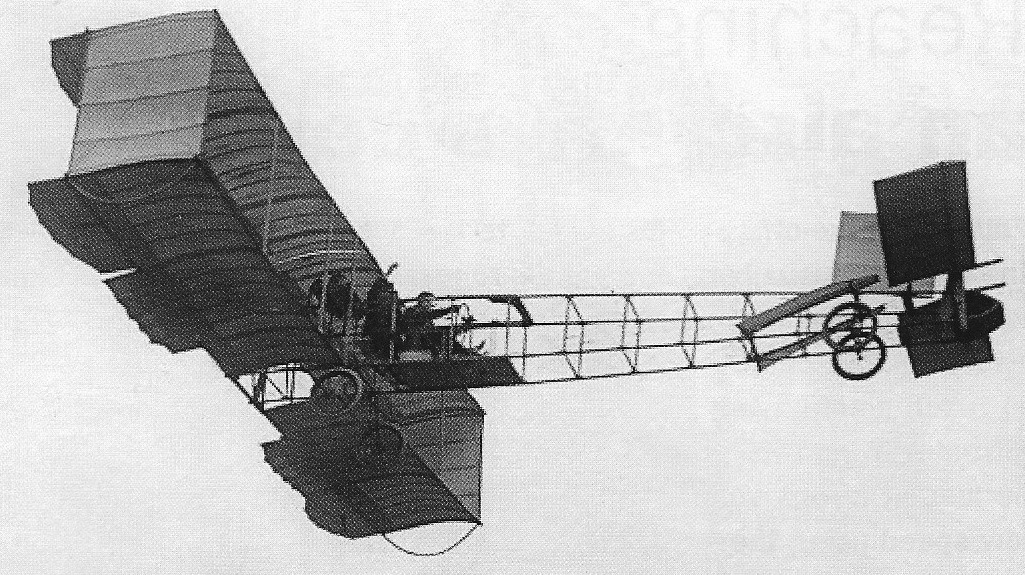
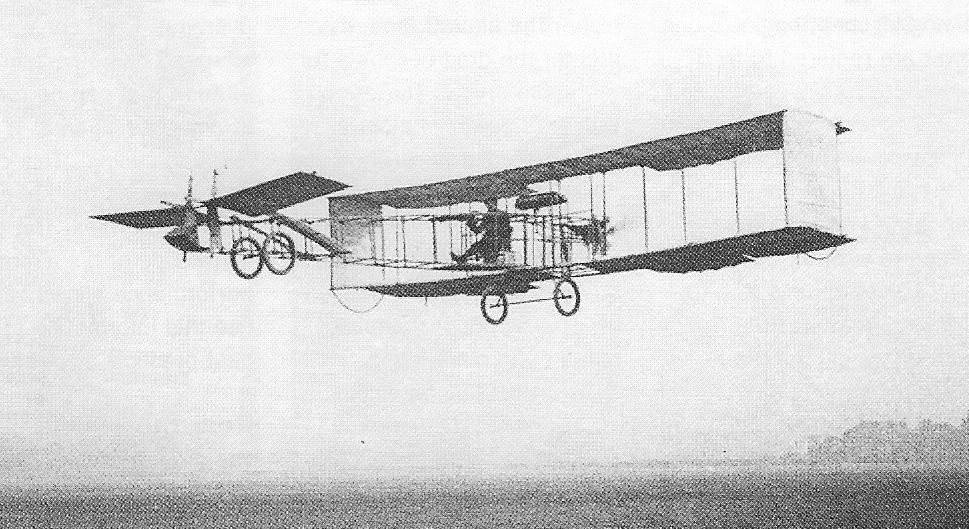
Images Source: Wikipedia, and All-Aero
First, as I normally do with many of my BOTM Editions, some background on the actual 1911 Voisin Canard aircraft. The Voisin Canard (called the French Ghost) was a pioneering French pusher biplane developed by the Voisin brothers (Gabriel and Charles) in late 1910 and first flown in early 1911. It was named the “Canard” because of the resemblance of its forward fuselage to that of a duck's long neck while in flight. The Canard was, even by the standards of 1910, a curiously regressive design, its layout reminiscent of Alberto Santos-Dumont's 14-bis of 1906. It was originally flown as a landplane but with the addition of floats it became one of the first seaplanes used by the French Navy.
As first flown at Issy-les-Moulineaux by Maurice Colliex, the aircraft had an uncovered fuselage of wire-braced wood construction with the 50 hp (37 kW) Rossel-Peugeot rotary engine at the rear and the front-mounted control surfaces consisting of an all-moving elevator divided into two halves, one either side of the fuselage, a rectangular balanced rudder mounted above the elevator, and a pair of short-span fixed horizontal surfaces with a high angle of attack mounted behind and below the elevators. Voisin's characteristic side-curtains were fitted to the outermost pair of interplane struts and roll control was achieved using trailing-edge ailerons on both upper and lower wings.
The aircraft was judged a success and Voisin manufactured a number of examples. There are variations between the individual production aircraft: the two examples flown in the French military aircraft trials in 1911 had a wingspan of 15 m (49 ft 3 in); one was powered by a 56 kW (75 hp) Renault and the second by a 97 kW (130 hp) Gnome. The number of sets of side curtains varied, some aircraft having two or even three sets.
The seaplane variant, fitted with floats designed by Henri Fabre, was initially built to the order of Prince Bibesco, who intended to use it make a flight across the Black Sea. It was first successfully flown from water on 25 April 1911. One example was bought by the French navy in March 1912 to equip the seaplane tender La Foudre, the first seaplane carrier in history. A second example was delivered to the Navy in December 1913. Forty-seven of the 1911 Voisin Canard (amphibian) were built.
- Full Scale 1911 Voisin Canard General Characteristics:
- Manufacturer: Frères Voisin
- Crew: One
- Seats: Two
- Wingspan: 12 m (40 ft)
- Wing Area: 43.9 m sq. (473 sq. ft)
- Length: 7.9 m (26 ft)
- Power Plant: 1 × Gnome 7-cylinder air-cooled radial, 52 kW (70 hp)
- Gross weight: 549 kg (1,210 lb)
- Maximum speed: 90 km/h (56 mph, 49 kn)
The RC model of the 1911 Voisin Canard featured this month and shown below was designed by Martin Maloy. Gabriel Voisin built and flew a number of pusher biplane canards in various configurations between 1911 and 1912. Martin's model is very much like the 1911 layout of the so-called French Ghost. The only departures from scale are in the forward landing gear (for rudder steering) and use of a cylindrical upper wing fuel tank to hide the aileron servo.
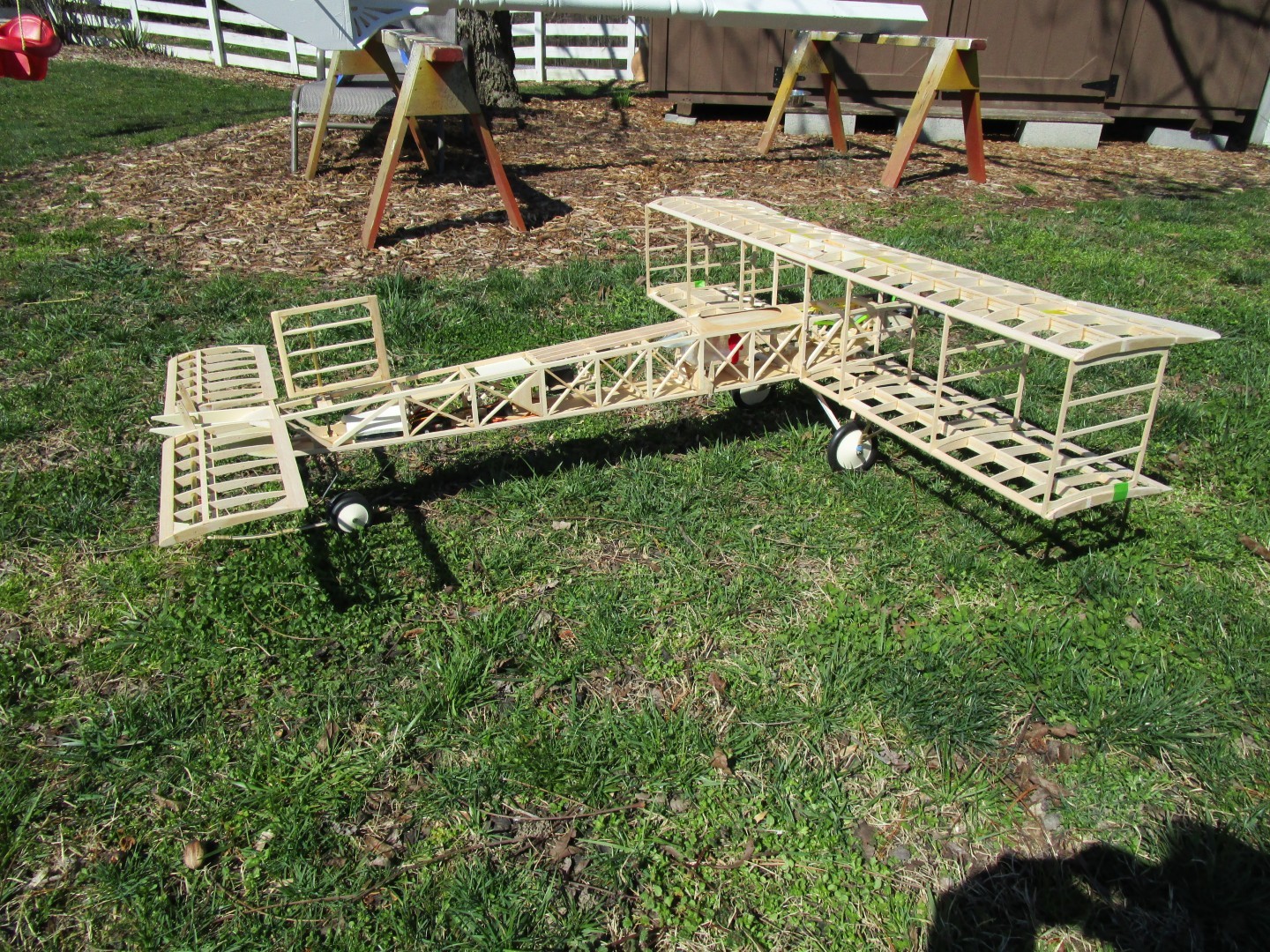
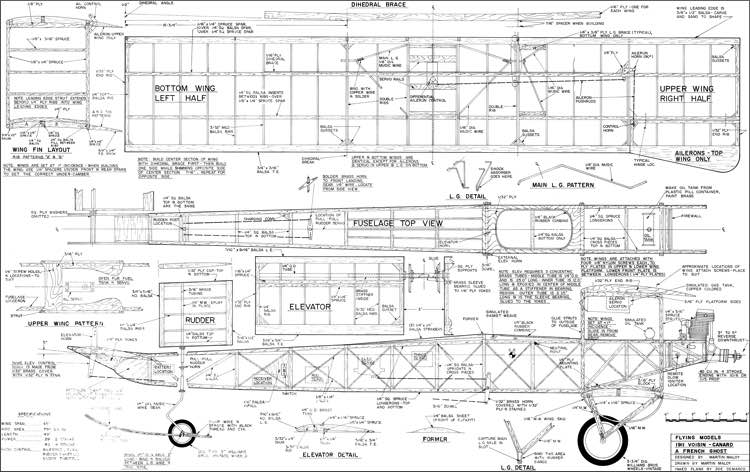
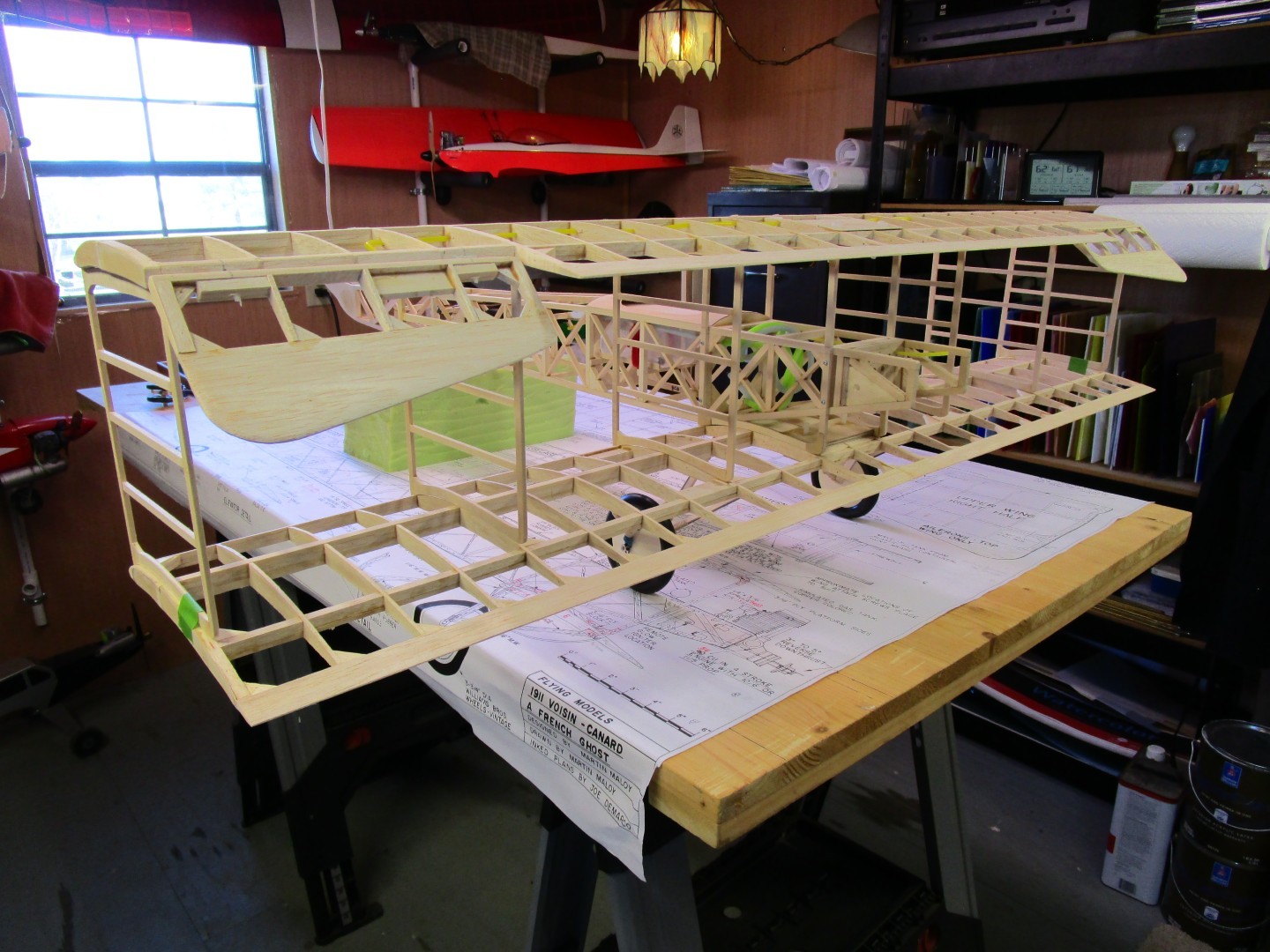
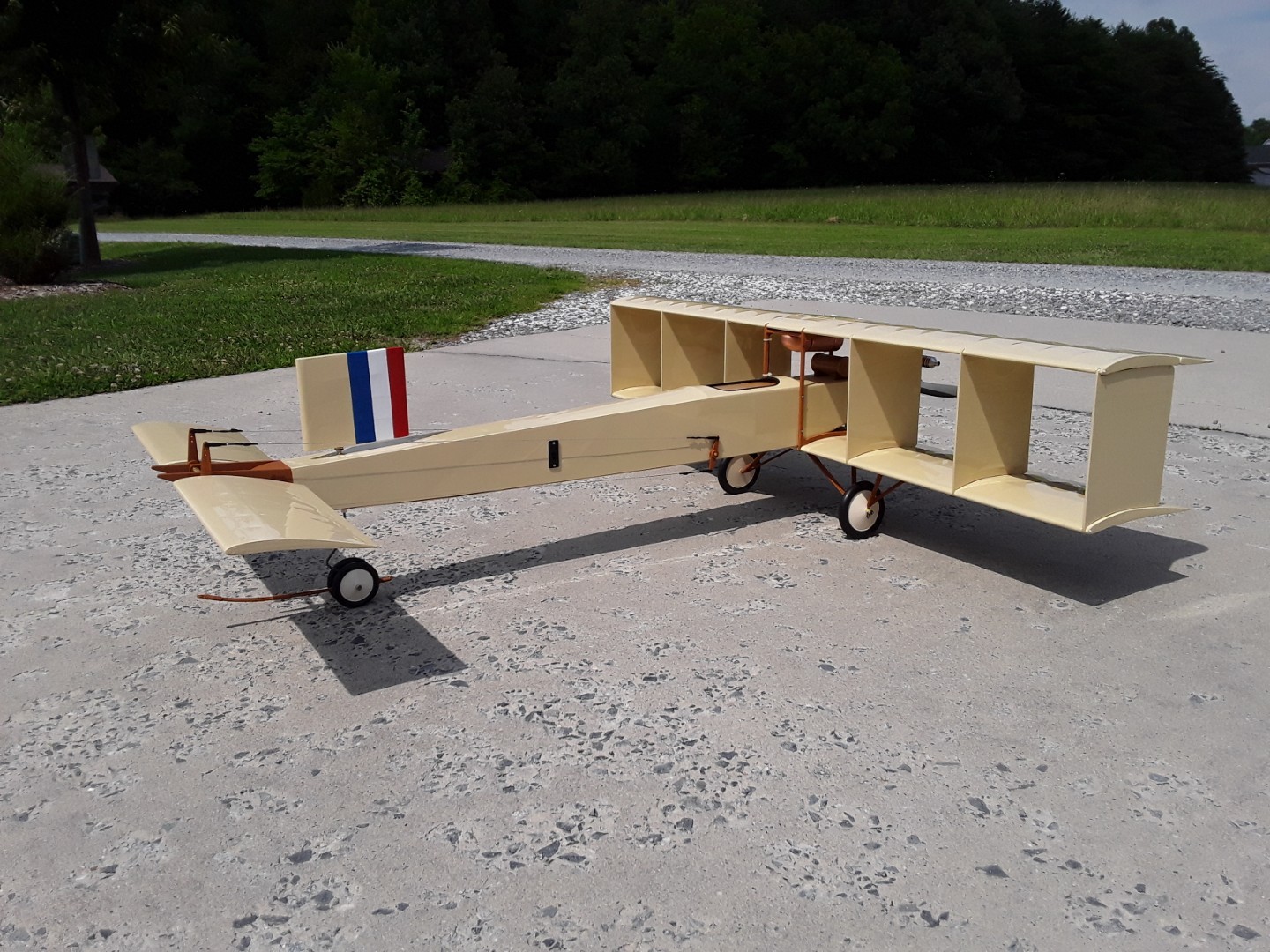
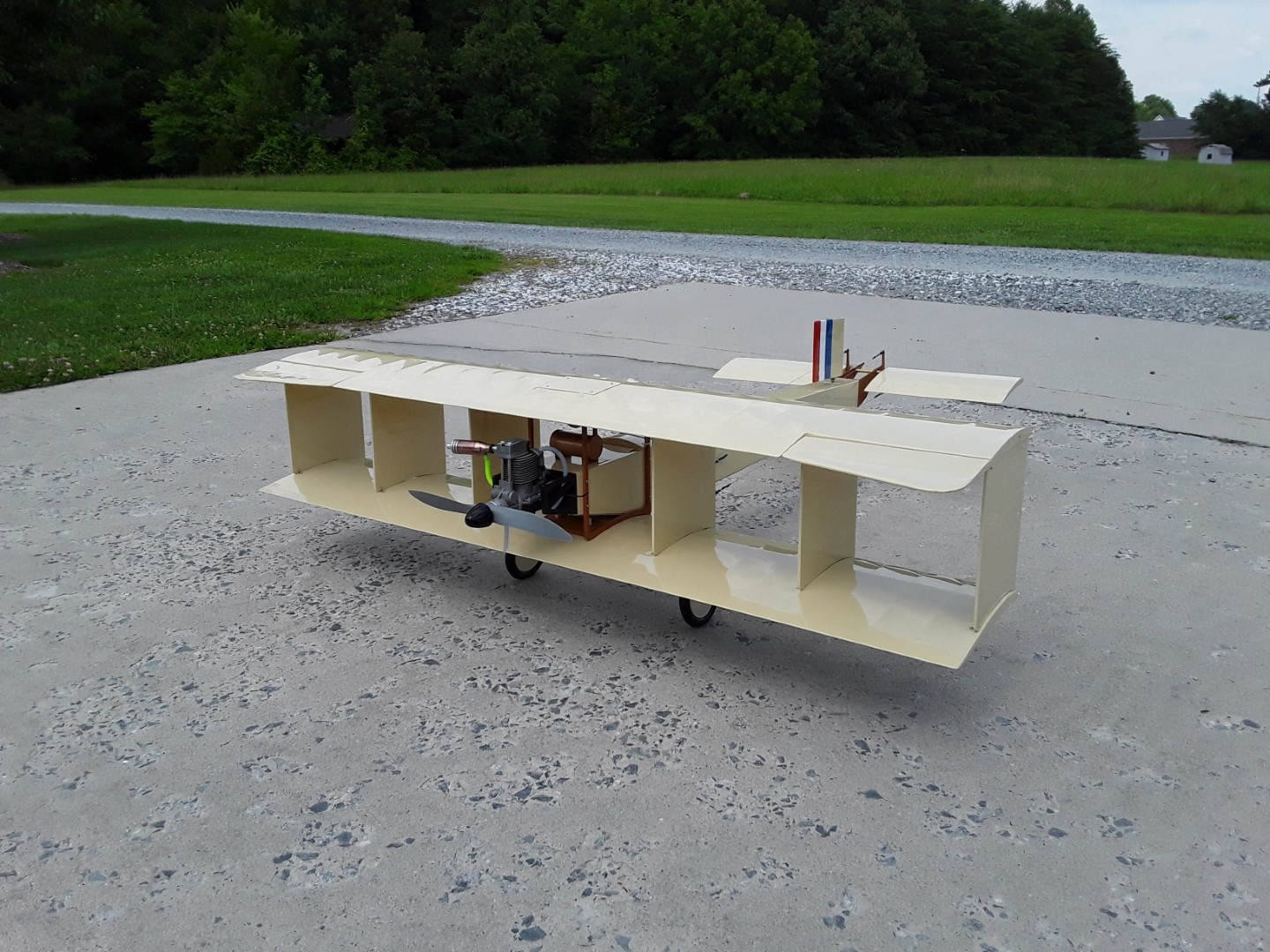
Images Source: Myself.
- 1911 Voisin Canard RC Model Specifications:
- Aircraft Type: Scale Military Biplane
- Flight Performance Category: General Sport
- Scale: 1/10th approx.
- Wing Span: 45″
- Wing Chord: 8.5″
- Wing Area: 750 sq.in.
- Canard (Elevator) Span: 22″
- Canard Chord: 5.75″
- Total Length: 49″
- Center of Gravity Location: 5″ forward of wing LE
- Required No. of Channels: 4 - Throttle, Rudder/NLG Steering, Elevator (Canard), and Ailerons
- Landing Gear: Tri-cycle Gear
- Glow Fuel Engines: .29 2-stroke or .40 4-stroke
The 1911 Voisin Canard RC model in this months BOTM Edition can be built from a set of free full size plans, and the Martin Maloy article from a September 1995 edition of Flying Models, which are both available @: Aerofred, and Outerzone.
The 1/10th sport scale Voisin Canard RC model is designed for .40 CID glow engines installed in a pusher configuration at the rear of the aircraft; a .40 CID four stroke engine is shown on the plans and propeller-to-ground clearance should be carefully monitored to avoid a propeller “ground strike” on takeoff or landing. I used an old Thunder Tiger .54 4-cycle for my scratch build. This model is for those who are up to a modeling challenge. This build was not only my first encounter with an under-camber airfoil, but also my first, and last, canard model with a pusher engine. I would highly recommend you NOT attempt this model build unless you have a lot of scratch build experience.
While not difficult to build, there are several areas that are “a little tricky” and you need to pay very close attention to everything in the plans. The first one being the canard. The canards are an under-camber airfoil, which makes for interesting build with shims. Both canards are attached at the very front of the fuselage, one on each side of the nose, using three concentric sizes of brass tubing for the pivot mechanism, and controlled using a servo that drives a pull-pull linkage from each side of the bottom of the fuselage up to the custom-made canard control horns (laminated brass sheet and very thin ply). There is a similar arrangement used for the rudder/nose landing gear. Yes, these two are linked together using brass tubing for the pivot mechanism, which is controlled using a servo that drives a pull-pull linkage inside the forward fuselage. Both of these can be seen in the image below.
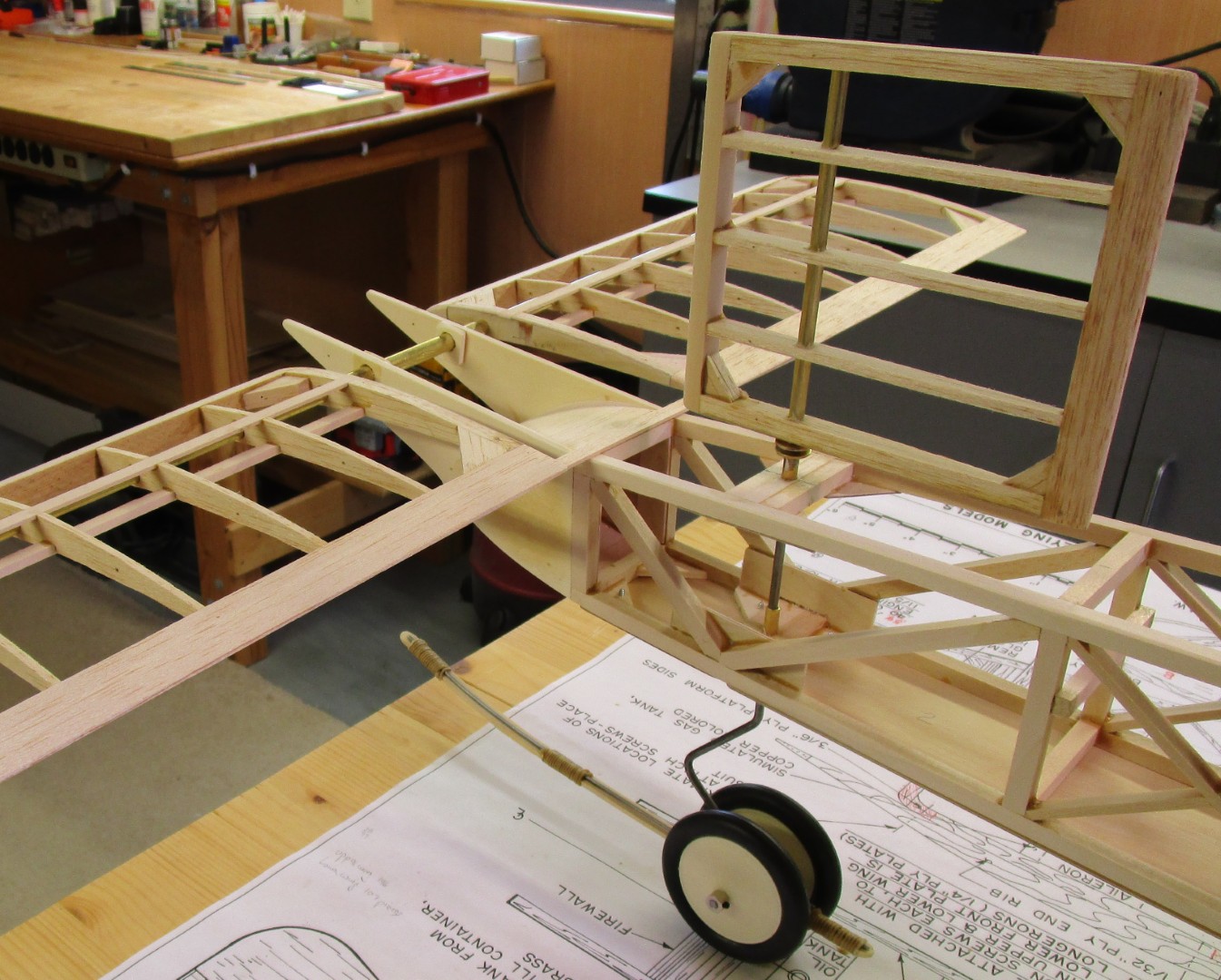
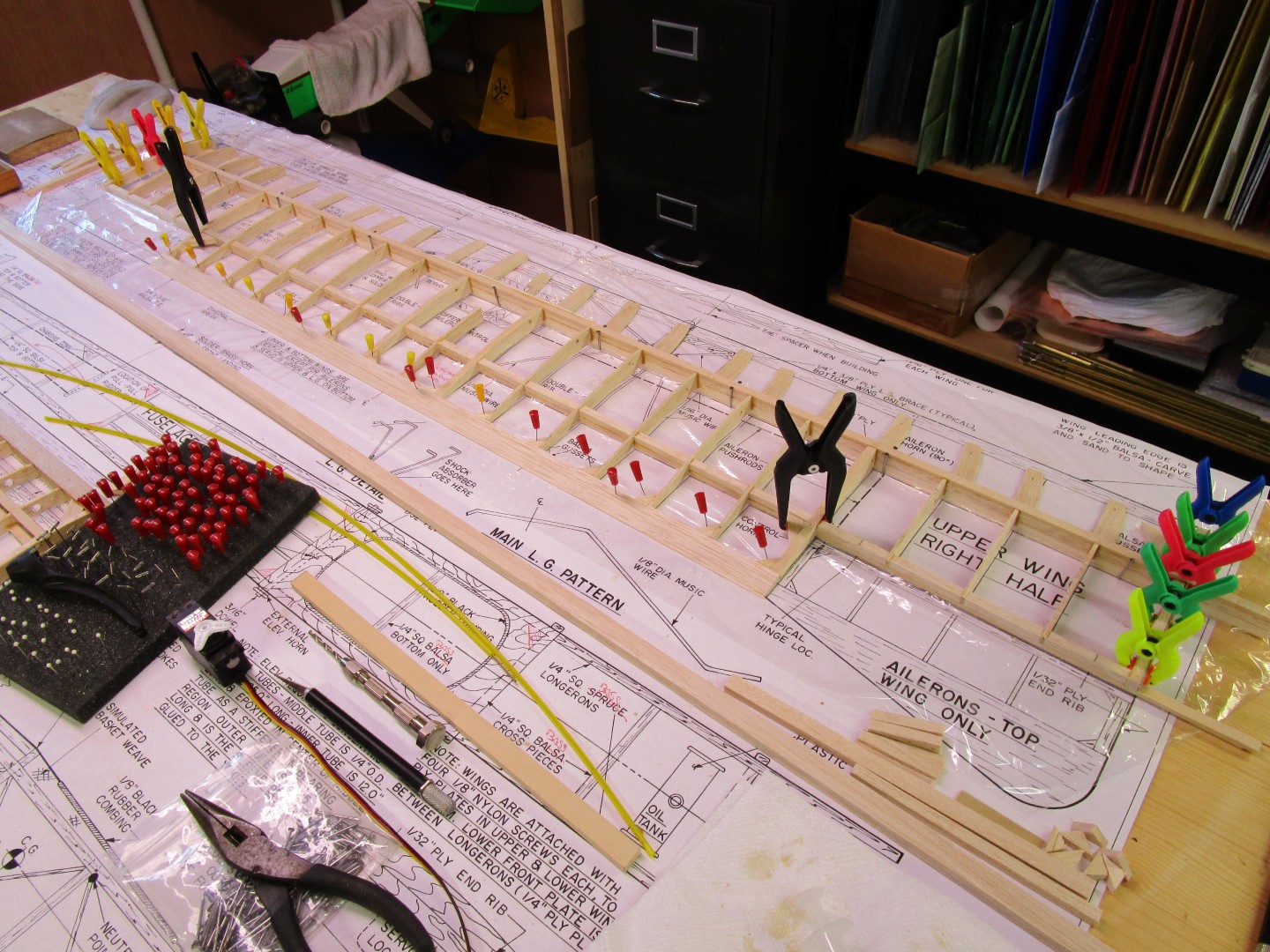
As with the canards, both wings are also under-camber airfoils. This means you must use 7/16″ shims under the main spar to hold the ribs in the correct position above the building board during both wing builds. This can be seen in the left image below. Also, as can be seen in the right image below, I replaced the aileron control cable/bell crank system used in the plan with Sullivan Flex Cables.
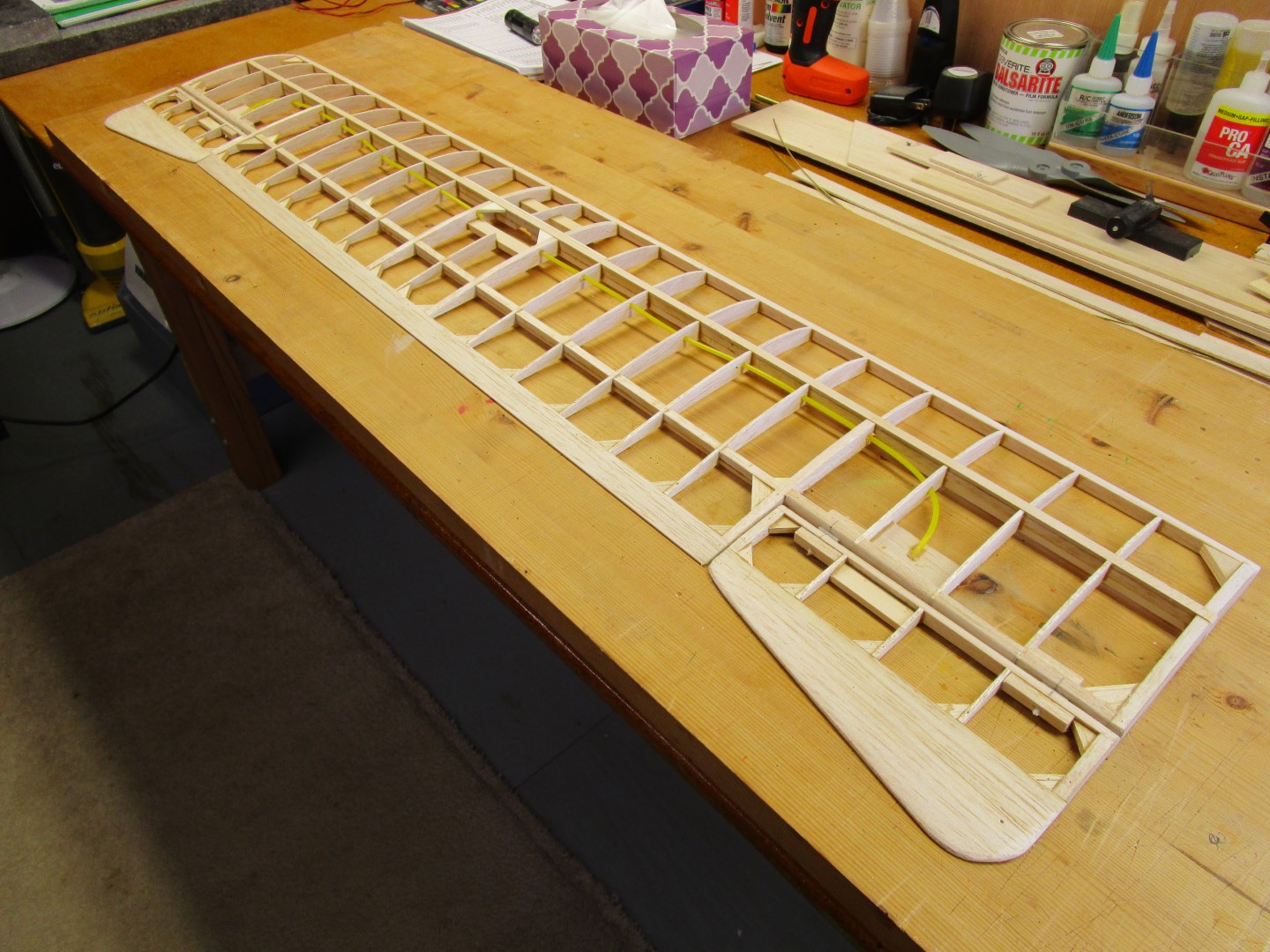
Between the wings are six side curtains which makes the wing assembly look like an old box kite. How many of you made a box kite when you were a kid? They fly great. While the plans do not call for them, I installed small 90-degree brass brackets at the back of each wing fin to help hold them in place. The front of each fin fits into a notch cut into the leading edge of each wing.
A couple other item to note are the engine installation and establishing the correct center of gravity (CG). Opposite from what is done on most RC models, this model requires a 3-5 degree reverse down thrust. And while most RC model aircraft require a CG somewhere approximately 1/3 chord aft of the wing leading edge, this model requires a CG 5 inch forward of wing LE. This can be obtained with correct positioning of the rudder/elevator control servos and fuel tank within the fuselage. I used multiple 1/16″ plywood access hatch along the underside of the fuselage for easy access to everything.
My Voisin Canard Build Description and a link to all the images taken during my scratch build can be found on the “Balsa RC Model Builders Page” of my website. If you plan to try this scratch build I would highly recommend you review my build, carefully study the plans, and read the Martin Maloy article. There also is a link to a short video of my Voisin Canards' first, and only, flight. She was a wild five minute ride, until the engine quite!
I hope you have enjoyed this months selection, and just maybe, I have spurred some interest in trying your hand at building an RC model airplane.
Until next month - Keep the Balsa Dust Flying!!
Build of the Month Series - July 2026 Edition
I hope you enjoyed last months BOTM Edition on the Andy Clancy Yard Bee. If you have an RC model that you would like to see featured in this section or feel others may find interesting, please let me know and I will make every attempt to find scratch build plans, images, and maybe even a published build article, which I will then post in a future edition. Just send me an email @: Build of the Month.
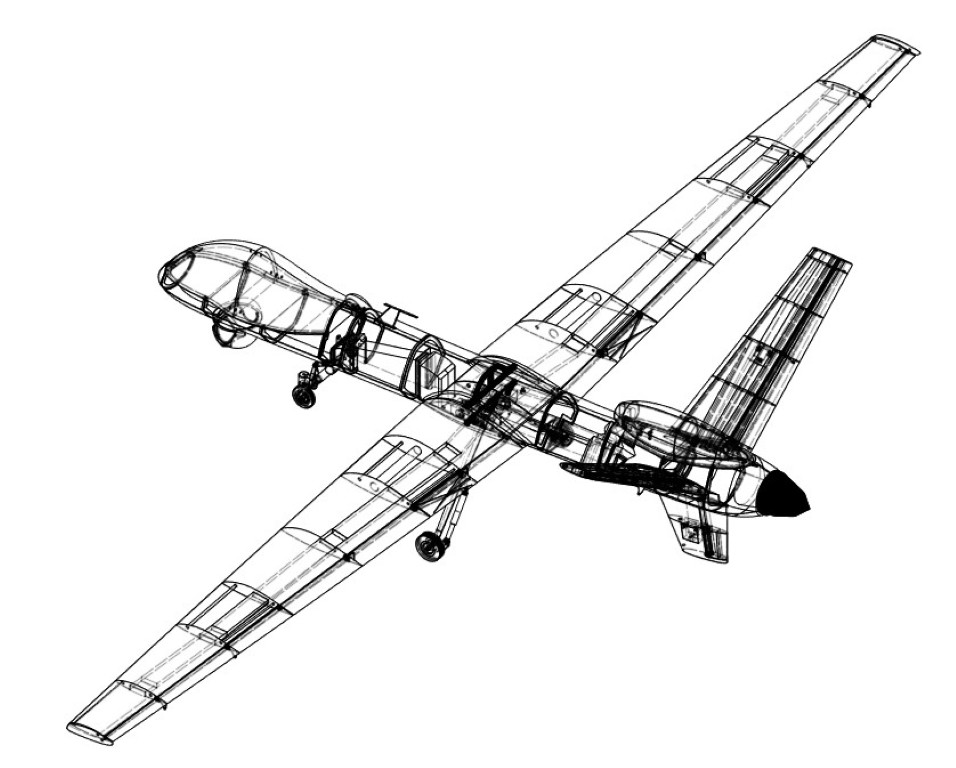
Ok, now lets see what I have for the month of July 2026. While I'm not a foam model builder myself, I did feature a “Foamy” in the February 2024 Edition of my BOTM Series. So I figured it was once again time to venture into this method of scratch building an RC model. In addition, I thought I would add the requirement to pick an aircraft which is currently very busy in real world military action supporting “Epic Fury.” Given these requirements, this month features a Foamy RC model of the MQ-9 Reaper, an unmanned aerial vehicle (UAV) built by General Atomics Aeronautical Systems (GA-ASI).
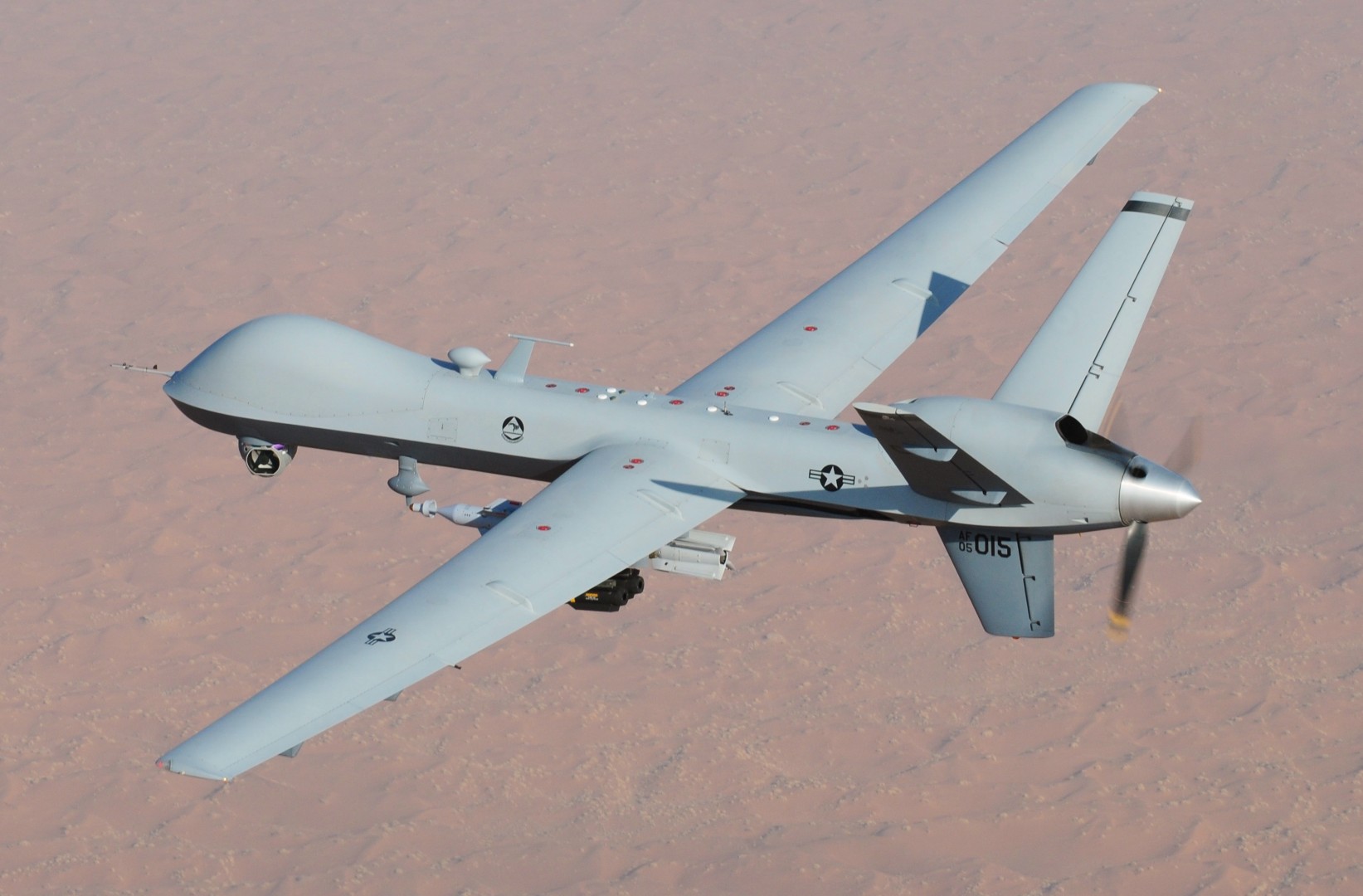
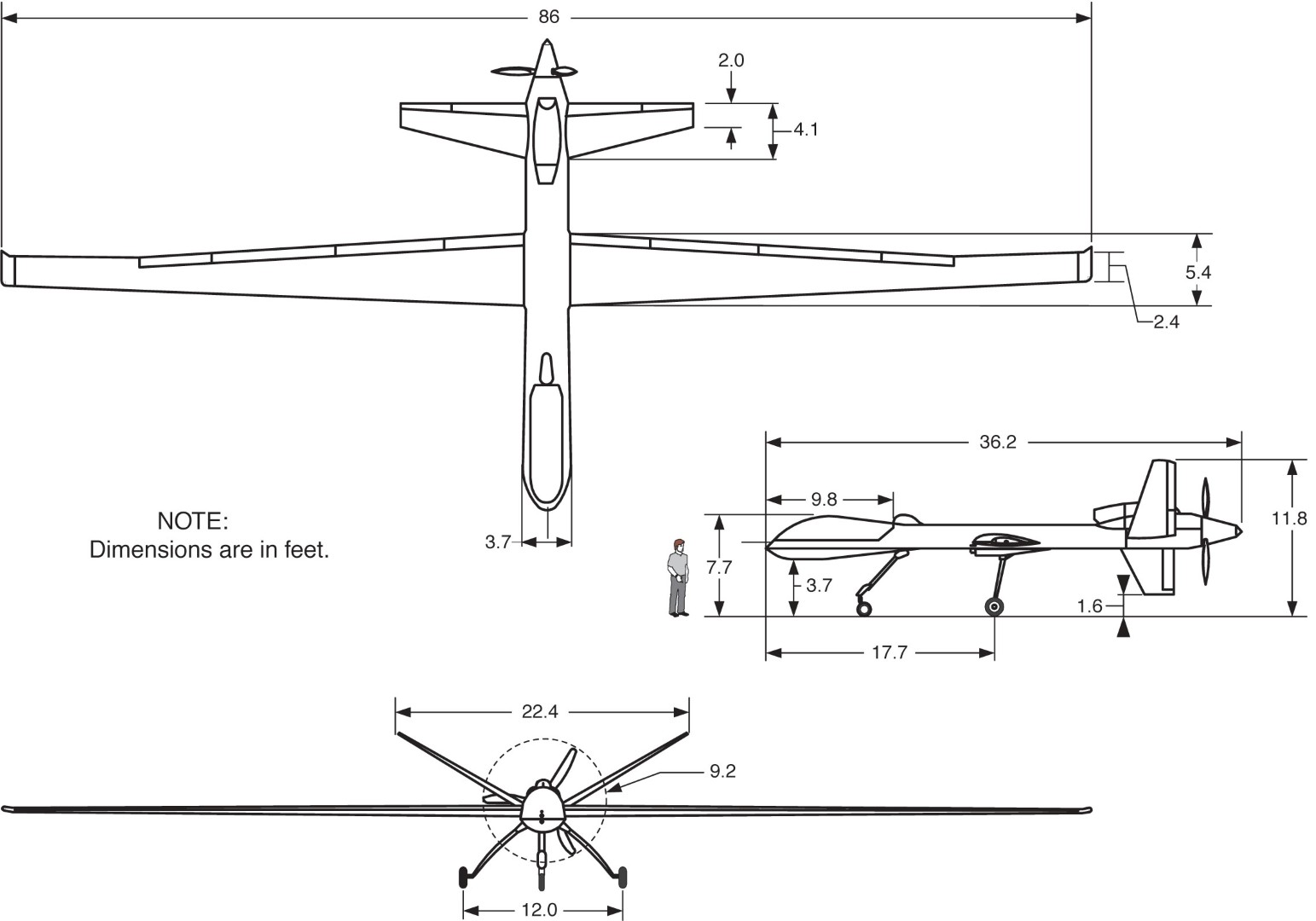

Images Source: Wikipedia MQ-9 Reaper Webpage.
First, some background on the actual MQ-9 Reaper. The MQ-9 Reaper, developed by General Atomics Aeronautical Systems (GA-ASI) primarily for the United States Air Force (USAF), is an armed, multi-mission, medium-altitude, long-endurance remotely piloted aircraft that is employed primarily against dynamic execution targets and secondarily as an intelligence collection asset. Given its significant loiter time, wide-range sensors, multi-mode communications suite, and precision weapons, it provides a unique capability to perform strike, coordination, and reconnaissance against high-value, fleeting, and time-sensitive targets. Reapers can also perform the following missions and tasks close air support, combat search and rescue, precision strike, buddy-lase, convoy/raid overwatch, target development, and terminal air guidance. The MQ-9's capabilities make it uniquely qualified to conduct irregular warfare operations in support of combatant commander objectives.
The Reaper is part of a remotely piloted aircraft system. A fully operational system consists of several sensor/weapon-equipped aircraft, ground control station, Predator Primary Satellite Link, and spare equipment along with operation and maintenance crews for deployed 24-hour missions. The basic crew consists of a rated pilot to control the aircraft and command the mission, and enlisted aircrew member to operate sensors and weapons as well as a mission coordinator, when required. To meet combatant commanders' requirements, the Reaper delivers tailored capabilities using mission kits containing various weapons and sensor payload combinations.
The MQ-9 baseline system carries the Multi-Spectral Targeting System, which has a robust suite of visual sensors for targeting. The MTS-B integrates an infrared sensor, color/monochrome daylight TV camera, image-intensified TV camera, laser range finder /designator, and laser illuminator. The full-motion video from each of the imaging sensors can be viewed as separate video streams or fused. The unit also incorporates a laser range finder/designator, which precisely designates targets for employment of laser-guided munitions, such as the Guided Bomb Unit-12 Paveway II. The Reaper is also equipped with a synthetic aperture radar to enable future GBU-38 Joint Direct Attack Munitions (JDAM) targeting. The MQ-9 can also employ four laser-guided Air-to-Ground Missile (AGM)-114 Hellfire air-to-ground missiles, which provide highly accurate, low-collateral damage, anti-armor and anti-personnel engagement capabilities. In addition to carrying the AIM-9 Sidewinder, tests are underway to allow for the addition of the AIM-92 Stinger air-to-air missile. GA-ASI conducted captive carry tests of the Sparrowhawk Small Unmanned Aircraft System (sUAS) on the MQ-9, with the Reaper itself acting as a drone mothership. The MQ-9B Sky Guardian will be able to carry up to four Sparrowhawks. An MQ-9 with two 1,000-pound (450 kg) external fuel tanks and 1,000 pounds (450 kg) of munitions has an endurance of 42 hours. The Reaper has an endurance of 14 hours when fully loaded with munitions.
In its secondary role as an ISR asset, the MQ-9 is part of a system that support strike aircraft and ground commanders by acquiring and tracking dynamic targets or other useful intelligence. It is also capable of supporting a wide range of operations such as coastal and border surveillance, weapons tracking, embargo enforcement, humanitarian/disaster assistance, support of peacekeeping and counter-narcotic operations. Utilizing satellite communication links, the RPA can acquire and pass real-time imagery data to ground users around the clock, and beyond-line-of-sight (BLOS).
- Full Scale MQ-9 Reaper General Characteristics:
- Primary Function: Intelligence collection in support of strike, coordination and reconnaissance missions
- Contractor: General Atomics Aeronautical Systems, Inc.
- Crew (remote): Two (pilot and sensor operator)
- Power Plant: Honeywell TPE331-10GD turboprop engine
- Thrust: 900 shaft horsepower maximum
- Wingspan: 66 feet (20.1 meters)
- Length: 36 feet (11 meters)
- Height: 12.5 feet (3.8 meters)
- Weight: 4,900 pounds (2,223 kilograms) empty
- Maximum takeoff weight: 10,500 pounds (4,760 kilograms)
- Fuel Capacity: 4,000 pounds (602 gallons)
- Payload: 3,750 pounds (1,701 kilograms)
- Speed: Cruise speed around 230 miles per hour (200 knots)
- Range: 1,150 miles (1,000 nautical miles)
- Ceiling: Up to 50,000 feet (15,240 meters)
- Armament: Combination of AGM-114 Hellfire missiles, GBU-12 Paveway II, GBU-38 Joint Direct Attack Munitions, GBU-49 Enhanced Paveway II, and GBU-54 Laser Joint Direct Attack Munitions
The Foamy RC model of the MQ-9 Reaper featured this month and shown below was designed by Julius Perdana and is featured on his website Paper Replica.

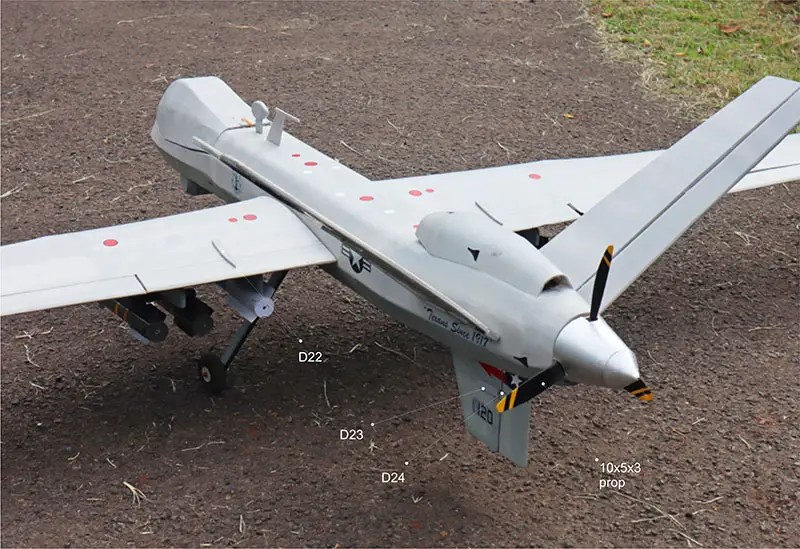
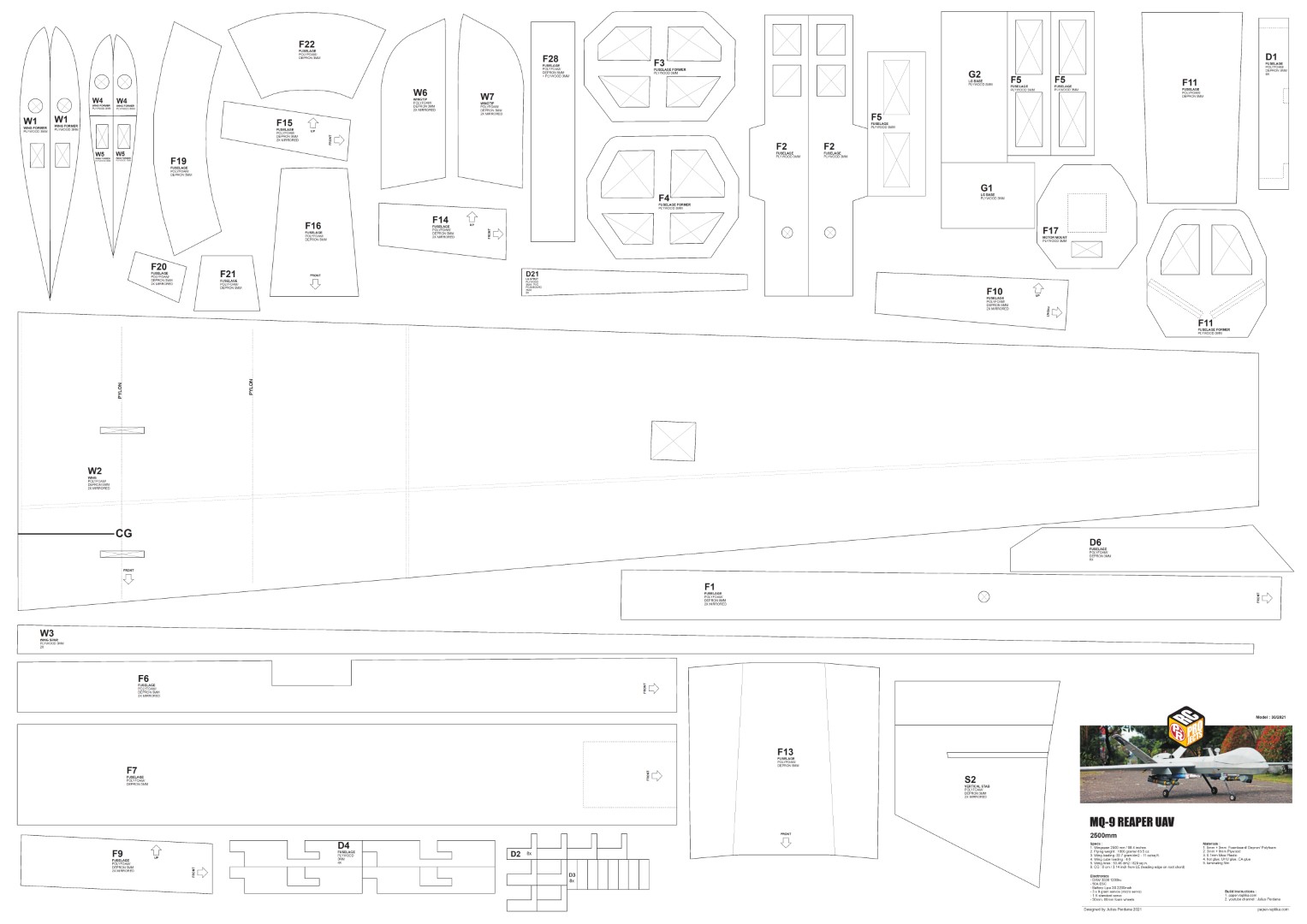
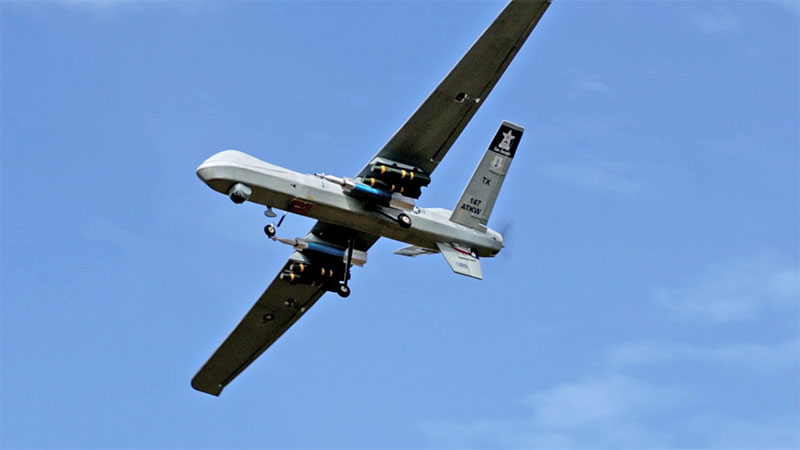
Images Source: Paper Replica MQ-9 Reaper Webpage.
Quoting Julius from his website “This is the first time I have made a glider like model aircraft. I build and make the plans for this MQ-9 Reaper because there are many requests for this UAV drone and it looks cool with all bombs and missiles it can carry. Learning from many previous models on Youtube videos, I decided to make the size of it with 2500mm wingspan, to give lighter wing loading. I enlarged the wing area almost doubled and also made the stabilizers a bit bigger then the scale for maintaining stabilization. Surprisingly it takes off without any issue and fly very stable and floating.”
- MQ-9 Reaper Foamy RC Model Specifications:
- Aircraft Type: Electric Powered Foamy Semi-Scale Military
- Flight Performance Category: General Sport
- Scale: 1/10th approx.
- Wing Span: 2,500 mm / 98.4″
- Flying weight : 1,800 grams/ 63.5 oz
- Wing loading :33.7 gram/dm2 - 11 oz/sq.ft.
- Wing cube loading : 4.6
- Wing Area : 53.46 dm2 / 829 sq.in.
- Center of Gravity Location: 80 mm / 3.14″ from wing LE (leading edge on root chord)
- Required No. of Channels: 5 - Throttle, Rudder/NLG Steering, V-Tail Elevators, and Ailerons
- Landing Gear: Tri-cycle Gear
- Electronics Needed:
- Motor: DXW 3536 1,200kv (or similar 400 watt)
- 50A ESC
- 9x7 3-bladed pusher prop
- Battery: LiPo 3S 2,200mah
- 3 each 9 gram servos (micro servo)
- 1 each standard servo
- 50mm NLG, and 2 each 60mm MLG foam wheels
- Materials Needed:
- 3mm and 5mm Foamboard/ Depron/ Polyfoam
- 3mm and 9mm Plywood
- 0.1mm Mica Plastic
- hot glue, UHU glue, CA glue
- heat shrink laminating film
- Tools Needed:
- X-Acto Knife
- steel straight edge/ruler
- Hot glue gun
- Heat gun
- Covering iron
The MQ-9 Reaper RC model in this months BOTM Edition can be built from a set of free full size plans that are available @: Paper Replica MQ-9 Reaper Webpage, or the RC-Plans MQ-9 Reaper Webpage.
As you can see from one of the plan sheets shown above, all the various model parts are clearly labeled indicating the part number, material required, and the number of each needed. The model construction is straight forward, requiring only simple hand tools, inexpensive materials, and all the assembly steps are clearly presented in the build instructions provided by Julius. In addition, he has provided a step by step YouTube build video which can be viewed from his webpage, or you can use this link: DIY Build MQ-9 Reaper UAV Drone. He even included a nice decal sheet to print all the decals needed from your ink jet printer.
After watching the YouTube flight video MQ-9 Reaper RC Camera View provided by Julius, I would have to say his model seems very easy to fly and it looks very nice in the air with his ordnance models hanging below the wings.
For those of you who might want to try a 3D printed MQ-9 Reaper RC model, check out one I found on Cults 3D website @: MQ-9 Predator Reaper RC semi-scale. This looks to be a nice model with a Wingspan of 3,353mm/132in; Length of 1,851mm/72.87in; Height of 577.75mm/22.75in.; and required receiver channels of 5-8 depending on your setup for Aileron/Elevator/Rudder/Gear/Flaps.
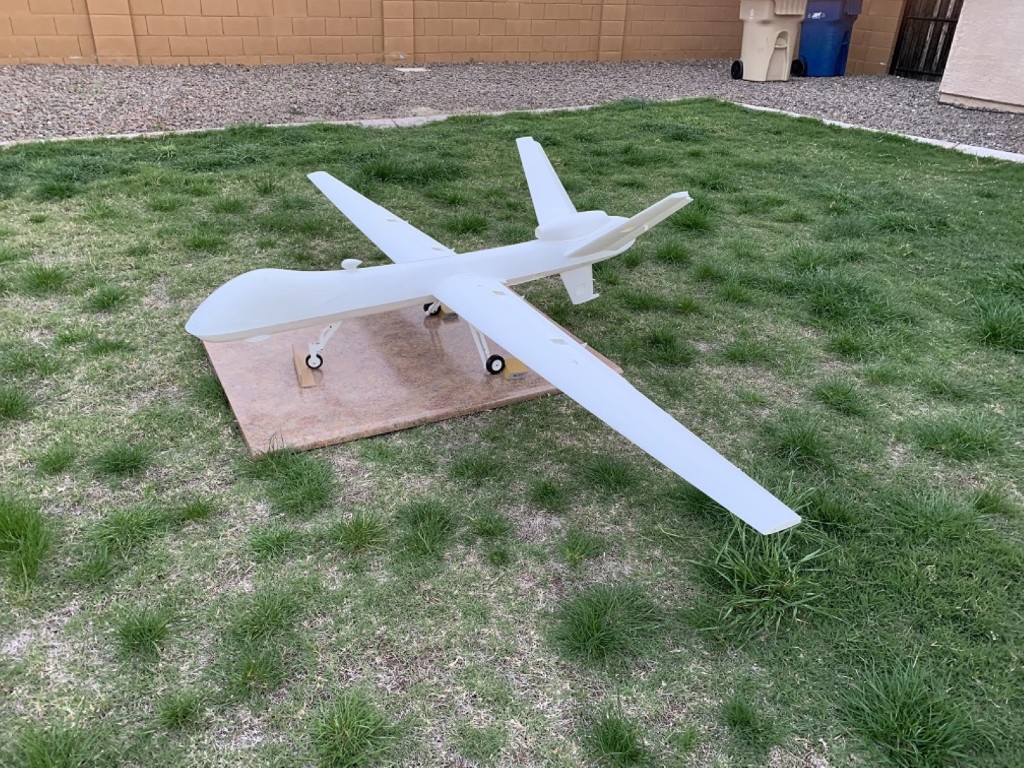
I hope you have enjoyed this months selection, and just maybe, I have spurred some interest in trying your hand at building an RC model airplane.
Until next month - Keep the “Foamy???“ Dust Flying!!
Build of the Month Series - June 2026 Edition
I hope you enjoyed last months BOTM Edition on the Douglas A-26 Invader. If you have an RC model that you would like to see featured in this section or feel others may find interesting, please let me know and I will make every attempt to find scratch build plans, images, and maybe even a published build article, which I will then post in a future edition. Just send me an email @: Build of the Month.
Ok, now lets see what I have for the month of June 2026. How about we get back to something that is a very easy and fast to build RC model; can be powered using Glow fuel, electric, or even flown as a glider; can be flown at small fields and is easy to transport in your car; and for those that don't want to try a scratch build, the RC model is available to purchase as a very nice kit with excellent plans and instructions. Given these requirements, this month features the Andy Clancy Yard Bee, another great model from Andy Clancy Aviation.
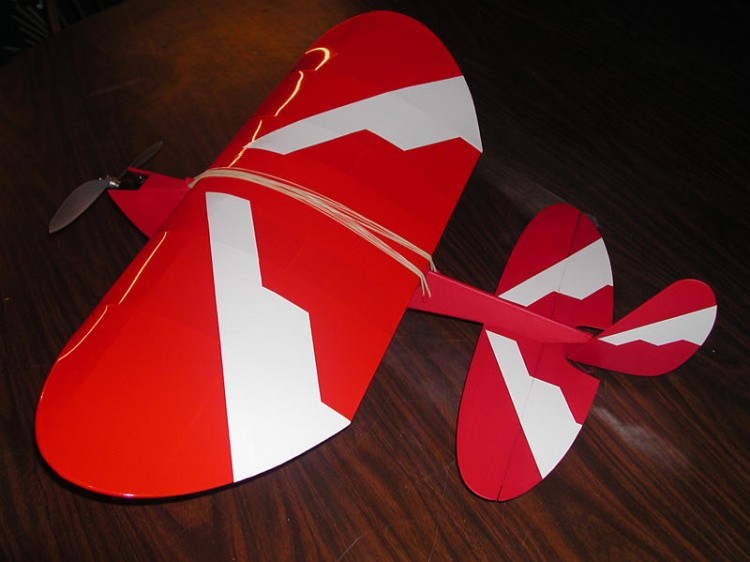
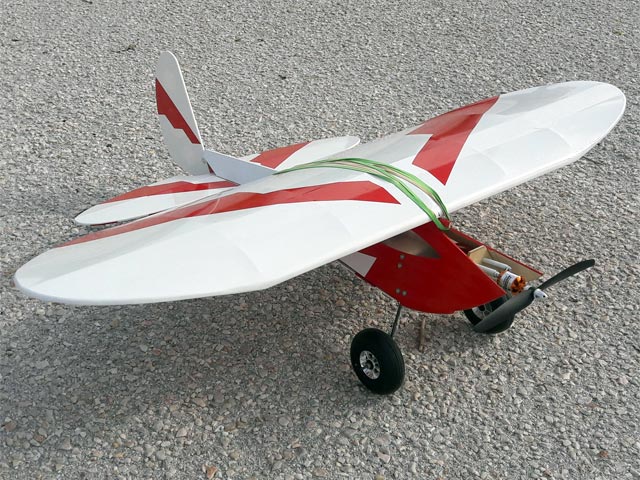
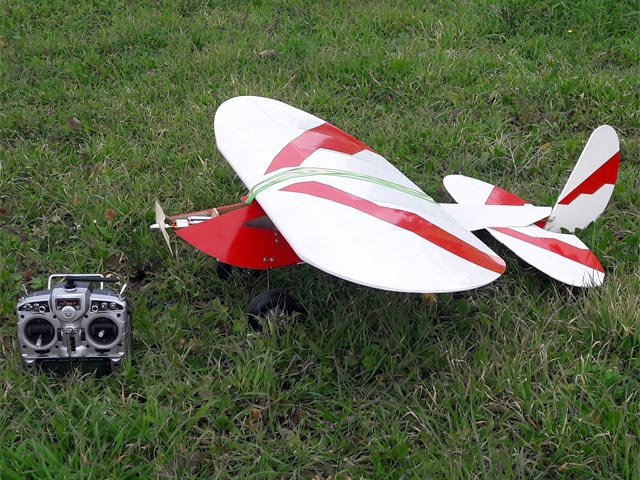
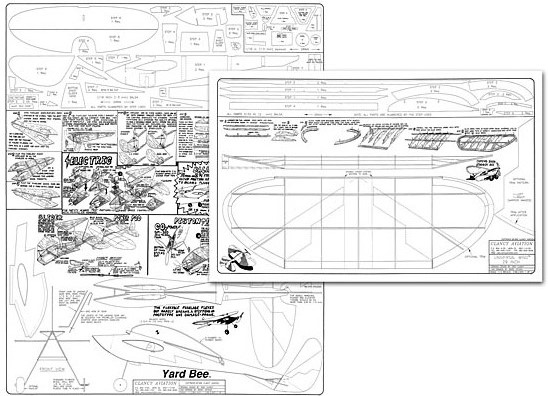
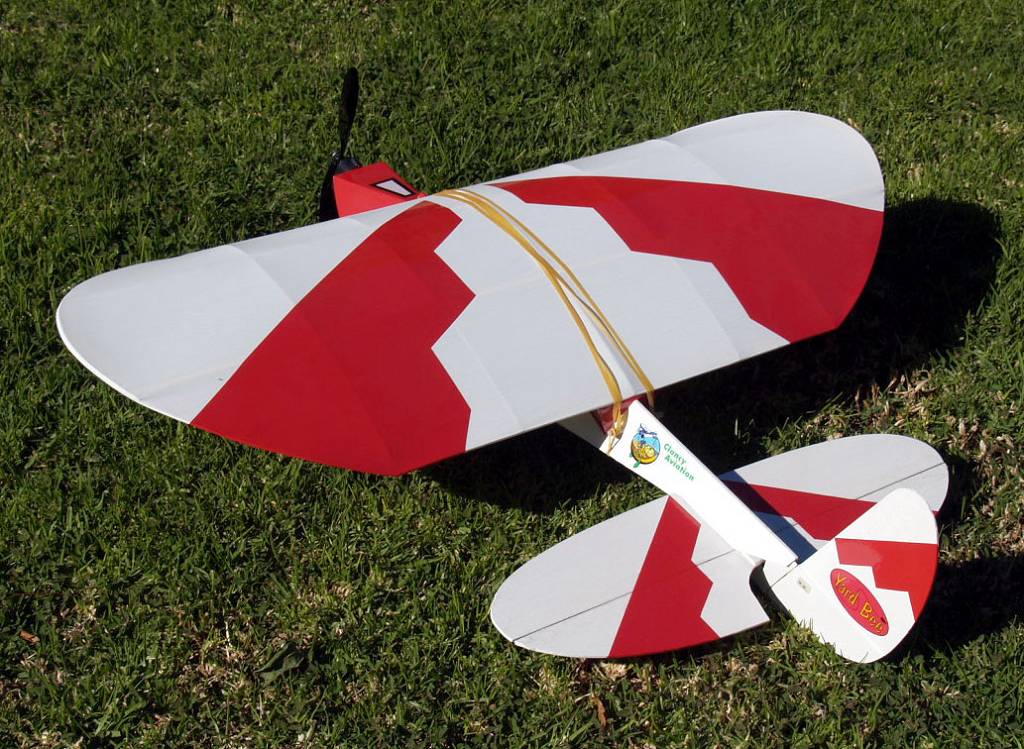
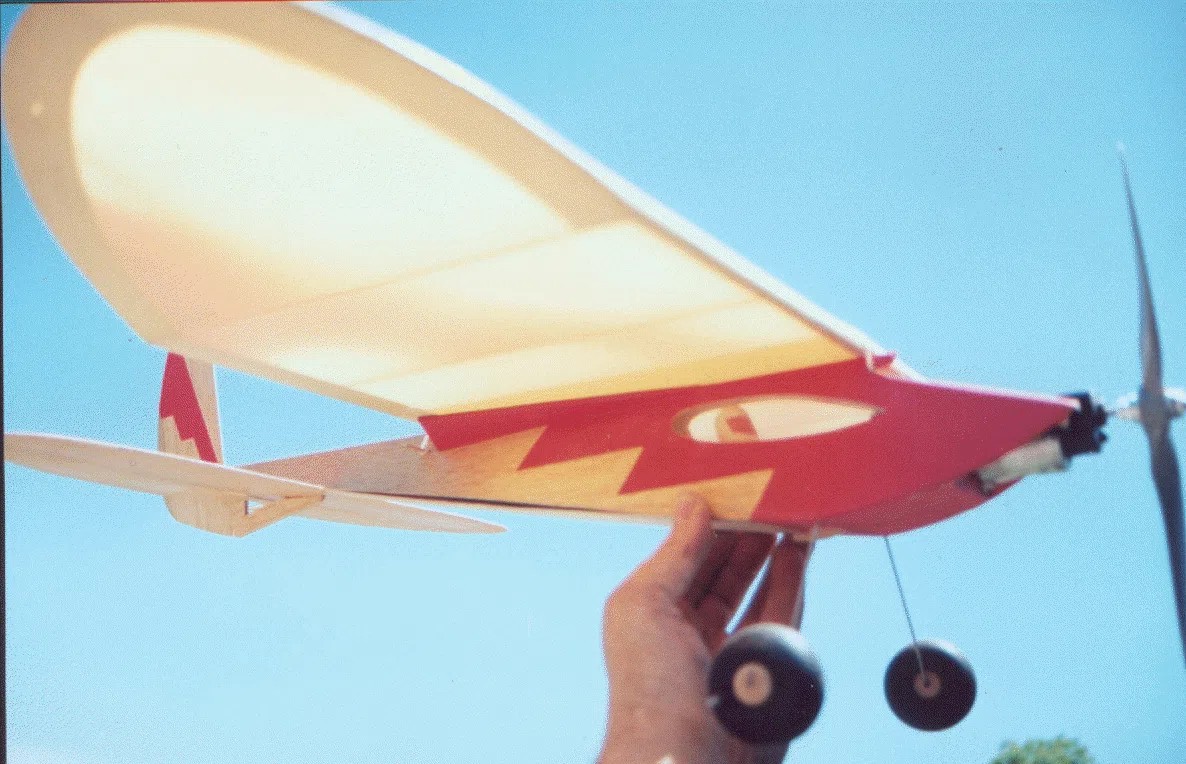
Images Source: Andy Clancy Designs Gallery Webpage, and Outerzone Yard Bee Webpage.
This highly maneuverable slow flying RC model plane flies just like its bigger brother the Lazy Bee. You know: Oversized control surfaces, hands-off stability, extremely low minimum flying speed, and easy aerobatics. It can be powered by Glow fuel engines from as little as .010 or up to .10 size, or the equivalent size electric power. It can be flown in very small places because it has a very low wing loading and oversize control surfaces.
- Andy Clancy Yard Bee Specifications:
- Aircraft Type: Park Flyer
- Flight Performance Category: General Sport
- Wing Span: 29″
- Wing Chord: 10″
- Total Wing Area: 270 sq. in. (approx.)
- Wing Location: Top-Fuselage Wing
- Airfoil: Flat Bottom
- Fuselage Length: 21.25″
- Fuselage Width: 3.35″
- Horizontal Stabilizer Span: 16.5″
- Horizontal Stabilizer Area: 69 sq. in.
- Vertical Stabilizer Height: 7.25″
- Center of Gravity Location: 2.75″ (70mm) back from wing leading edge
- Required No. of Channels: 3 - Throttle, Rudder, and Elevator
- Landing Gear: Bent 1/16″ (1.5mm) Music Wire Tail Dragger
- Ready to Fly Weight: 6-12 oz. depending on power system selection
- Glow Fuel Engines: .010 or up to .10 cu. in. two-stroke
- Fuel Tank Size: 2 oz. Sullivan Flex Tank
- Electric Powered: Output of 40-200 watts, 11-40 Amp ESC, 2-cell 450 mah LiPo pack or 3-cell LiPo pack sized 850-1,500 mah.
The Yard Bee RC model in this months BOTM Edition can be built from a set of plans that are available @: AeroFred Yard Bee webpage, or the Outerzone Yard Bee webpage.
Note as of 2024, a new kit of the Yard Bee (all laser-cut interlocking parts) is available from Andy Clancy Designs. The plans referenced above are the old 1999 Yard Bee kit plan.
After a quick review of the Yard Bee plans I found that as with all the Andy Clancy plans, the Yard Bee is a straight forward, quick and simple build that will not only require minimal materials and hardware, but will require little prior scratch build experience.
You may want to take a few minutes and review a 150% Yard Bee Build Log on: RCGroups. It contains an interesting video where the Yard Bee (in the image below) is viewed from a quad copter during the flight.
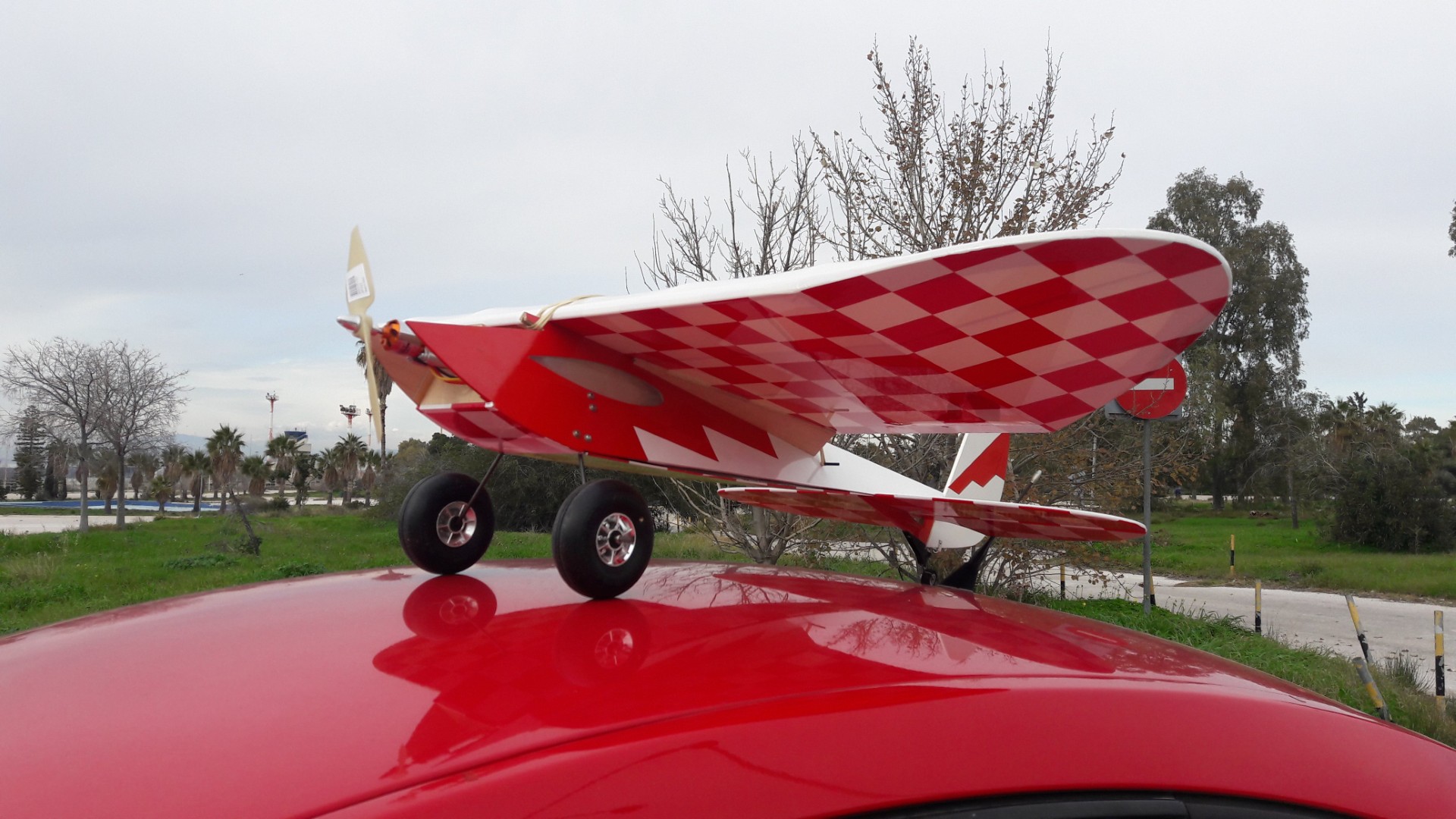
Image Source: RCGroups.
I hope you have enjoyed this months selection, and just maybe, I have spurred some interest in trying your hand at building an RC model airplane.
Until next month - Keep the Balsa Dust Flying!!!
Build of the Month Series - May 2026 Edition
I hope you enjoyed last months BOTM Edition on the DG-600 Jetpower. If you have an RC model that you would like to see featured in this section or feel others may find interesting, please let me know and I will make every attempt to find scratch build plans, images, and maybe even a published build article, which I will then post in a future edition. Just send me an email @: Build of the Month.
Ok, now lets see what I have for the month of May 2026. During my search for my March 2026 BOTM Edition, there was another aircraft that met the criteria of a military aircraft from the “post WW-II” period, had to have twin engines, or more, and something that had several RC model scratch build plans to select from. Given these same requirements, this month features the Douglas A-26 Invader, an American twin-engined light bomber and ground attack aircraft.
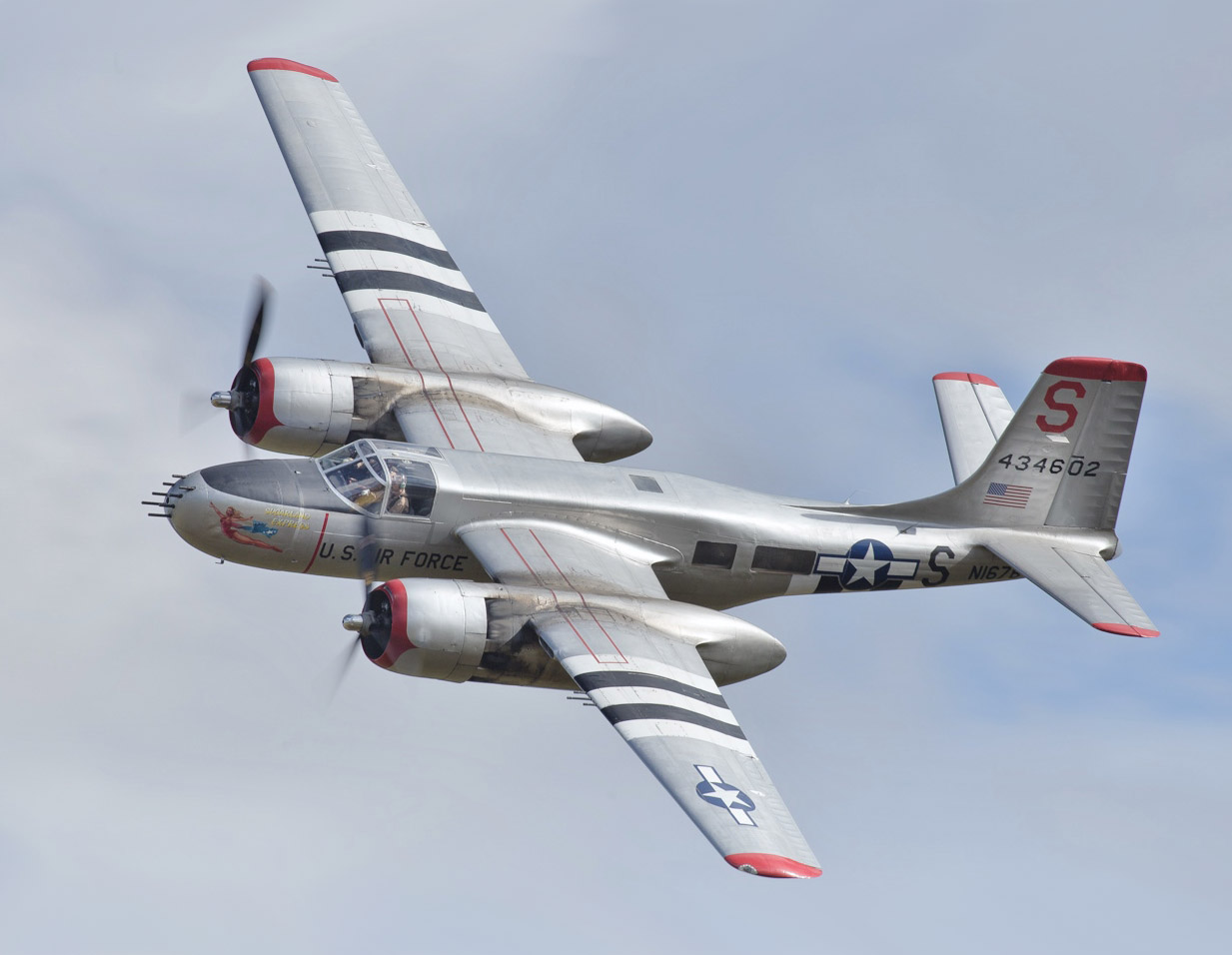
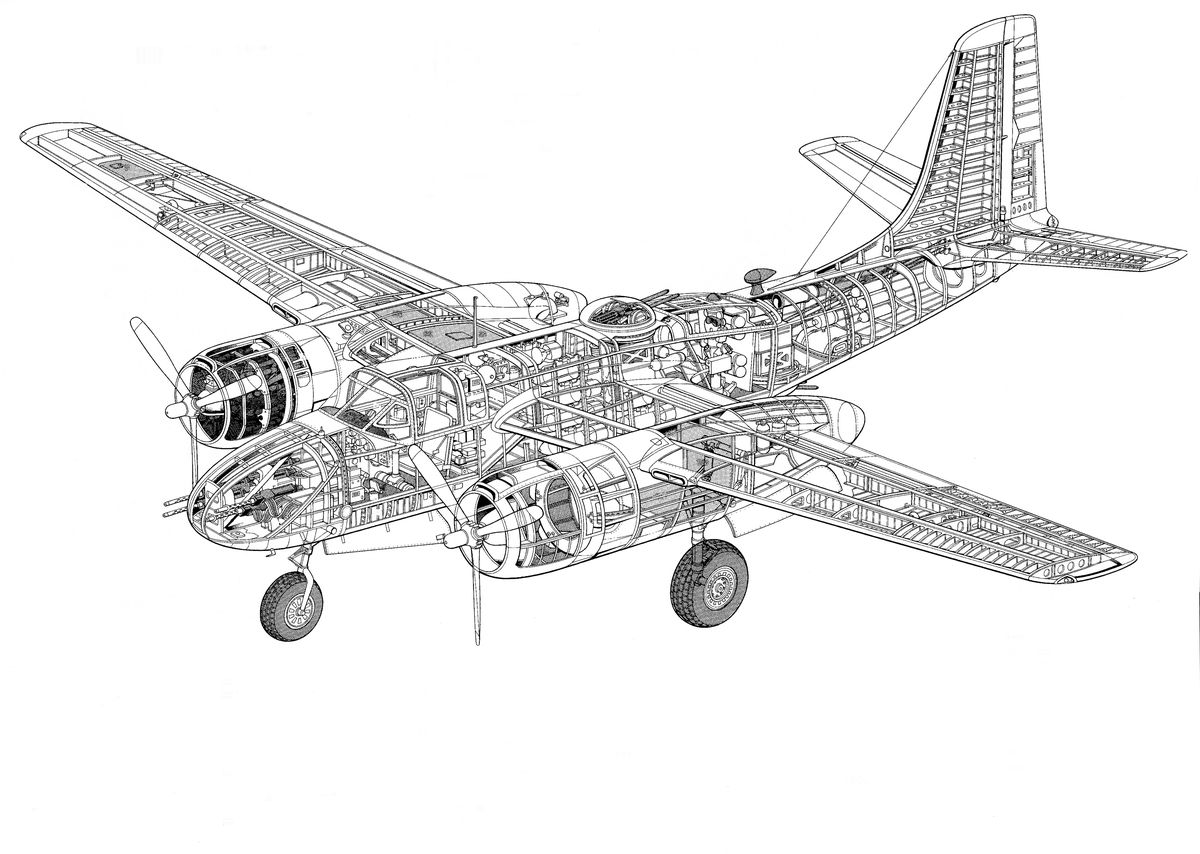
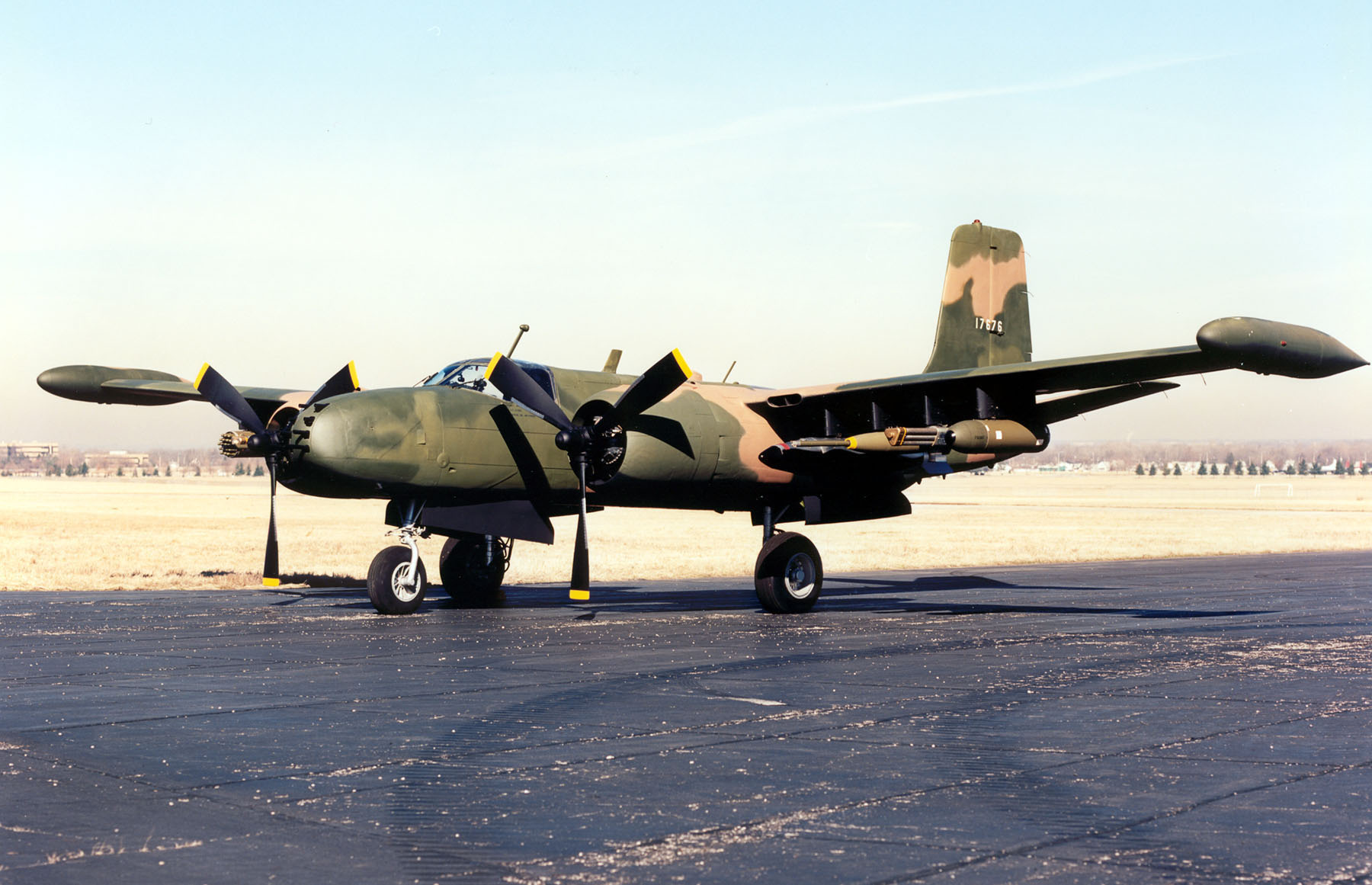
Images Source: Douglas A-26 Invader Webpage.
First, a little history on the actual Douglas A-26 Invader. The Douglas A-26 Invader (designated B-26 between 1948 and 1965) is an American twin-engined light bomber and ground attack aircraft. Built by Douglas Aircraft Company during World War II, the Invader also saw service during several major Cold War conflicts. A limited number of highly modified United States Air Force aircraft served in Southeast Asia until 1969. Not only was it a fast aircraft capable of carrying a large bomb load, but it could also be fitted to produce a formidable ground-attack aircraft.
The Counter Invader was a highly modified version of the Douglas A-26 Invader, a World War II attack bomber. Redesignated B-26 in 1948, the Invader served again during the Korean War (1950-1953), mainly as a night intruder against North Korean supply lines. It was removed from service in 1958, but in 1961 the USAF recalled many Invaders for use as tactical bombers in Southeast Asia. Combat duty and two decades of wear took their toll, and in 1964 the B-26s again were removed from service.
In 1966 the old bomber was resurrected once more when the improved B-26K Counter Invader returned to Southeast Asia for ground-attack missions along the Ho Chi Minh Trail. Modified by On Mark Engineering, the B-26K had a rebuilt fuselage and tail, strengthened wings, improved engines, reversible propellers, wing-tip fuel tanks and other refinements. Redesignated A-26As, Counter Invaders remained in Southeast Asia until 1969 and retired from USAF service.
- Actual Douglas A-26 Invader Specifications:
- Crew: 3
- Wingspan: 70 ft (21 m)
- Length: 50 ft (15 m)
- Height: 18 ft 6 in (5.64 m)
- Wing area: 540 sq ft (50 m2)
- Airfoil: NACA 65-215
- Empty weight: 22,370 lb (10,147 kg)
- Gross weight: 27,600 lb (12,519 kg)
- Max takeoff weight: 35,000 lb (15,876 kg)
- Fuel capacity: 925 US gal (770 imp gal; 3,500 L) normal + optional 675 US gal (562 imp gal; 2,560 L) ferry tank in the bomb bay; Oil capacity 60 US gal (50 imp gal; 230 L) in two nacelle tanks
- Powerplant: 2 × Pratt & Whitney R-2800-27, -71, or -79 Double Wasp 18-cylinder air-cooled two-row radial piston engines, 2,000 hp (1,500 kW) each for take-off
- Propellers: 3-bladed Hamilton Standard Hydromatic, 12 ft 7 in (3.84 m) diameter constant-speed fully-feathering propellers
- Maximum speed: 359 mph (578 km/h, 312 kn) at 16,700 ft (5,100 m) (normal rated power)
- Cruise speed: 266 mph (428 km/h, 231 kn) at 5,000 ft (1,500 m) (62.5% rated power)
- Range: 1,600 mi (2,600 km, 1,400 nmi) without ferry tank at 5,000 ft (1,500 m) at 206 mph (179 kn; 332 km/h)
- Combat range: 700 mi (1,100 km, 610 nmi)
- Ferry range: 3,000 mi (4,800 km, 2,600 nmi) with ferry tank at 5,000 ft (1,500 m) at 210 mph (180 kn; 340 km/h)
- Service ceiling: 28,500 ft (8,700 m) ; 14,400 ft (4,400 m) on one engine
- Armament
- Guns: 6 or 8 0.50 in (12.7 mm) M2 Browning machine guns in solid, "all purpose" nose: or 2 × 0.50 in (12.7 mm) M2 machine guns in glass "bombardier" nose
- Up to 8 × 0.50 in (12.7 mm) M2 machine guns paired in four optional under wing pods: or 3 × 0.50 in (12.7 mm) M2 machine guns in each outer wing panel
- 2 × 0.50 in (12.7 mm) M2 machine guns in remote-controlled dorsal turret
- 2 × 0.50 in (12.7 mm) M2 machine guns in remote-controlled ventral turret
- Rockets: Up to 10 × 5-inch (12.7 cm) HVAR rockets on "zero length" launch pylons, five under each outer wing panel
- Bombs: Up to 6,000 lb (2,700 kg) capacity - 4,000 lb (1,800 kg) in the bomb bay plus 2,000 lb (910 kg) carried externally on underwing hardpoints
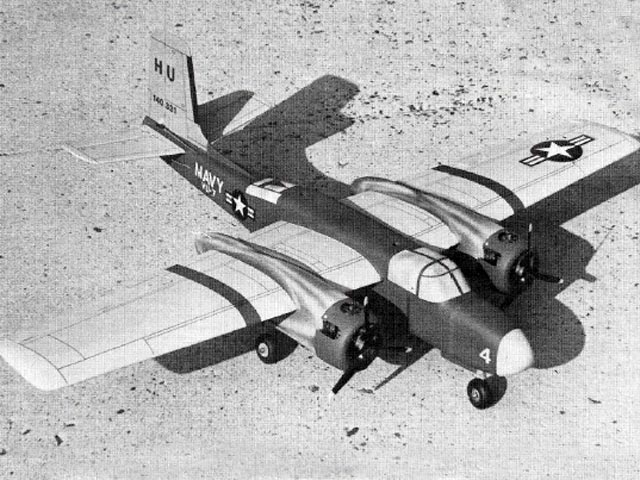
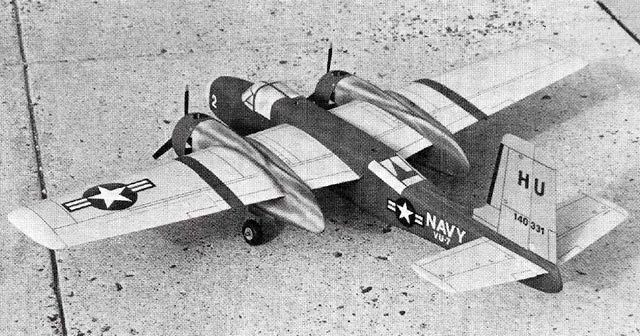
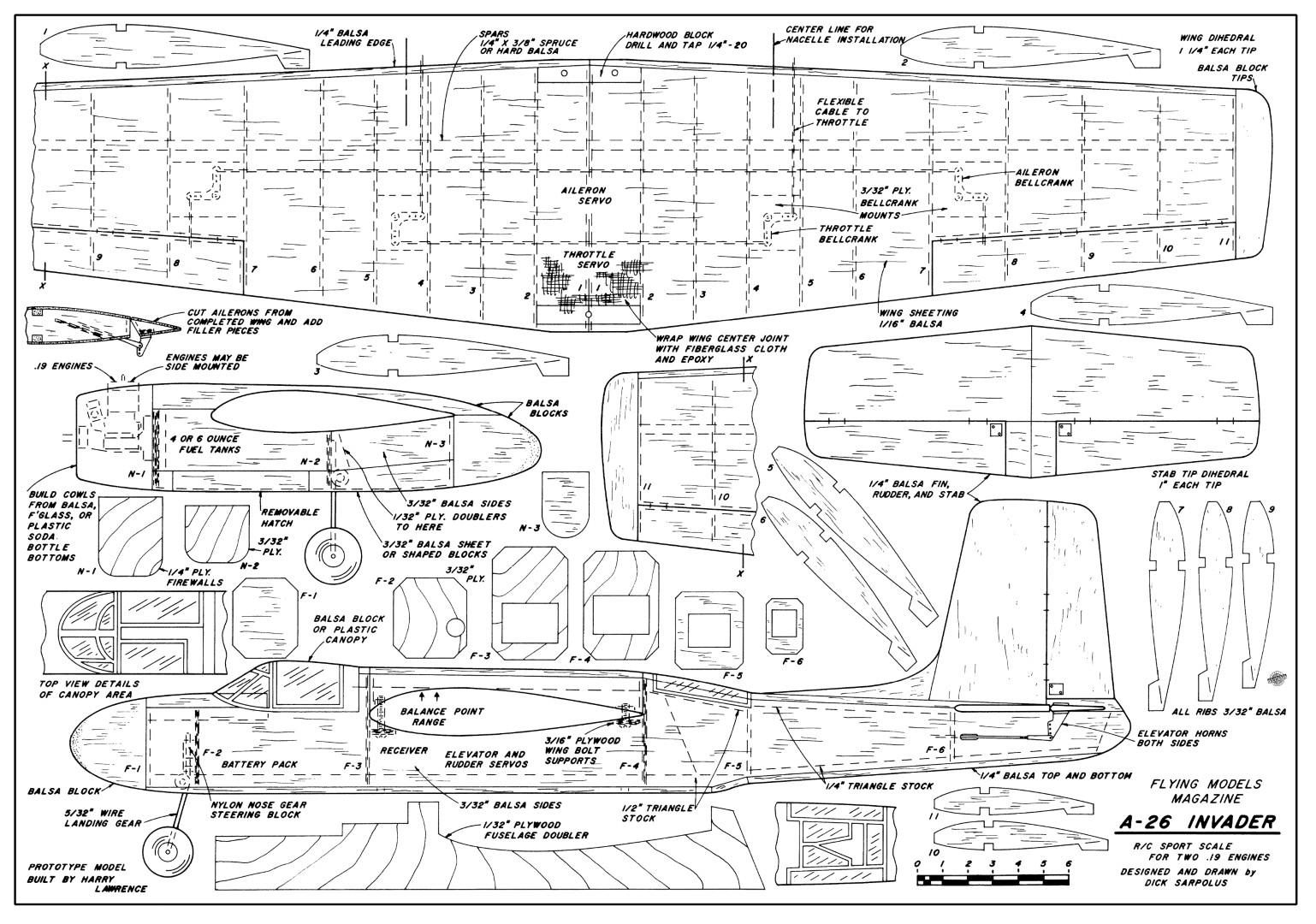
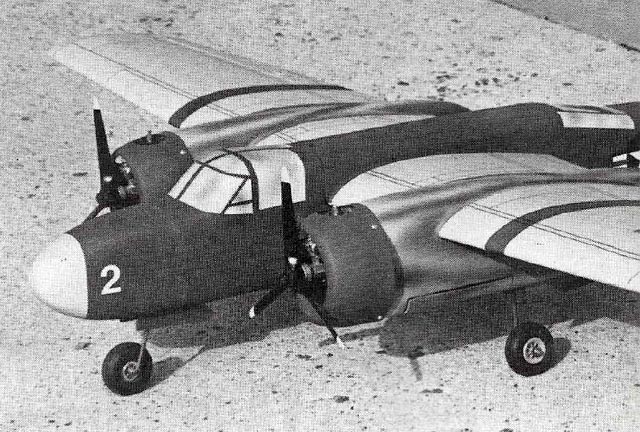
Images Source: Outerzone A-26 Invader (oz10379) webpage.
RC MODEL CONSTRUCTION: The RC 1/15th Scale A-26 Invader model featured this month was designed by Dick Sarpolus and featured in Flying Models Magazine, August 1985. The plan drawing is clean and has a complete set of fuselage formers. As quoted from Dick Sarpolus in his article: “This A-26 model is stand-pretty-far-off scale; my primary aim was to get an easy flying twin engine model, easy to build, with a reasonably scale appearance. As a scale reference source, I used the Squadron/Signal publication, A-26 Invader in Action. This book provided a good 3-view drawing along with many, many photographs of all the A-26 details and design variations.
In laying out the model design, the biggest intentional deviation from scale was an increase in the wing chord, to get more wing area while still trying to keep the overall appearance close to scale. I was concerned about the power available from two tired old OS .19s, so wanted to keep the model to a reasonable size for the engines. The result was a wingspan of 54 inches and a fuselage length of 42 inches. The wing area is 480 square inches, and a semi-symmetrical airfoil is used for good lift and flight characteristics. The root airfoil is 17% thick, and the tip is 18% thick; the result is that this wing doesn't want to stall. Horizontal stabilizer area is 19% of the wing area, maybe a little small but okay. The vertical fin area is about 11% of the wing area, more than enough for stability. I wanted plenty of vertical fin area for safe single engine flight operation.
Construction is conventional and straight-forward. The fuselage is a basic box, with tri-angle stock in the corners to permit rounding to shape. Tail surfaces are sheet balsa. Engine nacelle's are box construction with shaped blocks where needed. Engine cowlings are made from the plastic bottoms on large soda bottles; their diameters were reduced by cutting and overlapping to get the right size. The paint used, butyrate dope, didn't stick too well to the plastic cowls but they're sure low cost and easy to use. Rather than try to vacuum form a clear plastic canopy, the canopy area was shaped from balsa blocks and airbrushed to simulate the window areas.
The wings are conventional with top and bottom spars and are completely sheeted with 1/16 inch balsa. A built-up wing was used rather than foam as we felt it would be easier to install the aileron bellcranks and throttle linkages in the built-up structure. The completed wing, with two engines, seems heavy, but the fuselage seems light. The total weight of the prototype is 5.75 pounds.
The plane handles pretty much like a sport pattern model; rolls, loops, and inverted flight are easy although we don't plan to get too wild with it. Flaps are not needed as it will slow up enough for easy landings. Bomb bay doors would be a fun addition and maybe we'll try that.”
- A-26 Invader RC Model Specifications:
- Aircraft Type: Stand-Off Scale Warbird
- Flight Performance Category: General Sport Scale
- Scale: 1/15th
- Wing Span: 54″
- Wing Chord: 10.8″ (centerline) - 6.7″ (wing tip)
- Total Wing Area: 480 sq. in. (approx.)
- Wing Location: Mid-Fuselage Wing
- Airfoil: Semi-Symmetrical 1.88″ (centerline) - 1″ (wingtip)
- Wing Platform: Double Tapered
- Fuselage Length: 42″
- Fuselage Width: 3″
- Horizontal Stabilizer Span: 18″
- Horizontal Stabilizer Chord: 6″ (centerline) - 4.4″ (stab tip) (w/elevator)
- Horizontal Stabilizer Area: 90 sq. in.
- Stabilizers Airfoil Sections: Both 1/4″ Flat
- Vertical Stabilizer Height: 8″
- Vertical Stabilizer Chord: 7.3″ (base) - 5″ (tip) (including rudder)
- Center of Gravity Location: 2-2.65″ back from wing root leading edge
- Required No. of Channels: 4 - Throttle, Rudder, Elevator, and Ailerons
- Landing Gear: Tri-cycle Gear
- Ready to Fly Weight: 92 oz. depending on power system selection
- Glow Fuel Engines: Twin .19 cu. in. two-stroke
- Fuel Tank Size: 4 - 6 oz.
- Electric Powered: Output of 400 watts each, 40 Amp ESCs, 3-cell LiPo pack sized up to 3,500 mah.
The A-26 Invader RC model in this months BOTM Edition can be built from a set of plans and article that are available @: Outerzone A-26 Invader (oz10379) webpage.
Should you like a larger A-26 Invader RC model, you can build a 100″ wing span, twin .45-.60 two-stroke engines version designed by Gary Fuller from a set of plans and RCM article that are available @: Aerofred, or Outerzone.
I hope you have enjoyed this months selection, and just maybe, I have spurred some interest in trying your hand at building an RC model airplane.
Until next month - Keep the Balsa Dust Flying!!!
Build of the Month Series - April 2026 Edition
I hope you enjoyed last months BOTM Edition on the OV-10 Bronco. If you have an RC model that you would like to see featured in this section or feel others may find interesting, please let me know and I will make every attempt to find scratch build plans, images, and maybe even a published build article, which I will then post in a future edition. Just send me an email @: Build of the Month.
Ok, now lets see what I have for the month of April 2026. Once again in looking back over my past BOTM Editions, I found only one edition featuring a large glider. Therefore, I think I'm overdue in featuring a nice large glider design. In addition, how about something that is not only 3D printable but also powered. Given these requirements, this month features the DG-600 Jetpower, a 3D printed RC model glider designed and sold by 3D LabPrint. The DG-600 Jetpower model can also be found on Printables.
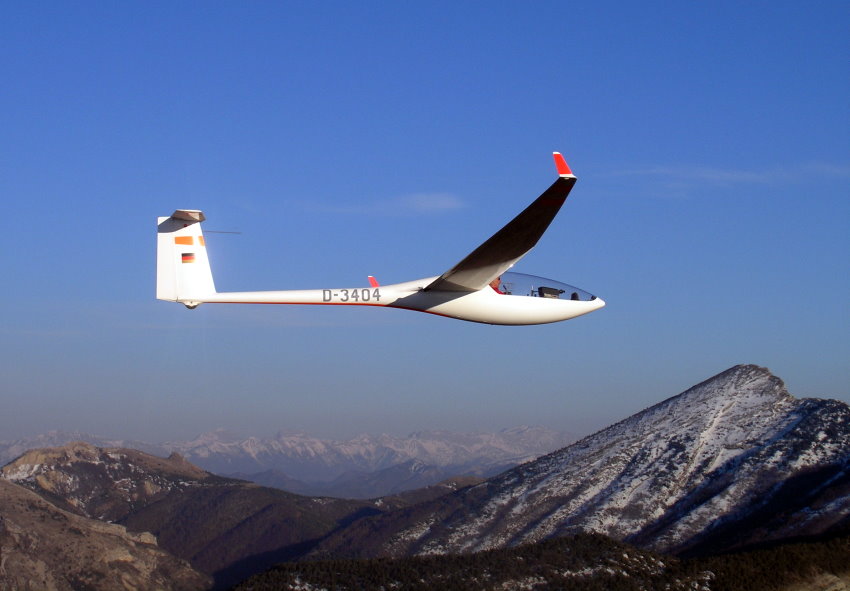
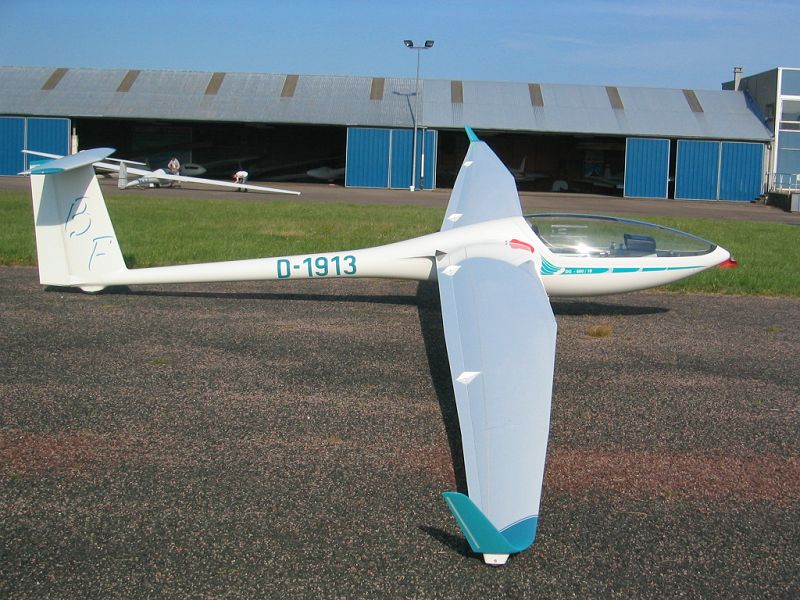
Images Source: Wikipedia Glaser-Dirks DG-600 Webpage.
First, a little history on the actual DG-600. The DG-600 is a high performance glider, manufactured by Glaser-Dirks Flugzeugbau as a successor to the DG-200 and DG-400 series of gliders in 1987. In 1991 the DG-600M with a Rotax engine and self-launching capability was released. The fuselage was based on the design of the DG-400 but with a slenderer tail boom, canopy and the instrument panel stood basically the same as on other DG gliders. The control surfaces now incorporated flaperons which serve as both flaps and aileron and the wing had a newly designed thinner airfoil and higher aspect ratio than previous types of DG gliders. Initial problems with critical slow speed behavior could be improved by the use of winglets, clip-on wings or both, but only 112 aircraft were produced until the molds were destroyed in a factory fire and the DG-800 became its successor.
- Actual DG-600 Specifications (15m wings):
- Crew: One
- Length: 6.83 m (22 ft 5 in)
- Wingspan: 15 m (49 ft 3 in)
- Height: 1.35 m (4 ft 5 in)
- Wing area: 10.95 m2 (117.9 sq ft)
- Aspect ratio: 20.55
- Airfoil: root;HQ-35; tip:HQ-37
- Empty weight: 255 kg (562 lb)
- Max takeoff weight: 525 kg (1,157 lb)
- Water ballast: 180 L (48 US gal; 40 imp gal) in two wing tanks + 7 L (1.8 US gal; 1.5 imp gal) in fin tank for trimming.
- Stall speed: 64 km/h (40 mph, 35 kn)
- Never exceed speed: 270 km/h (170 mph, 150 kn) in smooth air, 200 km/h (110 kn; 120 mph) in rough air, 200 km/h (110 kn; 120 mph) on aero-tow, 150 km/h (81 kn; 93 mph) on winch launch
- g limits: +5.8 -3.8
- Maximum glide ratio: 46
- Rate of sink: 0.56 m/s (110 ft/min)
- Wing loading: 47.94 kg/m2 (9.82 lb/sq ft) max
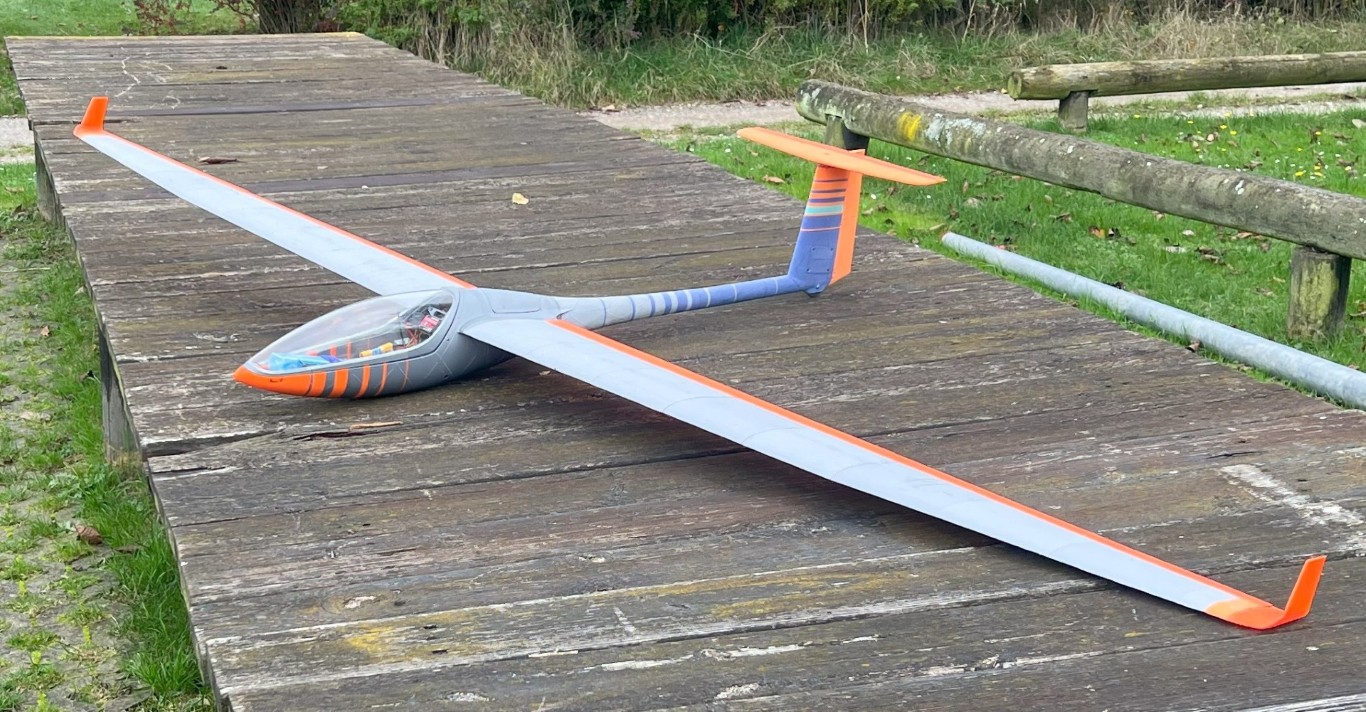
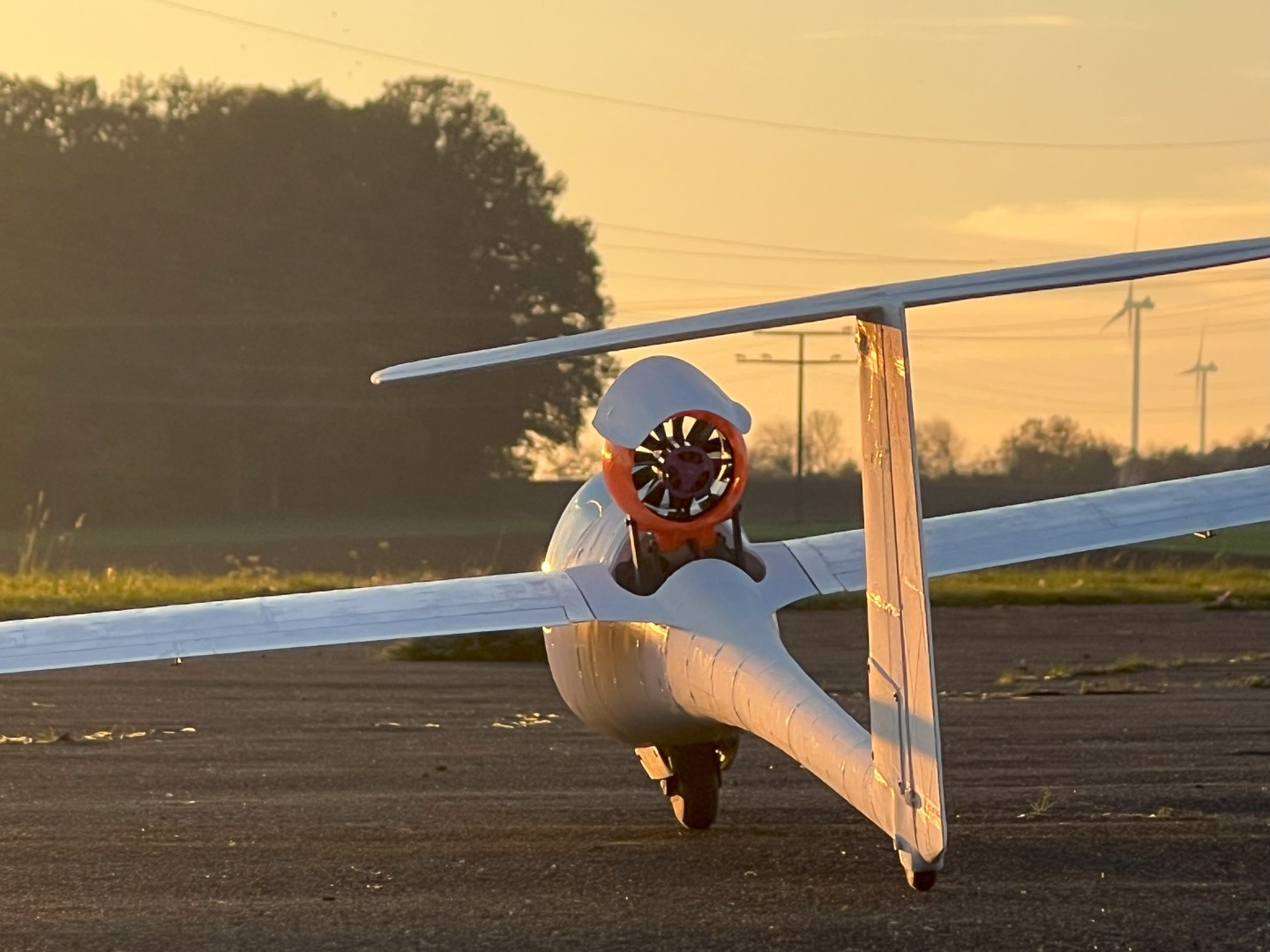
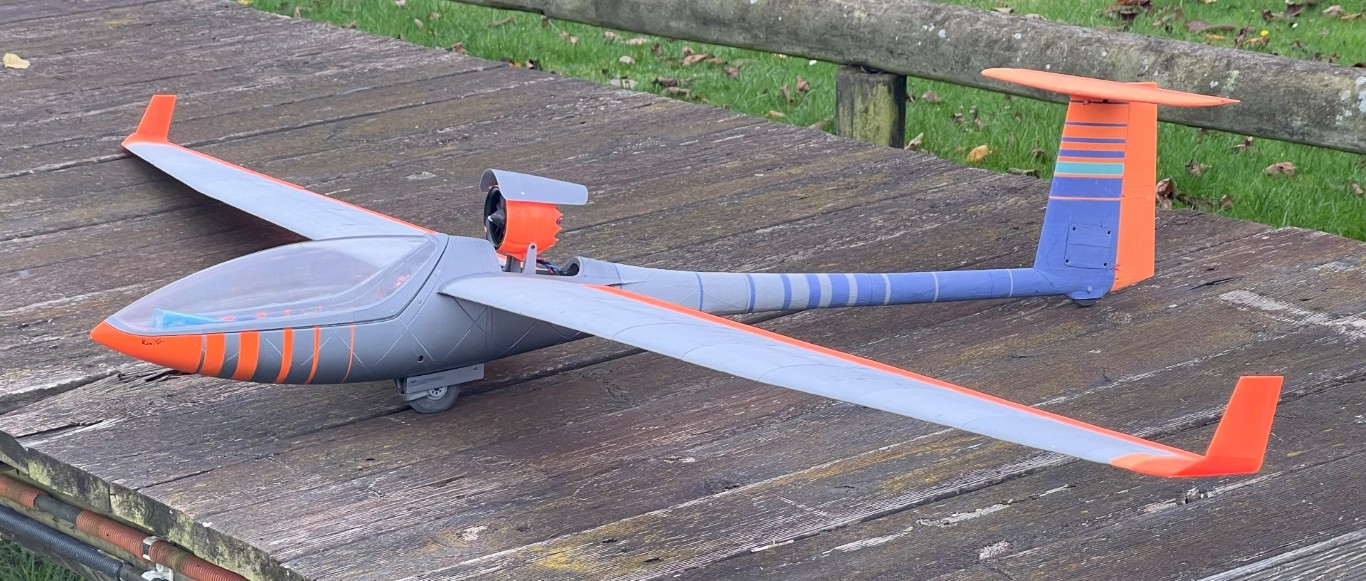
Images Source: 3D LabPrint.
The 3D LabPrint EDF powered DG-600 Jetpower glider by Martin Klöpfermodel (modeled after the DG-600M) with wingspan of 2.6m is packed full of features that will enlighten the heart of any RC-glider fan. It is intended for the more experienced pilot or advanced beginner. It comes with retractable landing gear, four servo wing for optimal thermal performance and aerobatic capabilities, flaperons, and a 50mm retractable EDF unit, that not only gives it self-starting capabilities and a good climb rate but also offers loads of fun in powered acrobatics. Equipped with a 2,600mah 4S battery you will get about 6 minutes of EDF power, but that usually does not mean your flight time! In calm conditions, it is not difficult to make 20 minutes or more just gliding, but in good ones, you can easily get to the thermals within your reach and then attempt (and possibly succeed) to fly them out. This bird likes to stay up!
With your purchase of the DG-600 package you get Prusa Slicer 3MF files with pre-configured settings (serves as a reference for settings in other slicers too), 97 STL files, and a very nice and highly detailed PDF User Guide (a.k.a. assembly manual). The DG-600 User Guide can be downloaded for free from the 3D LabPrint DG-600 Jetpower webpage.
- DG-600 Jetpower 40 RC Model Specifications:
- Aircraft Type: Powered Glider
- Flight Performance Category: General Sport
- Scale: 1:6
- Wingspan: 2,600mm
- Airframe Length: 1,180mm
- Print weight: 1,300g
- Weight fully equipped: 1,800g
- Wing profile: HQ 25/12
- Center of Gravity Location: 43mm-45mm back from wing leading edge
- No. of Channels: 9 - Throttle, Elevator, Rudder, Ailerons, Flaps, Landing Gear, and EDF Unit extension/retraction
- Additional parts needed to complete and fly the kit:
- Combination of standard PLA and lightweight PLA filaments
- 50mm EDF, 4300KV or similar
- 40A Electronic Speed Controller (ESC) or similar
- XT60 connectors
- 2,600mah 4S LiPo Battery or similar
- 16AWG wire black
- Gold Connectors
- Shrink tube
- Radio system, with at least 9 channels or more
- 12g servo MG90S (x8)
- ESP8266 micro controller as servo way extender or suitable servo with 180° travel
- 800mm servo lead extensions (x3)
- 200mm servo lead extensions (x4)
- carbon rod, 0.8mm × 3mm × 577mm
- carbon rods, 0.8mm × 3mm × 675mm (x2)
- carbon rods, 1.5mm × 6mm × 1,220mm (x4)
- carbon rods, 3mm × 10mm × 287mm (x2)
- 3mm spring steel wire, 200mm
- 4mm × 0.5mm brass tube, 200mm
- 1.0mm steel pushrods, 1000mm (x4)
- 1.2mm steel pushrod, 300mm
- 6x push rod connectors
- M2 threaded ball joint
- 10mm Velcro strip for Li-Po battery
- Rubber bands
- CA glue - medium or similar medium viscosity CA glue
- Activator for CA glue or similar
- Silicone sealant
The DG-600 Jetpower is a fully 3D printable model aircraft. The hull prints about 70% standard PLA, 30% lightweight PLA, and a little FlexiLight for the tires. Gear and EDF mechanics are 3D printed as well, and you will have to get not much more than some carbon rods, some (okay… many) tiny DIN screws, steel wires, and some brass tubes next to your radio equipment to complete the build.
Finally, for the scale enthusiasts that want to show some cockpit, the set contains data and a guide to producing your own clear canopy (access to a resin printer is recommended), or you may want to order one from the IFA Supply Store, where you will also find the screws, drives, complete sets and more.
You may also want to take a few minutes to view a couple nice YouTube videos from the Institute of the flying Arts on the DG-600, and DG-600 Jetpower - Maiden Flight.
I hope you have enjoyed this months selection, and just maybe, I have spurred some interest in trying your hand at building an RC model airplane.
Until next month - Keep the Balsa Dust Flying and the 3D Printer Humming!!!
Build of the Month Series - March 2026 Edition
I hope you enjoyed last months BOTM Edition on the Sky Ranger 40. If you have an RC model that you would like to see featured in this section or feel others may find interesting, please let me know and I will make every attempt to find scratch build plans, images, and maybe even a published build article, which I will then post in a future edition. Just send me an email @: Build of the Month.
Ok, now lets see what I have for the month of March 2026. Since I first started my BOTM Series back in August 2023, I have not selected a military aircraft from the “post WW-II” period. So, how about something from that period and lets add that it must have twin engines, or more. Additionally, something that has several plans for not only a balsa and ply or foam scratch build, but also a selection of 3D printable models since I have jumped into that method of RC model builds. Given these requirement, this month features the OV-10 Bronco, a military aircraft produced by North American Rockwell that is easily recognized by its combination of the twin booms, with a horizontal stabilizer that connects them.
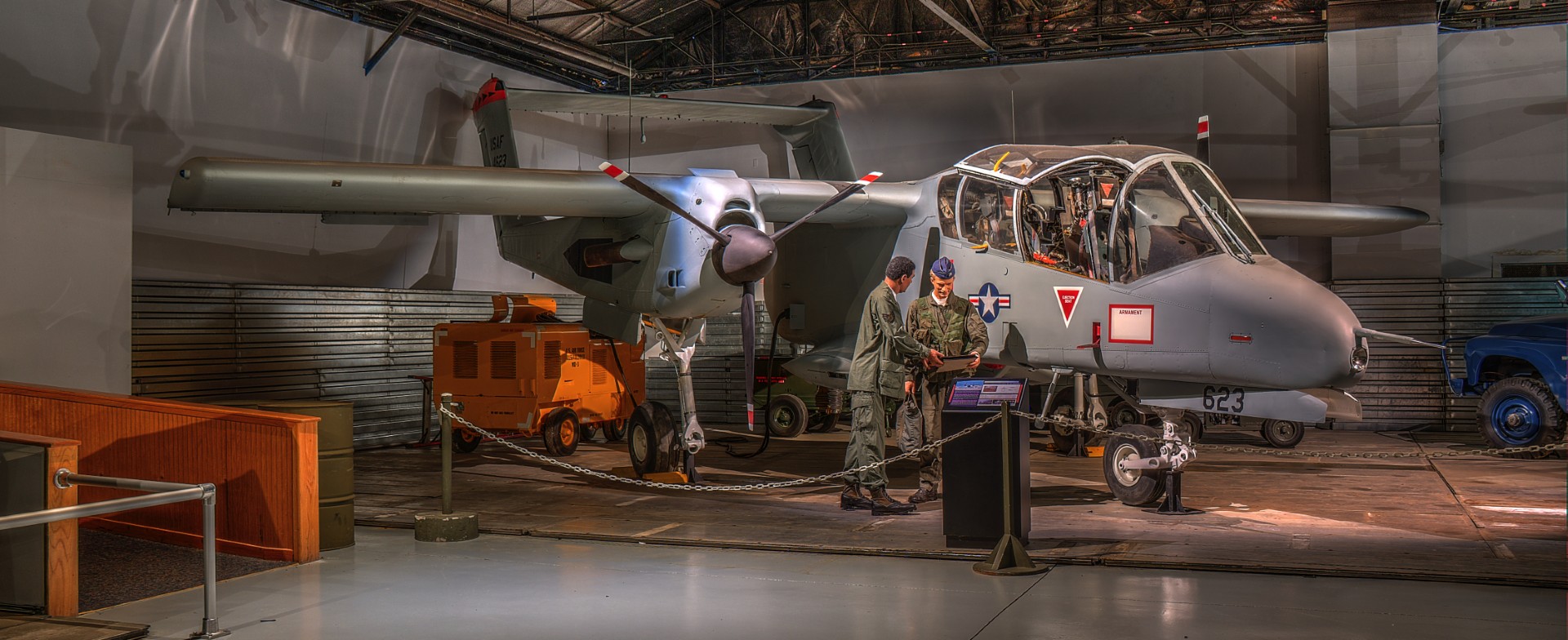
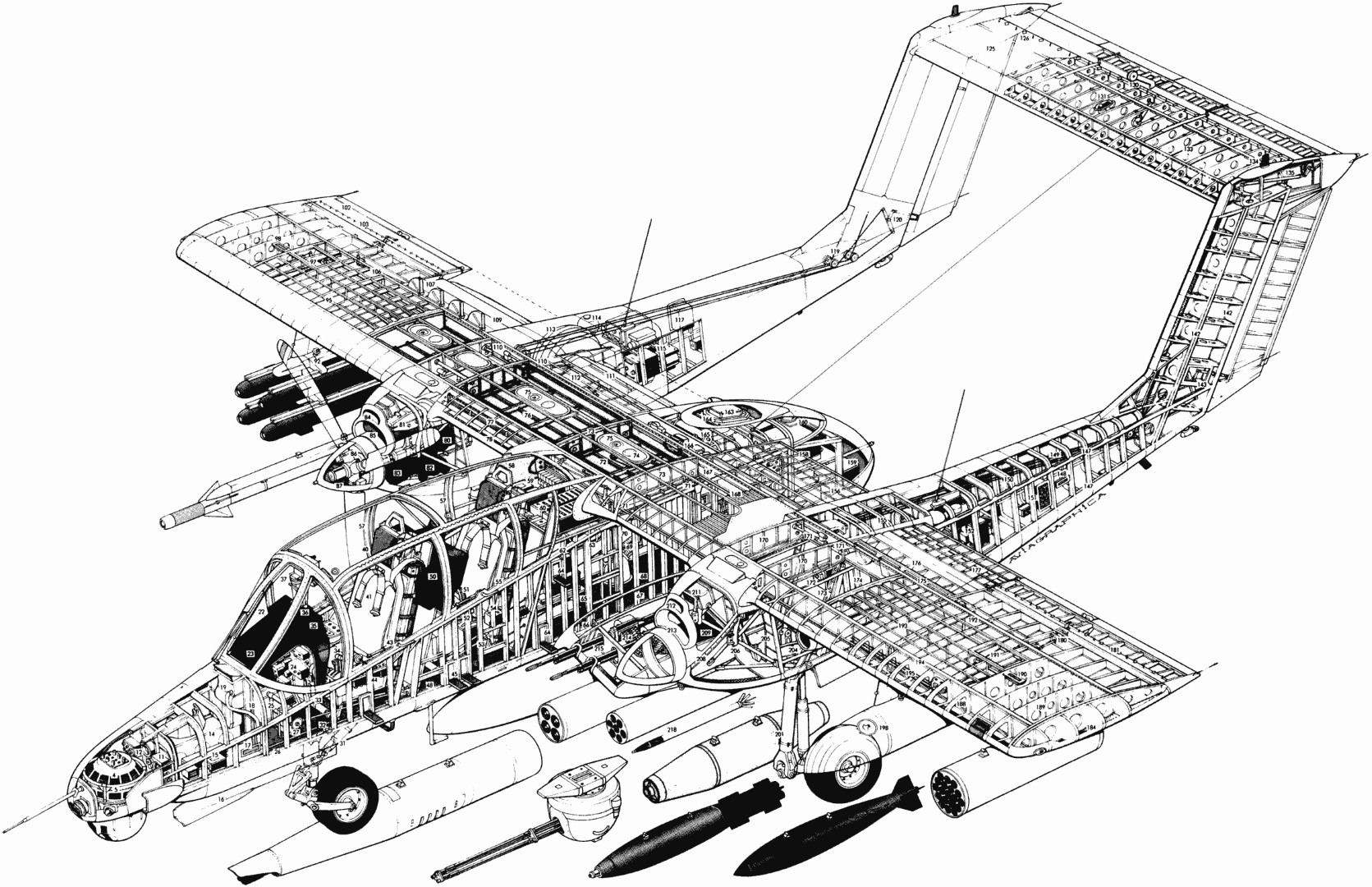
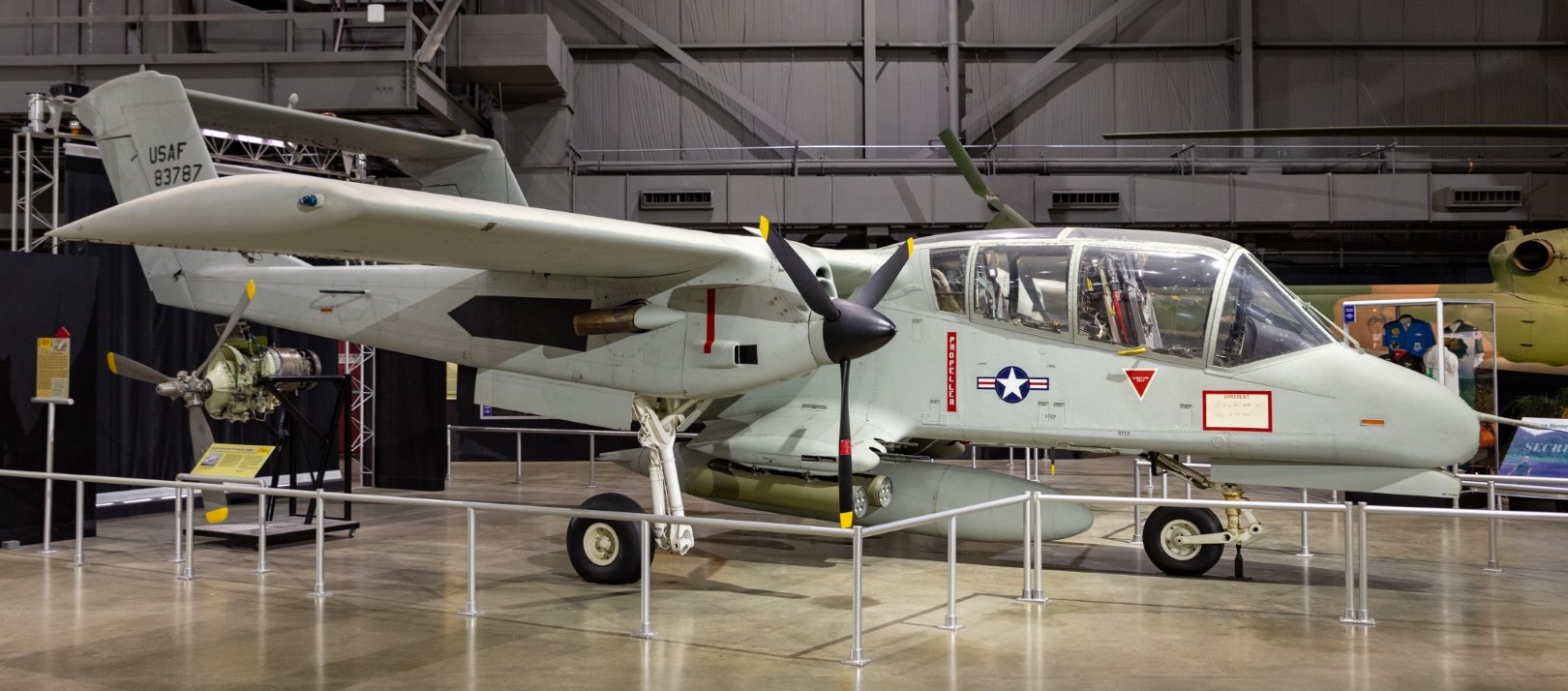
Images Source: Wikipedia OV-10 Webpage, and Cutaway Drawings OV-10 Webpage.
The North American Rockwell OV-10 Bronco is an American twin-turboprop light attack and observation aircraft that was developed in the 1960s. Purpose-built for for counter-insurgency (COIN) combat, Forward Air Control (FAC) and intended to fly off unimproved short fields with its high lift narrow wingspan wings. The Bronco performed observation, helicopter escort, armed reconnaissance, utility light air transport, and limited ground attack. The Bronco has also performed aerial radiological reconnaissance, tactical air observation, artillery and naval gunfire spotting, airborne control of tactical air support operations, and front-line, low-level aerial photography. In recent times, Broncos continue service as fire fighting aircraft and flying specialized evaluation missions against ISIS.
The OV-10 has a central nacelle containing pilots and cargo, and twin booms containing twin turboprop engines. The visually distinctive feature of the aircraft is the combination of the twin booms, with the horizontal stabilizer that connects them. The aircraft's design supported effective operations from forward bases. The OV-10 can perform short takeoffs and landings, including on aircraft carriers and large-deck amphibious assault ships without using catapults or arresting wires. Further, the OV-10 was designed to take off and land on unimproved sites. Repairs could be made with ordinary tools. No ground equipment was required to start the engines. If necessary, the engines could operate on high-octane automobile fuel with only a slight loss of power.
The aircraft had responsive handling and could fly for 5 1/2 hours with external fuel tanks. The cockpit had extremely good visibility for a tandem pilot and co-pilot, provided by a wrap-around “greenhouse” that was wider than the fuselage. North American Rockwell custom ejection seats were standard, with many successful ejections during service. With the second seat removed, it can carry 3,200 pounds (1,500 kg) of cargo, five paratroopers, or two litter patients and an attendant.
The OV-10 served in the U.S. Air Force, U.S. Marine Corps, and U.S. Navy, as well as in the service of a number of other countries. In total, 81 OV-10 Broncos were ultimately lost to all causes during the course of the Vietnam War, with the Air Force losing 64, the Navy 7, and the Marines 10. The first combat USAF OV-10As arrived in Vietnam on 31 July 1968 as part of “Operation Combat Bronco”, an operational testing and evaluation of the aircraft. The test roles included the full range of missions then assigned to FAC aircraft, including day- and night-strike direction, gunship direction, bomb damage assessment, visual reconnaissance, aerial artillery direction, and as escorts for aircraft engaged in Operation Ranch Hand.
At least 157 OV-10As were delivered to the USAF before production ended in April 1969. In the late 1980s, the USAF started to replace their OV-10s with OA-37B and OA-10A aircraft. Unlike the Marine Corps, the USAF did not deploy the Bronco to the Middle East in response to the Iraqi invasion of Kuwait, as it believed that the OV-10 was too vulnerable.
The USAF retired the OV-10 on 1 September 1991. In 2012, $20 million was allocated to activate an experimental unit of two OV-10s, acquired from NASA and the State Department. Starting in May 2015, these aircraft were deployed to support Operation Inherent Resolve flying combat missions over Iraq and Syria, flying more than 120 combat sorties over 82 days. They reportedly provided close air support for Special Forces missions. The experiment ended satisfactorily, but an Air Force spokesman stated they are unlikely to invest in reactivating the OV-10 on a regular basis because of the overhead cost of operating an additional aircraft type.
- Actual OV-10 Bronco Specifications:
- Crew: Two
- Capacity: cargo compartment for personnel (no seats) or 3,200 lb (1,451 kg) of freight
- Length: 44 ft 0 in (13.41 m)
- Wingspan: 40 ft 0 in (12.19 m)
- Height: 15 ft 2 in (4.62 m)
- Wing area: 291.0 sq ft (27.03 m2)
- Airfoil: NACA 64A315[124]
- Empty weight: 6,893 lb (3,127 kg)
- Gross weight: 9,908 lb (4,494 kg)
- Max takeoff weight: 14,444 lb (6,552 kg) (overload)
- Powerplant: 2 × Garrett T76-G-420/421 turboprop engines, 1,040 shp (780 kW) each equivalent
- Propellers: 3-bladed Hamilton Standard, 8 ft 6 in (2.59 m) diameter constant-speed fully feathering propellers
- Maximum speed: 250 kn (290 mph, 460 km/h) at sea level
- Combat range: 198 nmi (228 mi, 367 km)
- Ferry range: 1,200 nmi (1,400 mi, 2,200 km) with auxiliary fuel
- Service ceiling: 30,000 ft (9,100 m)
- Rate of climb: 3,020 ft/min (15.3 m/s)
- Guns: 1 × 20 mm (0.79 in) M197 electric cannon (YOV-10D) or 4 × 7.62×51 mm M60C machine guns (OV-10D/D+)
- Hardpoints: 5 fuselage and 2 underwing
- Rockets: 7- or 19-tube launchers for 2.75 in (70 mm) FFARs/WAFARs or 2- or 4-tube launchers for 5 in (127 mm) FFARs or WAFARs
- Bombs: up to 500 lb (227 kg)
- Missiles: AIM-9 Sidewinder on wings only
Alright, lets see about building an RC model of the OV-10 Bronco. If you are like me and enjoy scratch building using balsa and plywood, then there are several plans available which you can download for free. A good simple basic build plan for someone just starting out in scratch building can be found on the Outerzone OV-10 Bronco (oz10941) webpage. This plan and resulting RC model are shown in the images below.
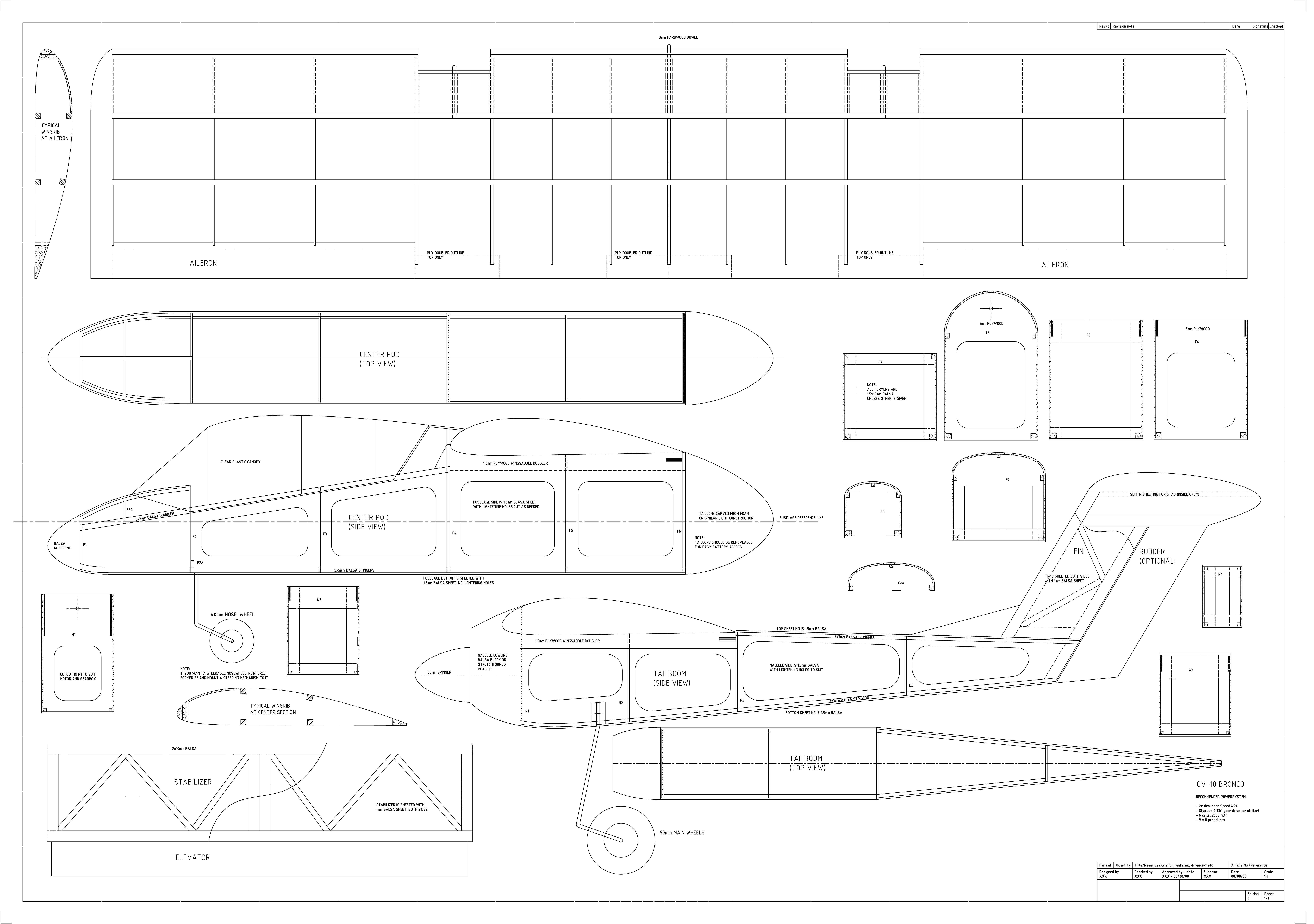
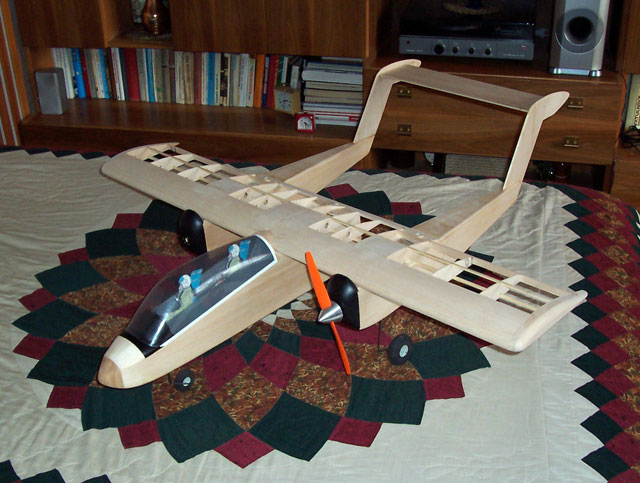
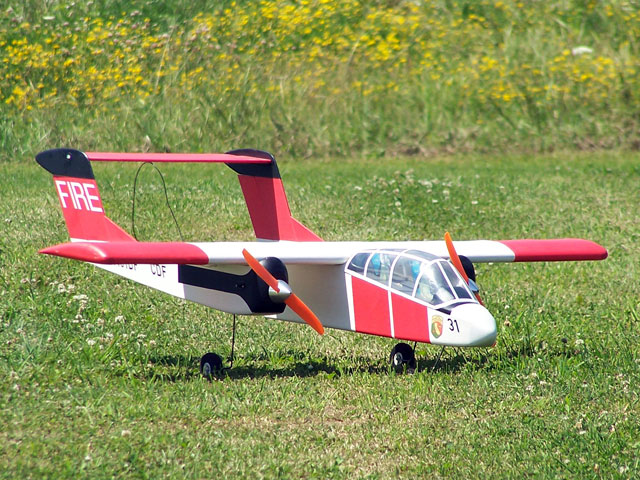
Images Source: Outerzone OV-10 Bronco (oz10941) webpage.
This model is a straightforward simple design of a 42″ wingspan, twin Speed 400 size motors electric powered OV-10 RC model. The flat bottom airfoil wing can be built directly over the plans on your workbench with no special jigs required. The centerline fuselage and twin tailbooms are a “basic box” construction using formers and sides made from balsa and ply. There are CAD DXF files provided for the builders that may want to have a laser cutting firm make up a short kit for you. The DXF files also provide you a great route if you want to scale the model to the size you want.
Looking for something larger and powered by nitro engines? Then take a look at the Outerzone OV-10A Bronco (oz8399) webpage. This is a 72″ wingspan, twin .60 sized nitro engine powered OV-10 RC model. This plan and resulting RC model are shown in the images below.
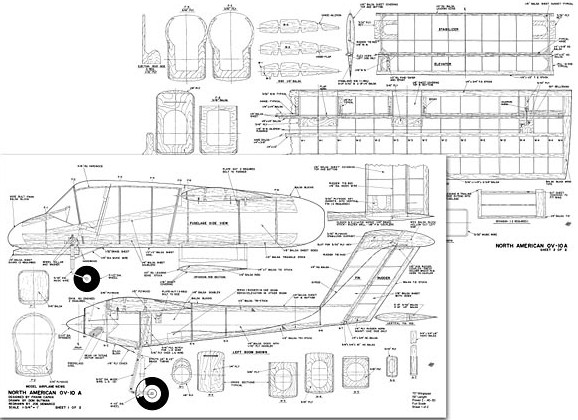
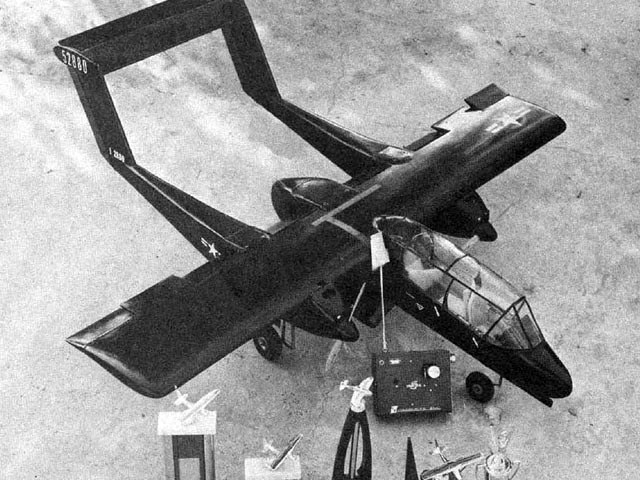
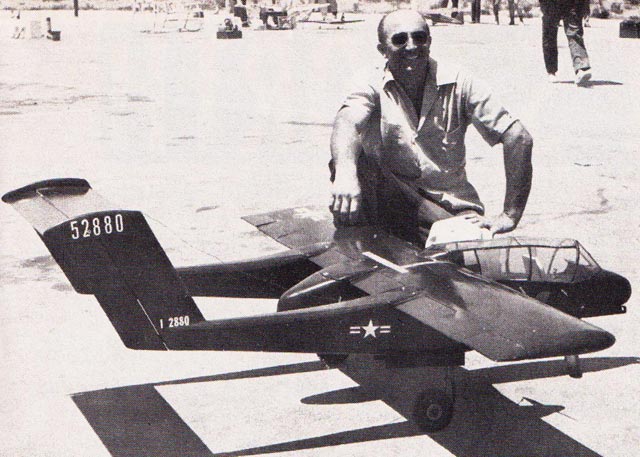
Images Source: Outerzone OV-10 Bronco (oz10941) webpage.
This OV-10 model was designed by Frank Capan and featured in the September 1968 edition of Model Airplane News. Please note - this model is for an experienced builder. While not a simple build, it will produce a nice looking RC plane, and you can not beat the sounds you get from a twin nitro powered model flying.
Lets take a look at another method of build for this RC model. How about a 6mm Depron OV-10 Bronco scratch build? If interested there is an excellent build log you must see on the RCGroups website. This build log has PDF plan files and lots of built images, like those shown below, to help you with your build. This model has a 44.5″ wingspan, powered by twin NTM Prop Drive Series 35-30 1100kv/380w motors turning 8x6 Master Airscrew CW+CCW 3-blade props.
A quote from the model designer/builder “It is a joy to fly and is very docile in the air. It handles a bit of wind easily and best of all looks fantastic in the air. I went with no landing gear or flaps for simplicity but you could add them easily. The build itself is simple although shaping the canopy and nose to achieve a scale look is a bit of a challenge. Power-wise it is fine for my taste but you could put a larger prop/motor combo and get a faster plane.”
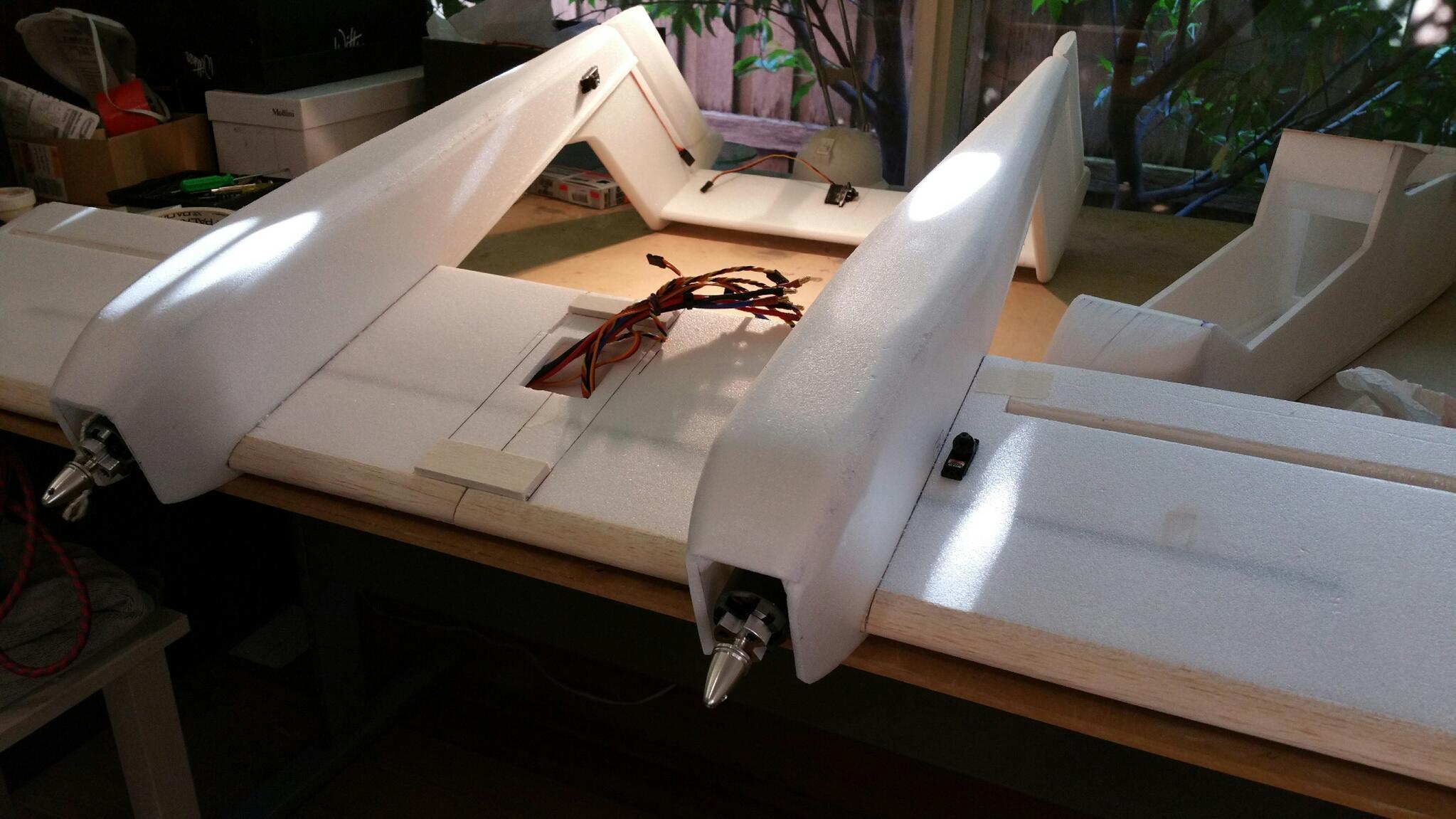
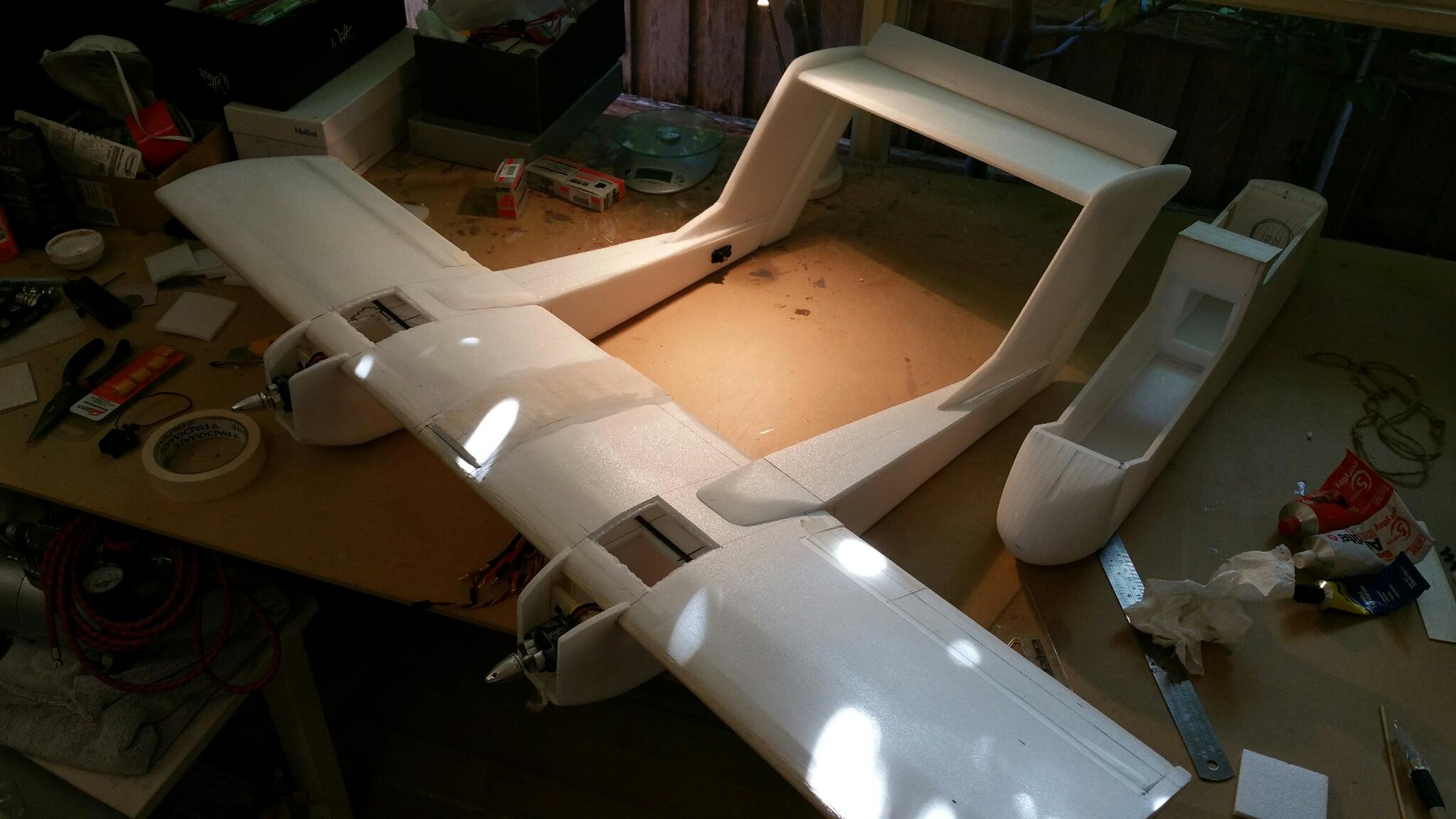
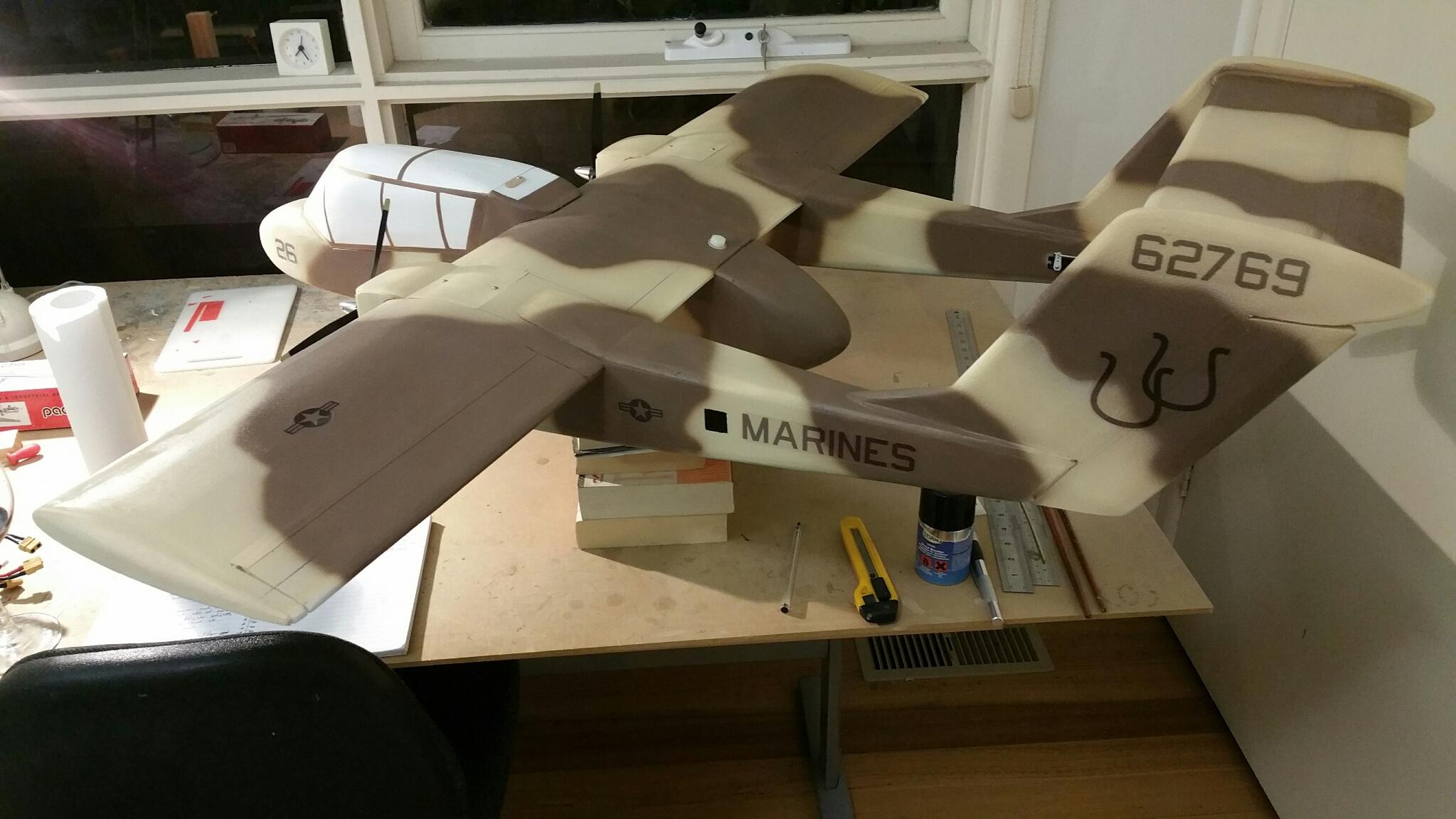
Images Source: Depron OV-10 Bronco Build Log.
And last, but not least, is a 3D printed OV-10 RC model. If you are a 3D modeler that has built several 3D printed RC model planes, than you might want to take a look at what is available at Planeprint OV-10 Webpage.
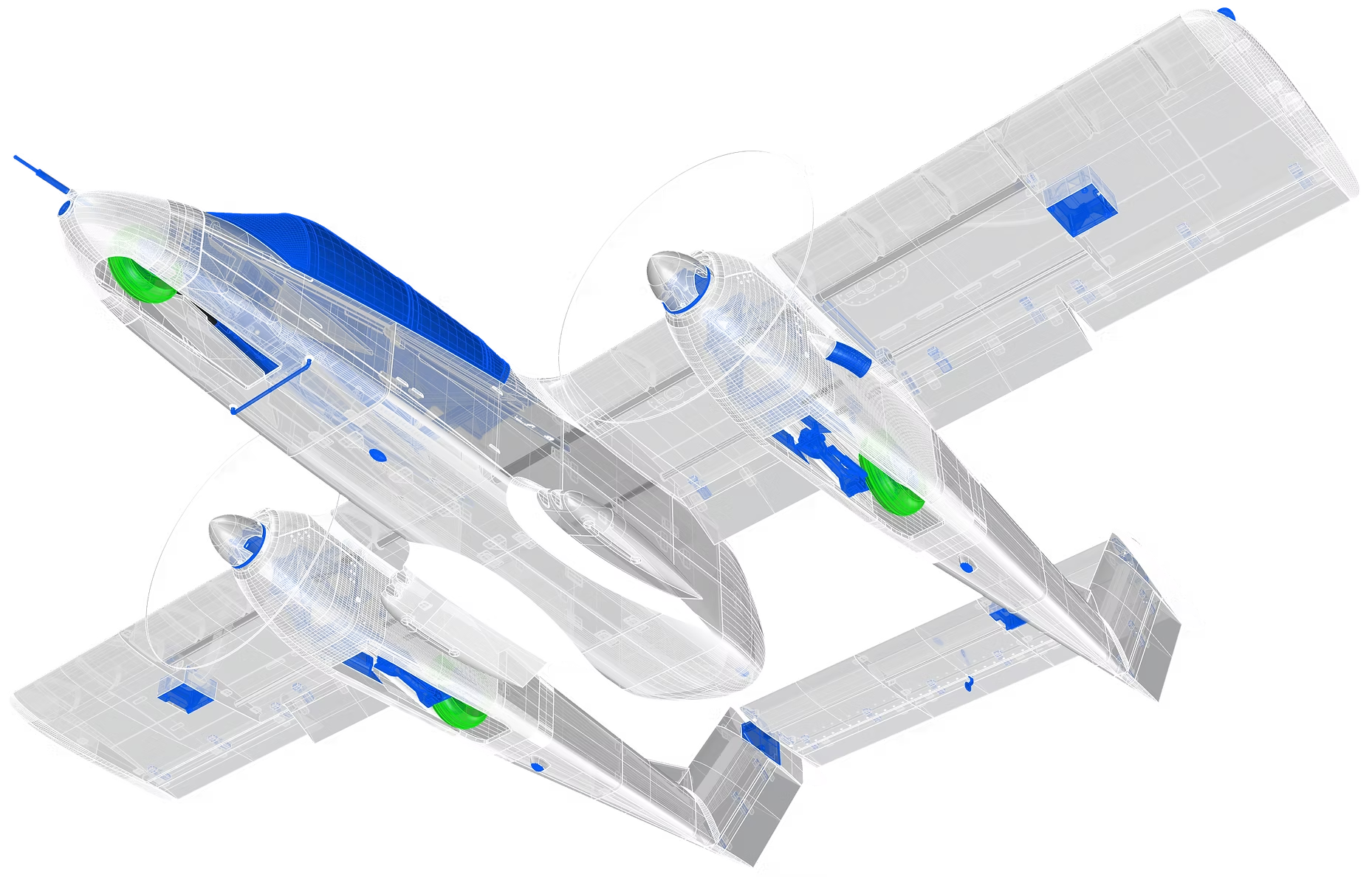
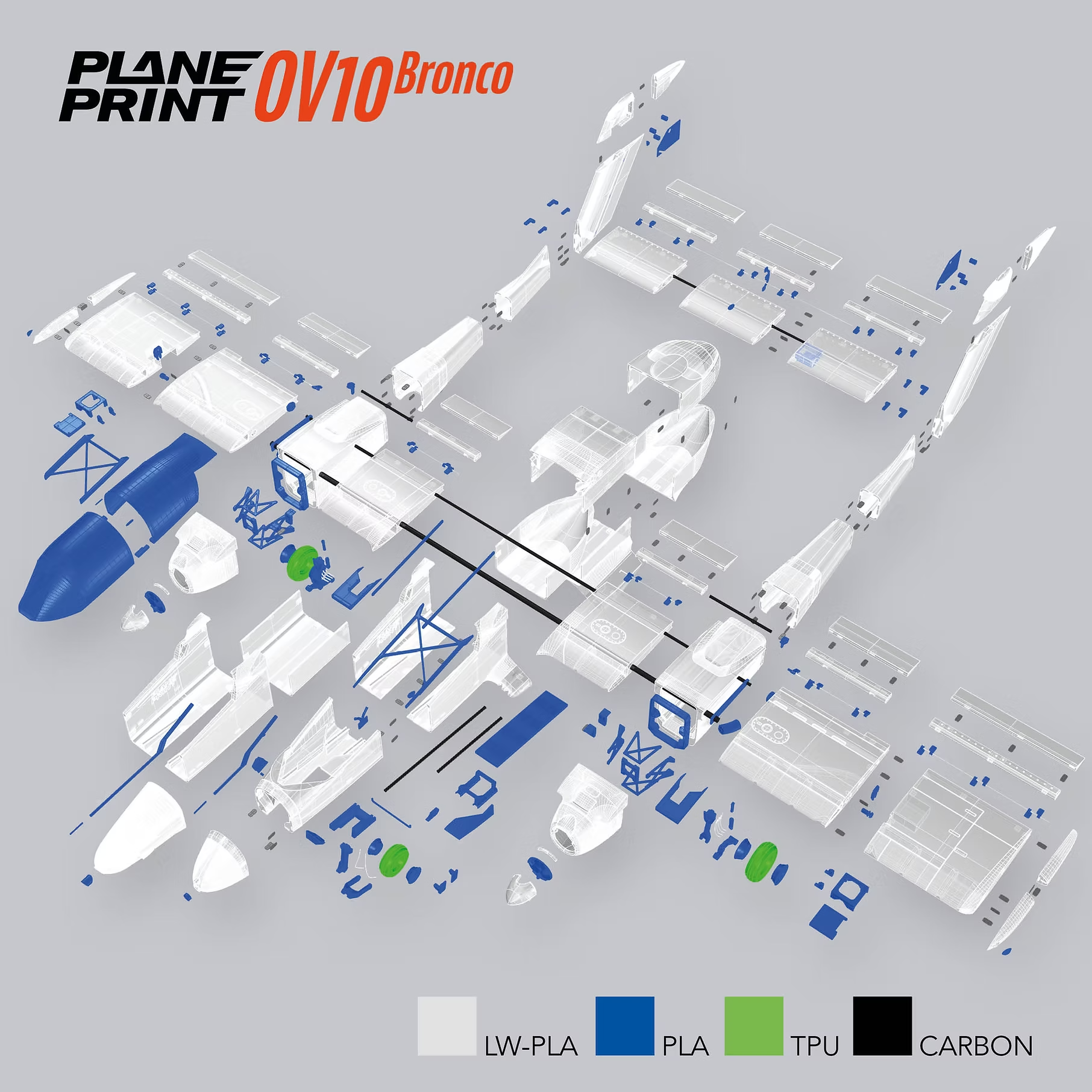
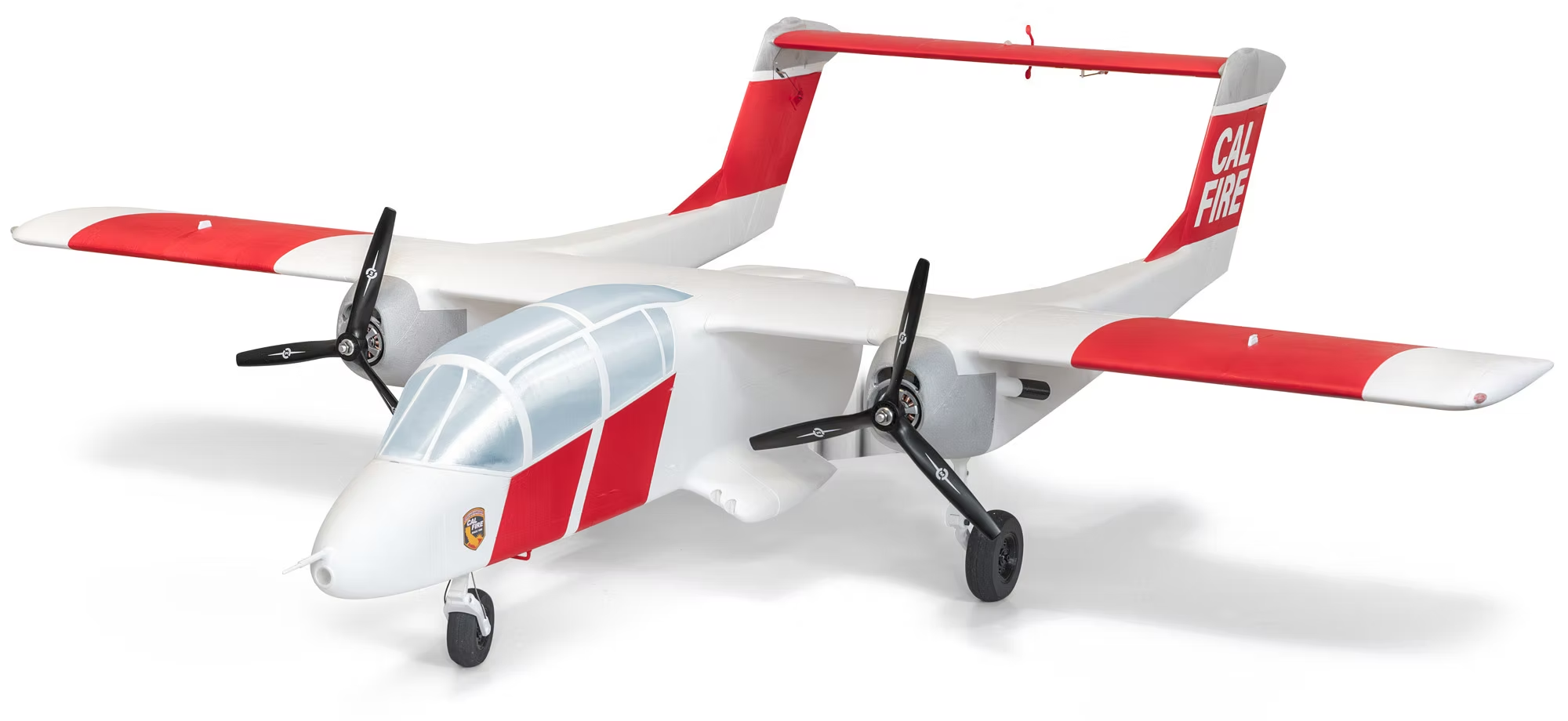
Images Source: Planeprint OV-10 Webpage.
This is a fully 3D printable twin-engine OV-10 RC model aircraft designed and developed by René Marschall. It has a wingspan of 1,400mm (55.1 inches); flight weight of 2,850 grams; requires a 9 channel receiver, is powered by twin electric motors such as PLANET-HOBBY JOKER 3542-6,5 V3 800 KV BRUSHLESS turning 10x7 Master Airscrew 3-blade props, has landing flaps, and retractable landing gear. The model will require LW-PLA 1100g, PLA 400g, and TPU 100g filaments. From their website you can download their free OV-10 PRINTING & ASSEMBLING MANUAL, where you can see exactly what to expect before you decide to buy the STL data.
The flight characteristics of the Planeprint OV-10 are very pleasant thanks to the large wing area and the four landing flaps, and the big wheels are good for use on grass runways. The retractable landing gear and the unusual double fuselage design make it look fantastic on the ground and in the air.
I hope you have enjoyed this months selection, and just maybe, I have spurred some interest in trying your hand at building an RC model airplane.
Until next month - Keep the Balsa Dust Flying and the 3D Printer Humming!!!
Build of the Month Series - February 2026 Edition
I hope you enjoyed last months BOTM Edition on the Royal Wing. If you have an RC model that you would like to see featured in this section or feel others may find interesting, please let me know and I will make every attempt to find scratch build plans, images, and maybe even a published build article, which I will then post in a future edition. Just send me an email @: Build of the Month.
Ok, now lets see what I have for the month of February 2026. Getting back to the basics of building a balsa RC model airplane, not everyone will want to try a scratch build. Another option is to try your hand at a laser-cut kit. This option still allows you to build an RC model that will be unique (unlike a cookie-cutter ARF), but not having to go through all the time and effort of cutting out each individual part as required in a scratch build. Given this requirement, this month features the Sky Ranger 40, a sport RC model airplane kit designed, manufactured, and sold by Old School Model Works (OSMW).
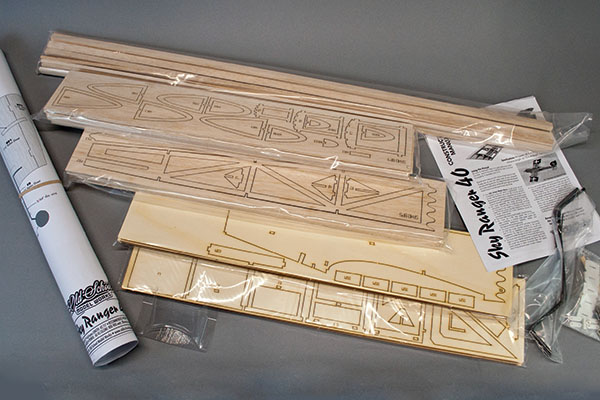
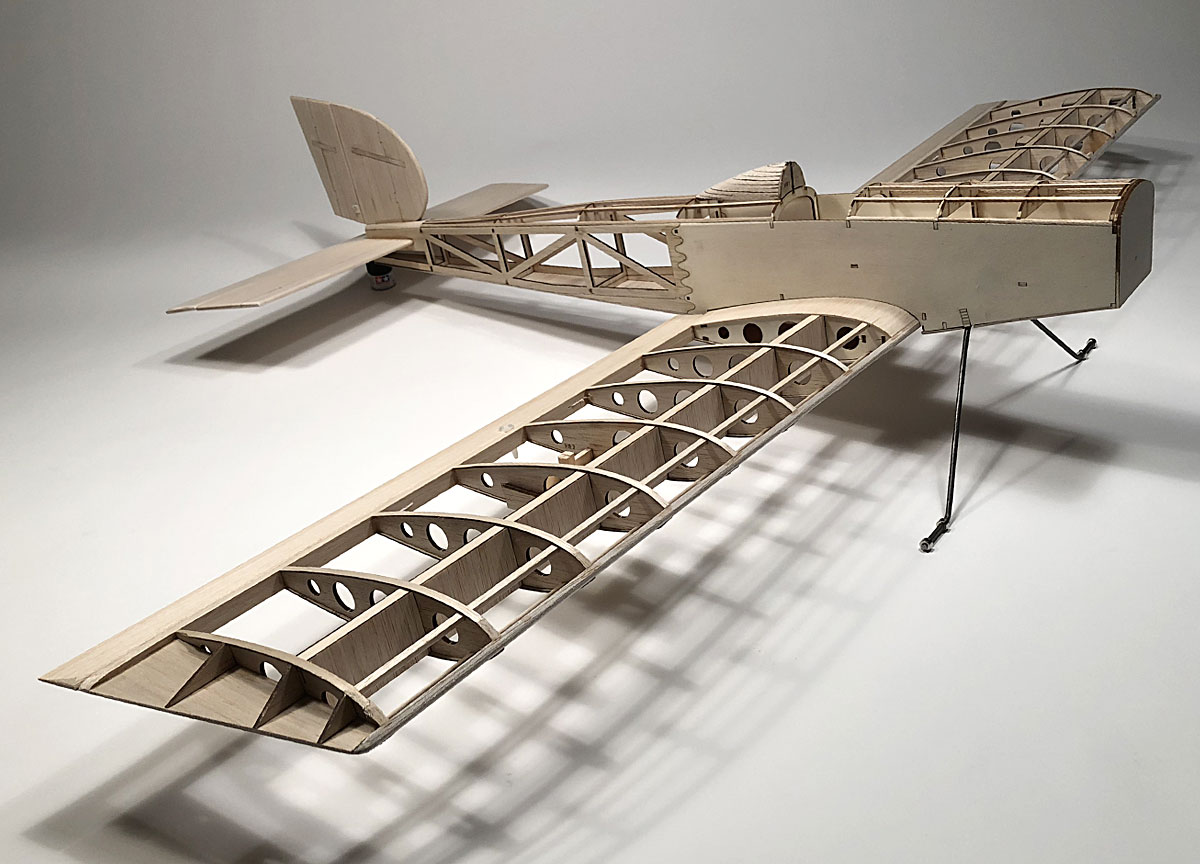
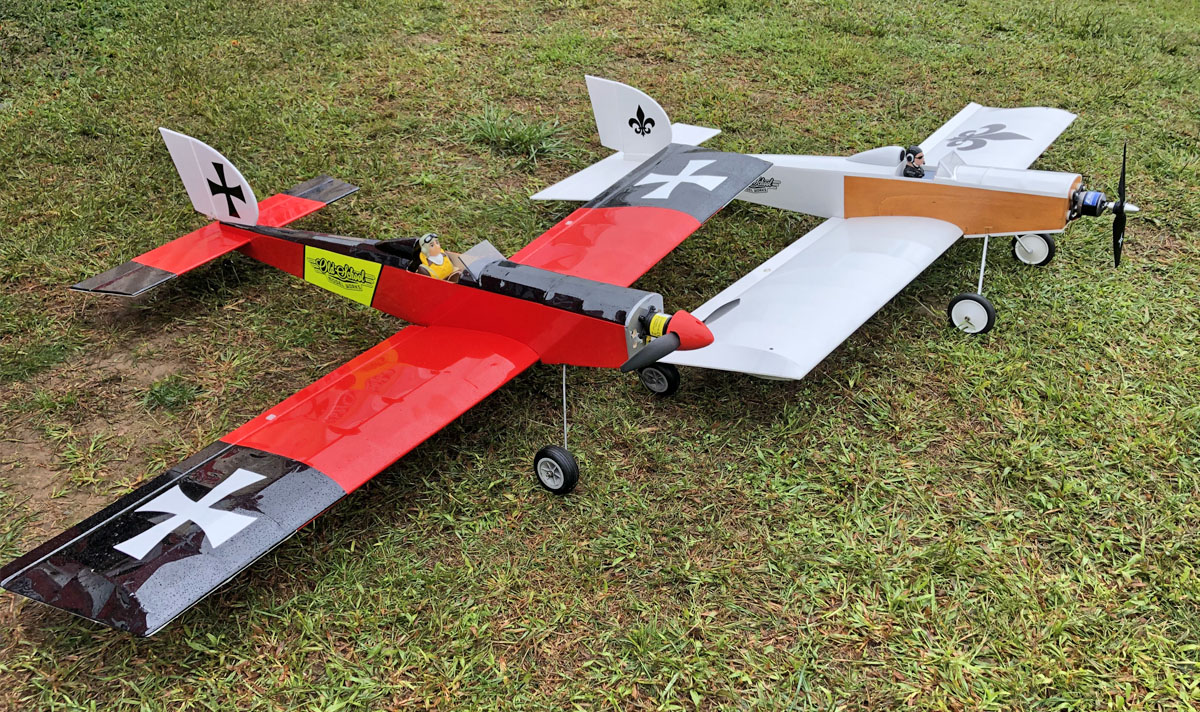
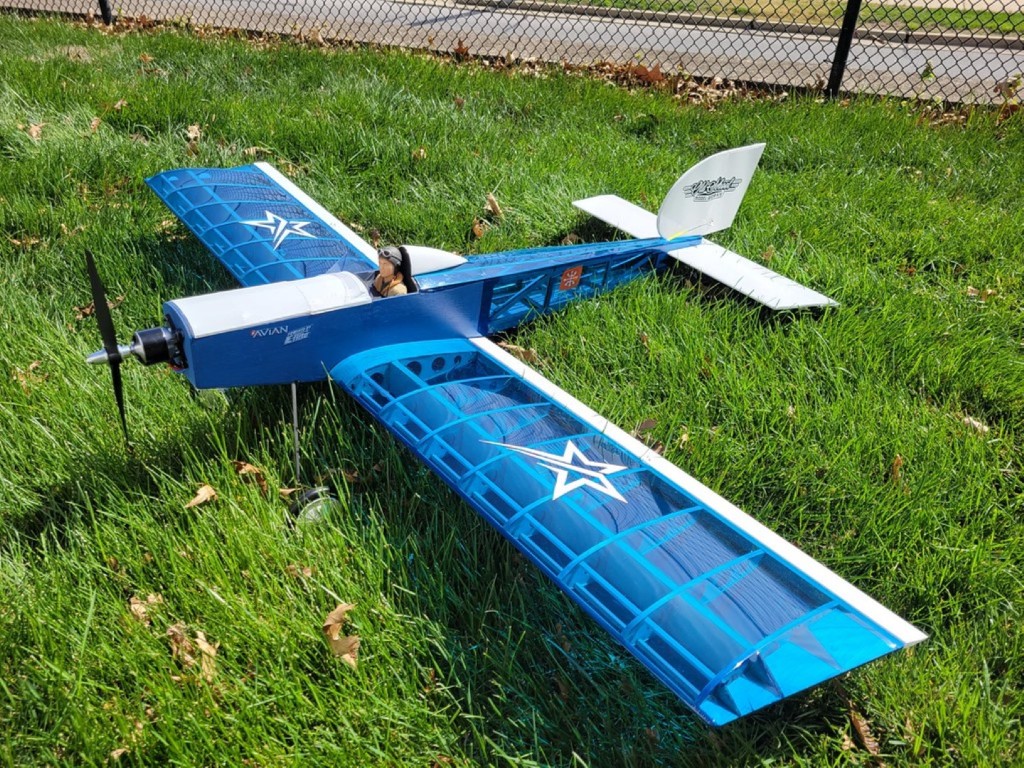
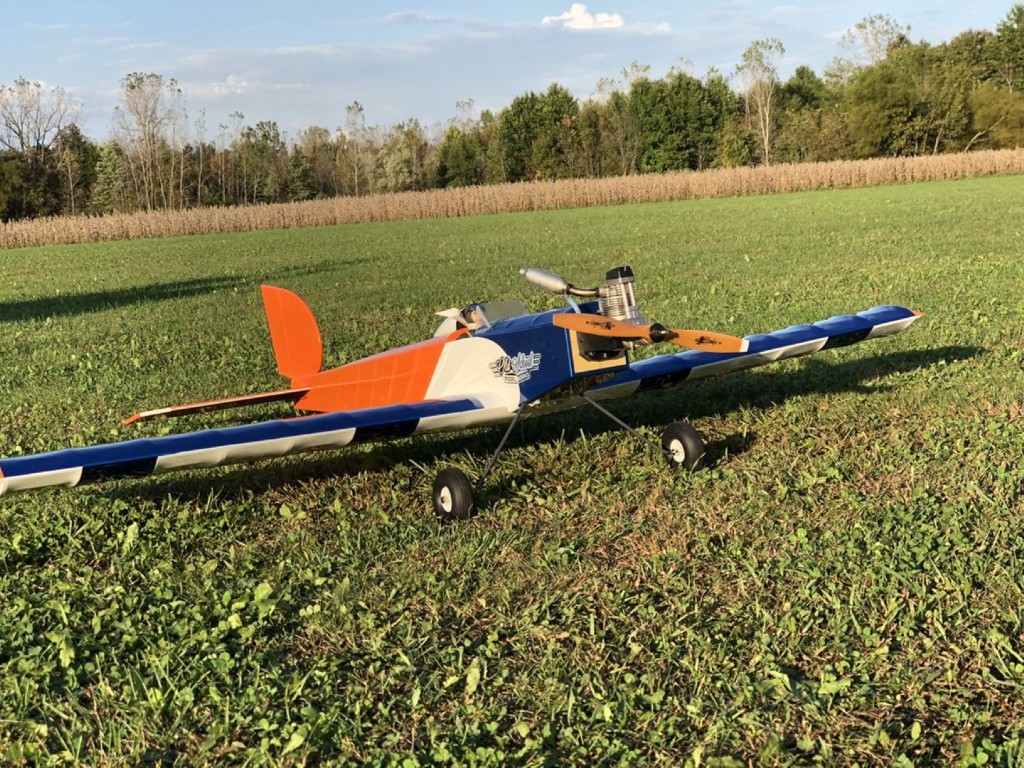
Images Source: OSMW.
Everyone knows that the RC model airplane market is dominated by ARFs. It is easy for those of us who enjoy building with balsa and plywood to feel neglected, but there are still numerous options put forth by a cottage industry of kit producers. In fact, the latest generation of laser-cut kits is better than ever! A GREAT company in the kit market is Old School Model Works (OSMW). Introduced in May 2018, their Sky Ranger 40 is an all-around low-wing open-cockpit sport RC model airplane based off a 1970's classic. Whether you like gentle cruising, or prefer to tear up the sky, the Sky Ranger 40's wide flight envelope makes it a blast to fly!
The Sky Ranger 40 is as much fun to build as it is to fly. Using updated design techniques and laser-cut precision, OSMWs designed this kit so most any modeler can successfully assemble it in a short amount of time. The laser cut kit uses OMSW “WEB-LOCK Construction” - There's nothing else like it. You will build the wings straight and true with a minimum amount of fuss. The Sky Ranger 40 includes most of the components that you will need to make a flying model. There is a selection of laser-cut balsa and plywood parts, as well as sheet and strip stock. Included in each OSMW kit is a premium hardware package. They only source their hardware from brand name, USA manufacturers (DuBro, Sonic-Tronics, and others) to guarantee the best quality. The rugged 3/16″ pre-bent main landing gear and wheel collars are included. The 3/16″ diameter wire can absorb quite a bit of abuse for those no-so-good landings. The front hatch is held in place with magnets, which gives you easy access to batteries or fuel. A clear, pre-formed plastic windscreen is also included. The Sky Ranger 40's assembly is guided by a printed construction manual and two sheets of rolled full-size plans. What's more, you can cover and finish your Sky Ranger 40 like you want, rather than being stuck with a “me-too” offering that looks exactly the same as the others at your local field.
- Sky Ranger 40 RC Model Specifications:
- Aircraft Type: Sport Flyer
- Wingspan: 60″
- Wing chord: 10″
- Wing Area: 527 in²
- Wing Location: Low Wing
- Airfoil: Symmetrical
- Wing Platform: Constant Chord
- Airframe Length: 42.8″
- Overall Height: 17.3″
- Horizontal Stabilizer Span: 24″
- Horizontal Stabilizer Chord: 6.3″
- Flight Performance Category: General Sport
- Center of Gravity Location: 2.8″ back from wing leading edge
- Flying Weight: 3.5 - 4.5 lbs. (depending on power system selected)
- Wing Loading: Approx. 17.5 oz/ft²
- No. of Channels: 4 - Aileron, Elevator, Rudder, and Throttle
- Recommended Control Throws: Aileron 1/2″ up/down; Elevator 1/2″ up/down; Rudder 3/4″ left/right
- Additional parts needed to complete and fly the kit:
- Glow Fuel Engines: .40-.45 2-stroke engine or similar, 6 ounce tank, fuel tubing
- Electric Powered: Output of 800 Watts, 80 amp ESC, 4-5S 45C LiPo
- Engine/Motor mount and mounting hardware
- Receiver - 4 channel minimum
- Servos: 4 each 40-70 in./oz. servos (Standard servos - similar to HS-311); 1 additional servo for throttle, if using a glow engine
- Rec. Props: Use the recommended propeller for the selected power system
- “Y” servo harness
- Pushrods (two 5″ for ailerons, two 24″ for elevator & rudder, one 12″ for throttle if glow powered)
- Clevises for the pushrods (8 if electric, 10 if glow)
- 3″ diameter wheels
- 1″ tailwheel
- Covering Material
- Optional pilot figure for the open cockpit
After reading through the Sky Ranger 40 construction manual, which you can download for free from the OSMW website, I feel this model would be an excellent candidate for someone just learning how to build a model airplane kit. Additionally, you can find all kinds of help from other Sky Ranger 40 builders on the web. Take some time and view an OUTSTANDING 20 part video build series by "Dan in VA" Sky Ranger 40 Build where he provides detailed instructions on his build of an electric powered Sky Ranger 40.
There also are two GREAT videos from MBMrc on his Sky Ranger 40 Post-build review, and his Sky Ranger 40 Flight Video.
The following is a quote by Terry Dunn in his review of the Sky Ranger 40 published in the October 2018 issue of Model Aviation.
“Flying the Sky Ranger 40: The models landing gear has a wide stance and plenty of ground clearance for the 12-inch propeller. Combined with the steerable tail wheel, the Sky Ranger 40 has solid ground handling. I found that gradual application of power helped me to track straight during the takeoff run. I mounted my motor with 3° of right thrust. The Sky Ranger 40 still demands some corrective rudder input, especially when you first start rolling. The model quickly achieves flying speed and takes to the sky with authority. Aileron authority is excellent. Rolls are crisp and tight. I am surprised by how cleanly the Sky Ranger 40 stops rolling as soon as I neutralize the stick. It’s instantaneous. The elevator is quite effective as well. This airplane happily performs big or small loops. Inverted flight requires only a hint of forward pressure. A quick yank back on the stick, coupled with rudder, produces a respectable snap roll. I sometimes yearn for better rudder authority with this model. It's fine for coordinated turns, sideslips, and other common maneuvers, yet rudder-heavy moves such as stall turns, wingovers, and knife-edge flight, are slightly soft for my taste. My model balanced at the suggested location, which I think is perfect. Stalls are very gentle. The airplane starts flying again as soon as back pressure is released. You have to get quite heavy-handed on the controls to coax the airplane into a spin. Again, recovery is immediate.
I didn't expect this model to be very fast because it has a relatively thick airfoil. Much to my surprise, the Sky Ranger 40 can really boogie when you firewall the throttle! My power system offers great climb performance. I guess that's what happens when your power loading approaches 200 watts per pound. A significant portion of my flights are spent at 1/2 to 3/4 throttle. That's more than adequate for cruising and aerobatics. Full power is reserved for an occasional jolt of adrenaline. Flights lasting 7 minutes or longer are normal with the mixed flying style that I prefer. The Sky Ranger 40 is one of those models that is easy to land, but somewhat challenging to land well. Achieving a gentle, YouTube-worthy arrival demands a little work. Many of my attempts to bring the Sky Ranger 40 in on the main wheels have resulted in bouncy rollouts. I consistently have the best luck when I go with a full-stall, three-point landing.
Overall, the Sky Ranger 40 is a well-rounded, low-stress sport airplane. It is fun to fly and doesn't hide any unwanted surprises. If you're a fan of “Stik” models, you will feel right at home flying this aircraft.
The Sky Ranger 40 is a great specimen representing the current state-of-the-art in laser-cut kits. It has a well-designed airframe that fits together nicely. Modelers who have built a kit or two should have no trouble building this airplane and have fun doing it. The completed model is a nimble performer with clean, retro styling.”
I hope you have enjoyed this months selection, and just maybe, I have spurred some interest in trying your hand at building an RC model airplane.
Until next month - Keep the Balsa Dust Flying!!!
Build of the Month Series - January 2026 Edition
Happy New Year and I hope you enjoyed last months BOTM Edition on the Westland P12 Wendover. If you have an RC model that you would like to see featured in this section or feel others may find interesting, please let me know and I will make every attempt to find scratch build plans, images, and maybe even a published build article, which I will then post in a future edition. Just send me an email @: Build of the Month.
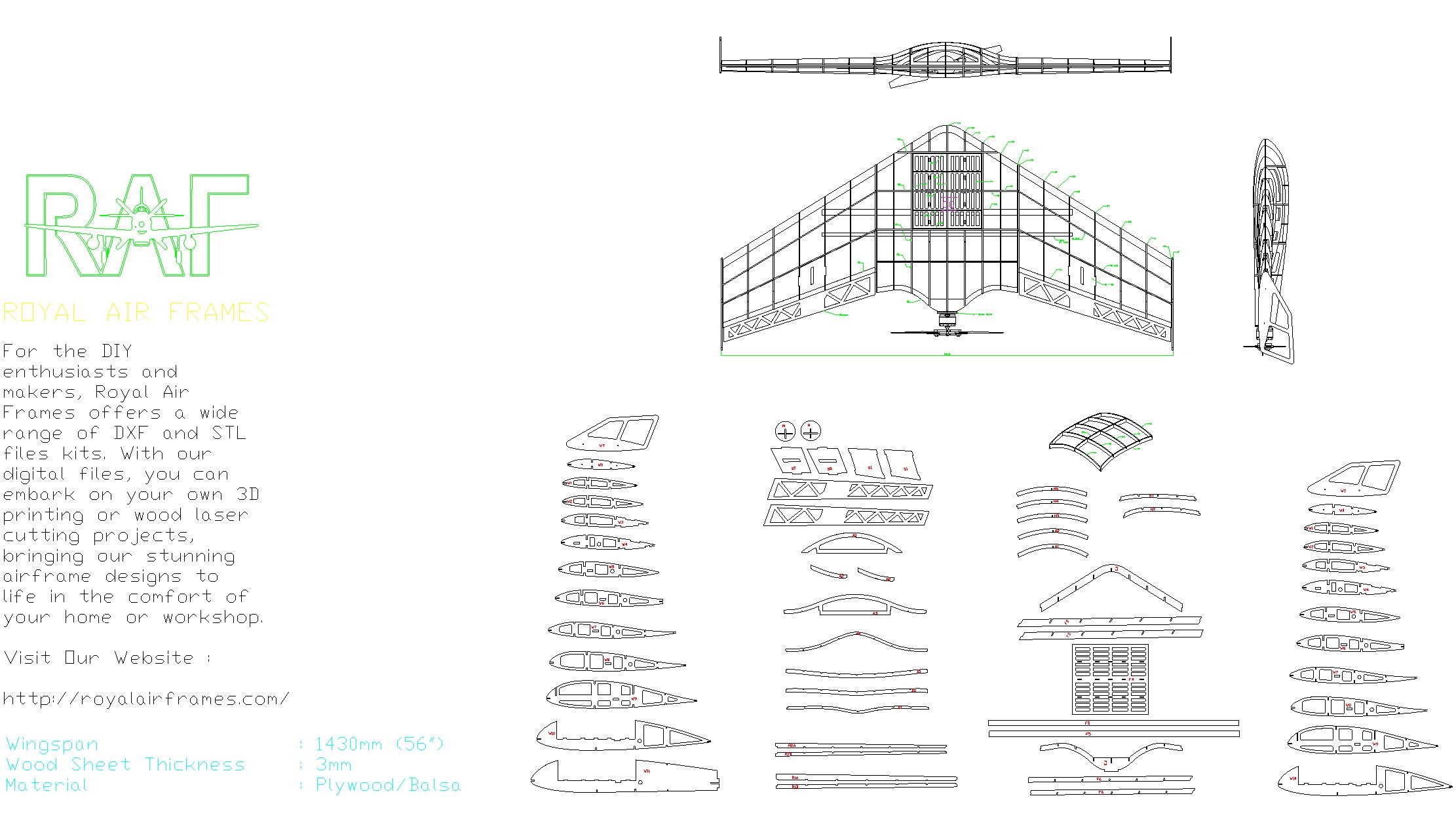
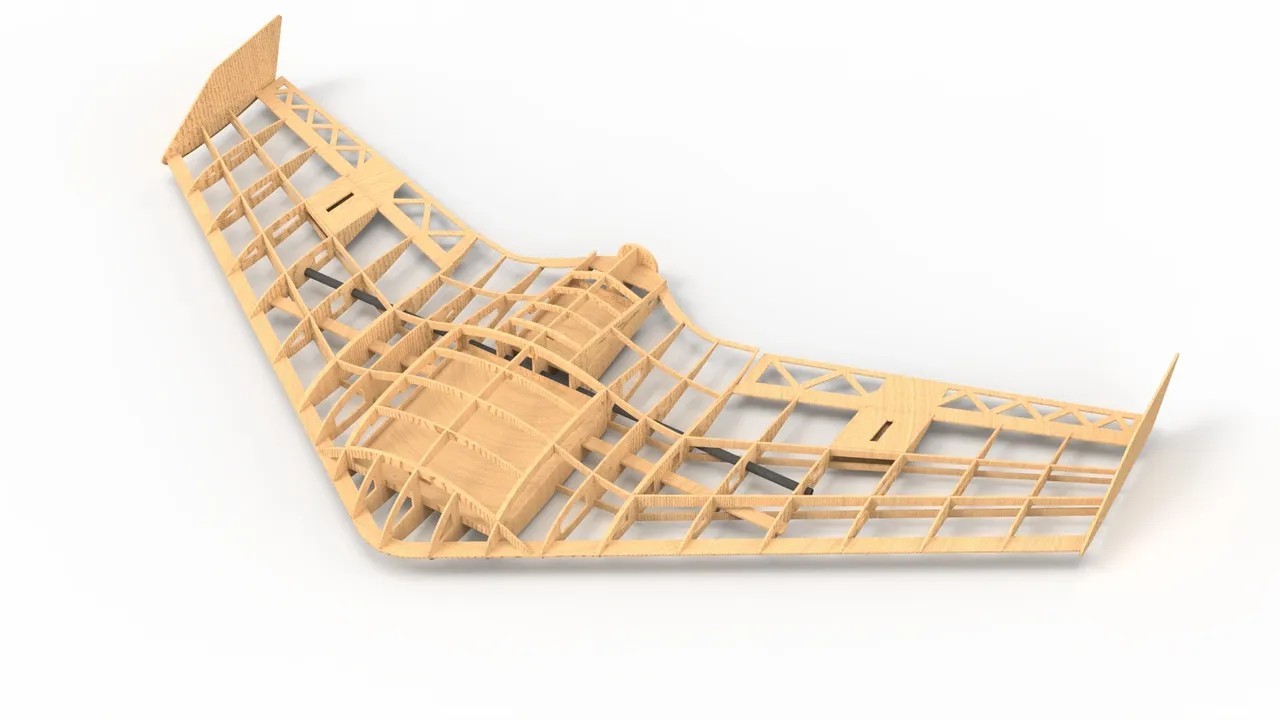
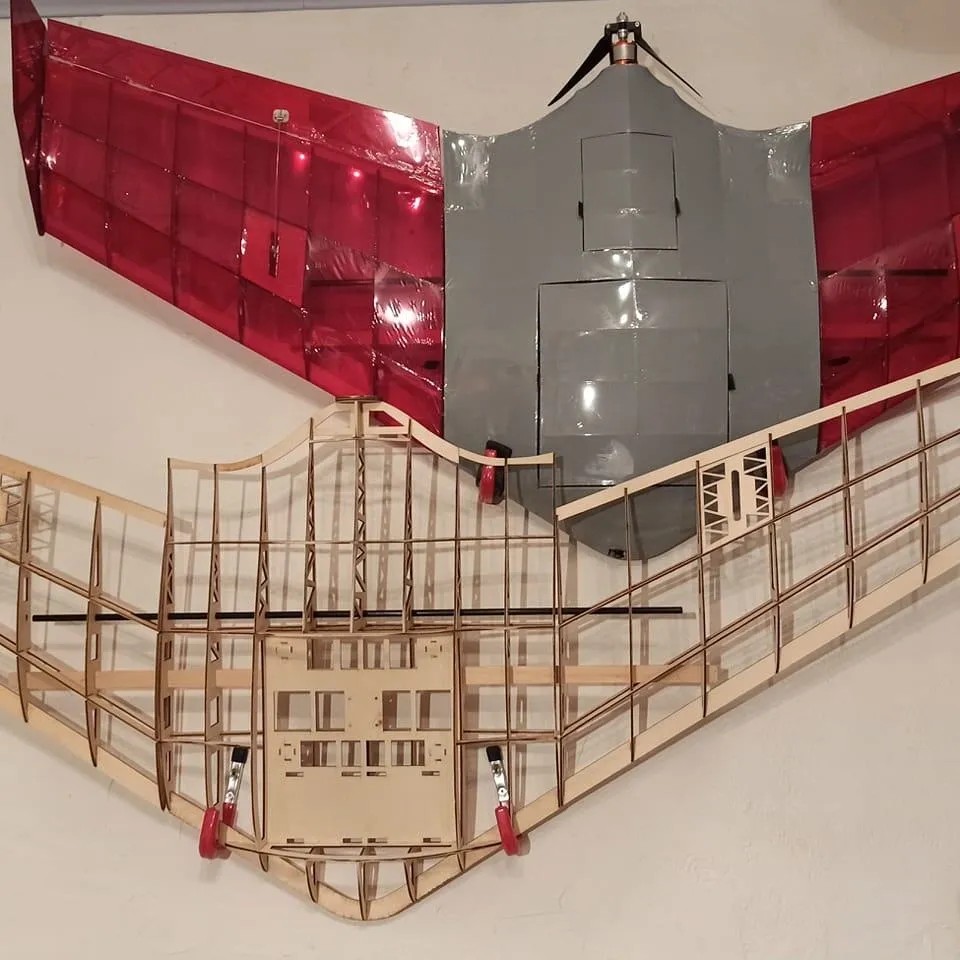
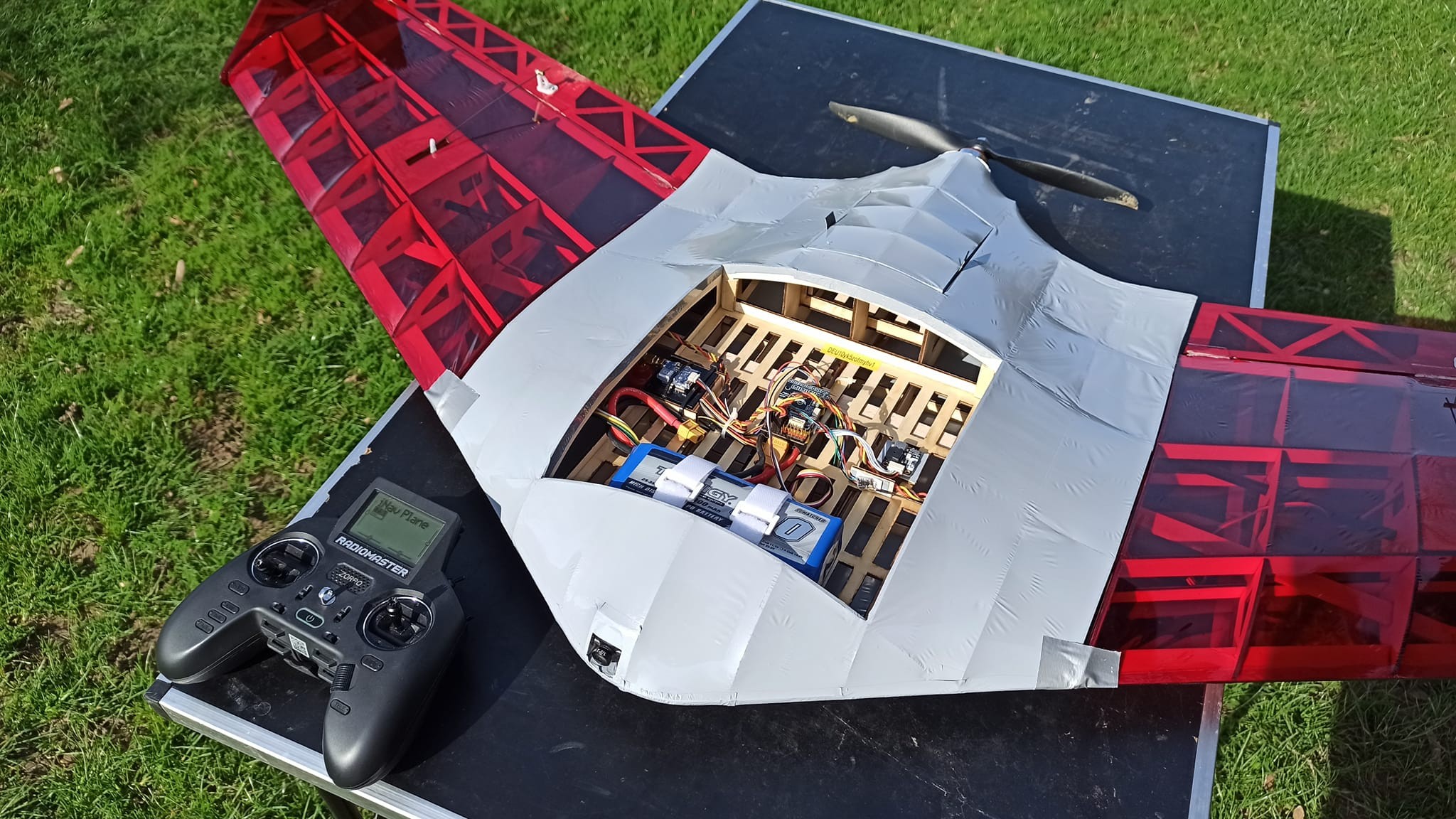
Ok, now lets see what I have for the month of January 2026. During my end-of-year review of my website pages, I noticed that I did not have a BOTM Edition for what could be called a flying wing RC model. Therefore, how about something that can be called a “flying wing” and is similar in design and construction to that used for the AMTN Beechcraft Starship kit I built. Given these requirements, this month features the Royal Wing, a RC model flying wing designed by Azher from Royal Air Frames, and can be found @ Royalairframes.com, and @: Cults 3D.
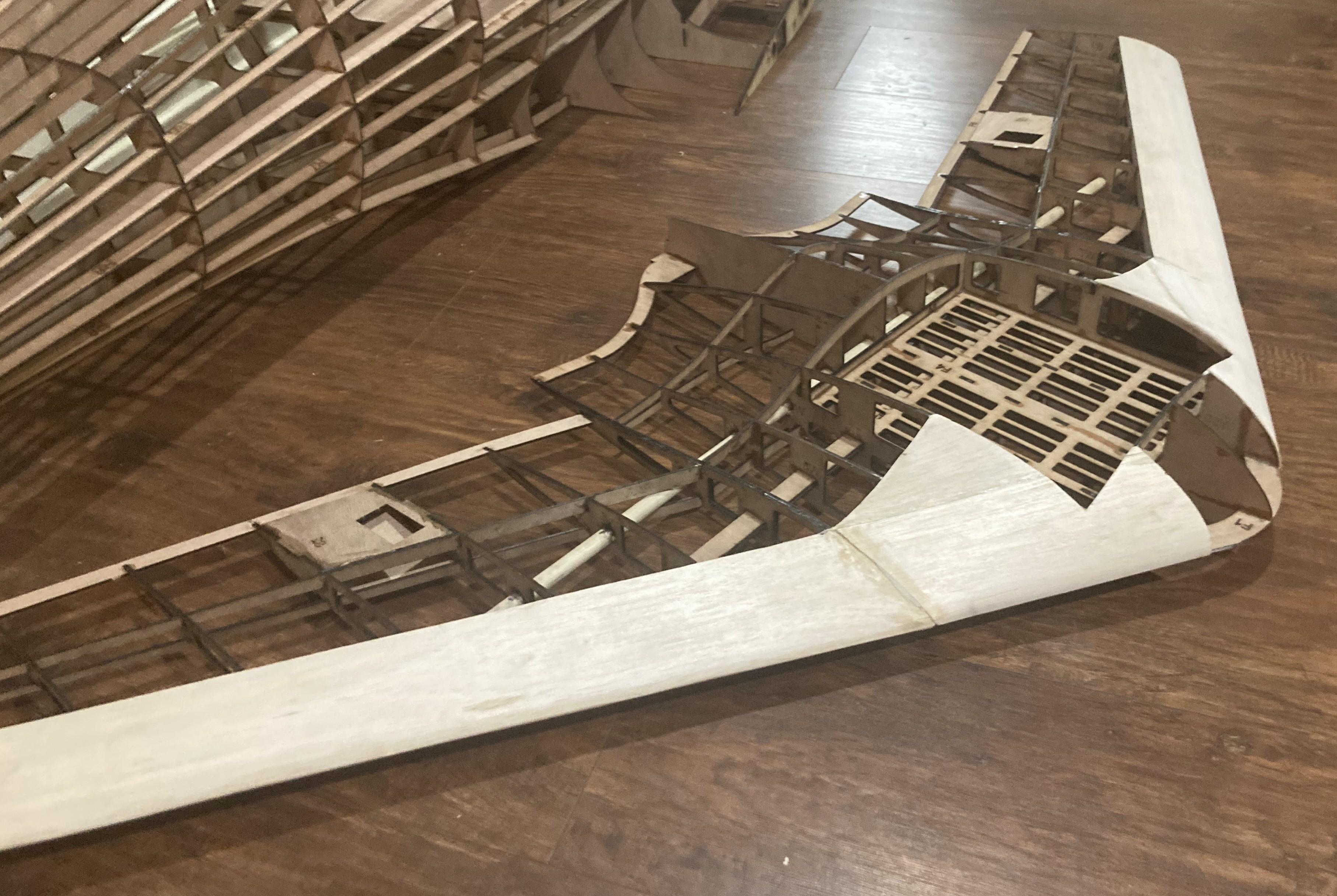
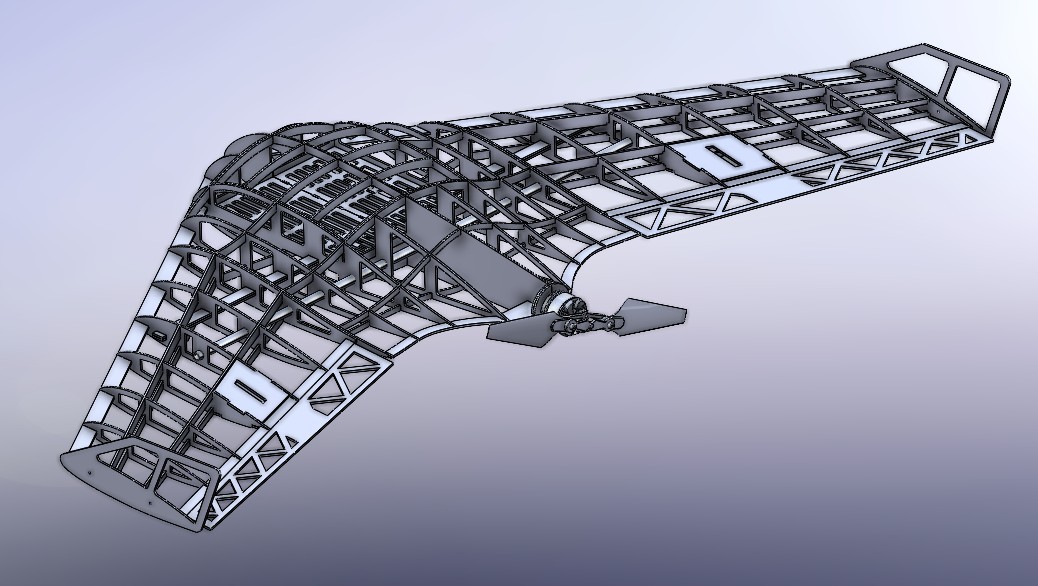
Images Source: Royalairframes.com.
I was doing a web search for 3-view drawings of a Blended Wing Body (BWB) design similar to that of the JetZero tanker/transport and just happened to come across a 3D model on Cults 3D from a designer listed as “RoyalAirframes.” I decided to take a look at other designs this company had done and eventually found their company website that has some very interesting and unusual balsa model airplane designs. This is how I found the Royal Wing featured this BOTM Edition.
Just a few words about the company. Royal Air Frames specializes in providing high-quality, precision-engineered scale short kit designs, DXF files, and aircraft CAD designs. Perfect for aeromodeling enthusiasts, hobbyists, and DIY builders, their extensive collection includes RC airplane plans for scale models, warbirds, giant-scale aircraft, and more. Whether you are looking to create custom airframes for laser cutting or CNC machining, their laser-ready DXF plans are designed for accuracy and ease of use. Download the files and unlock endless possibilities for wooden aircraft models, foam planes, and balsa wood designs. Need something unique? They offer custom design services to bring your creative ideas to life, tailored to your exact needs. From beginner to advanced builders, their comprehensive resources make it easy to turn your RC aircraft project into a reality. Need Old Plans converted to Laser-Cutting Data? If you have vintage or hand-drawn aircraft plans, Royal Air Frames can convert them into high-precision DXF files for laser cutting or CNC machining. Their team is experienced in transforming old designs into modern digital formats, preserving the details and accuracy of the original plans while making them suitable for current manufacturing methods.
Alright, enough with the free advertising, and lets get back to the Royal Wing model. As quoted from their website: “The Royal Wing is built for modelers who value the heritage of aeromodeling and the satisfaction of flying a well-crafted aircraft. With its 1430mm (56.3″) wingspan, this design delivers light wing loading, stable handling, smooth performance, and flight times of up to 1 hour, making every flight a rewarding experience. Constructed entirely from 3mm Lite plywood, the Royal Wing achieves the ideal balance of lightweight structure and durability. Whether you enjoy sport flying, First Person View (FPV), or simply the joy of building, this airframe offers the timeless experience of model aviation with the reliability of modern design.”
- Royal Wing RC Model Specifications:
- Aircraft Type: Flying Wing/Sport Flyer
- Wingspan: 1430mm / 56.3″
- Wing chord: Varies from 590mm down to 260mm
- Overall Length: 714mm / 28.1″
- Height: 130mm / 5.1″
- Wing Area: 54.64 decimeters² / 847 in² / 5.88 ft²
- Wing Sweep: 30.7 degrees
- Wing Loading: Approx. 11.7 oz/ft²
- Flight Performance Category: General Sport
- Center of Gravity Location: 450mm from wing root leading edge (with 10% static margin)
- Flying Weight: Estimate 1,950 g / 68.8 oz (depending on LiPo size used)
- No. of Channels: 3 - Elevons and throttle (2 servos + 1 ESC)
- Motor: DYS G3536 900kv motor, 1,050g push, 370 W, or any similar motor (this model works with a wide range)
- ESC: Minimum of 50A ESC 2-4S w/5v 3A BEC (depending on motor selection)
- Servos: 12g mini servos (x2)
- Rec. Props: Use the recommended propeller for the selected motor (i.e. 11x6 folding prop)
- Battery: 4S 2,600 - 10,000 mah LiPo
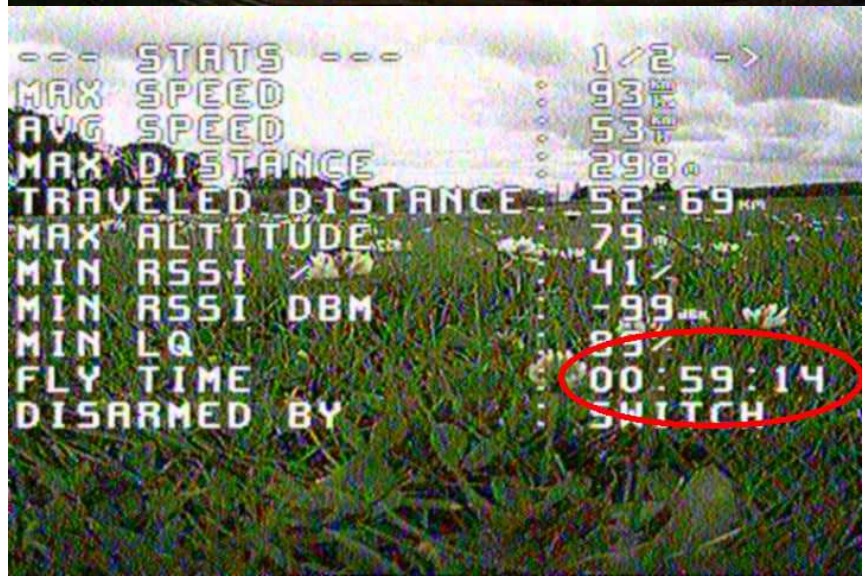
As you can see from the above specs, using light weight flight components will result in gentle handling characteristics and very long flight durations. One builder of the Royal Wing provided RAF a FPV frame capture showing a flight duration of almost an hour (see below), and a Royal Wing flight video.
- The files included in the Cults 3D Royal Wing download package are:
- 3D CAD (.STEP) – complete 3D model for reference and modification
- DXF & DWG – laser-cut ready files for precise fabrication
- Assembly Layouts – straightforward building process
I plugged the specs into an online C.G. calculator which established a 450mm behind the nose C.G. position using a 10% static margin. The equipment bay is large enough to accommodate just about any combination of LiPo batteries you would want to use.
In Conclusion: The Royal Wing is a very nice RC model aircraft, but I do not recommend it for beginners who are just starting out in aeromodeling. While it does not look that hard to scratch build, hand cutting all the CAD parts from 3mm ply could be a frustrating challenge. But, if you already have some experience in RC model aircraft, and maybe even a laser or CNC cutter, this looks like a fun RC model aircraft to build and fly.
I hope you have enjoyed this months selection, and just maybe, I have spurred some interest in trying your hand at building an RC model airplane.
Until next month - Keep the Balsa Dust Flying!!!
 All HTML & CSS Coded by Larry